




Can Mouth Taping Reduce Snoring?
Short answer: Mouth taping may help reduce mild snoring that happens because the mouth falls open during sleep. It does not treat every cause of snoring, and it is not a treatment for obstructive sleep apnea. If snoring is loud, frequent, worsening, or paired with choking, gasping, pauses in breathing, or severe daytime fatigue, medical evaluation matters.
Quick Answers Box
| Question | Quick answer |
|---|---|
| Can mouth taping reduce snoring? | Sometimes. It may help if snoring is linked to open-mouth sleep and dry mouth, but not if the main issue is nasal blockage, obesity, alcohol, anatomy, or sleep apnea. |
| Does it work immediately? | Some people notice a difference on the first night, but consistent results depend on nasal airflow, proper tape placement, and the true cause of the snoring. |
| Is it a sleep apnea treatment? | No. Mouth taping is not a treatment for obstructive sleep apnea and should never replace proper medical assessment. |
| Who is most likely to benefit? | Adults who can breathe comfortably through the nose and tend to wake with a dry mouth, noisy mouth-breathing, or light snoring. |
| What kind of tape matters? | A purpose-built mouth tape with reliable adhesion, sensitive-skin comfort, and secure all-night wear is generally preferable to generic household tape. |
What is mouth taping, exactly?
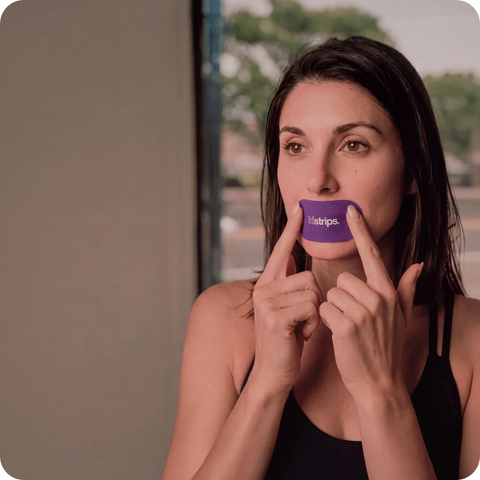
Mouth taping is the practice of placing a skin-safe strip over the lips before sleep to encourage the mouth to stay closed and to promote nasal breathing. The idea is simple: when the mouth stays closed, airflow may move more consistently through the nose rather than through an open mouth.
That distinction matters because not all snoring is the same. Some snoring is closely tied to mouth opening, dry tissues, unstable airflow, and poor tongue posture. Other snoring comes from deeper structural or medical causes that mouth taping will not solve.
In other words, the real question is not just “Can mouth taping reduce snoring?” but rather:
“Can mouth taping reduce your type of snoring?”
Direct answer: when can mouth taping help with snoring?
Mouth taping is most likely to help when snoring is driven by open-mouth sleep rather than a more complex airway disorder. By supporting lip closure and encouraging nasal breathing, it may reduce the vibration and turbulence that contribute to light snoring in some sleepers.
Why some people snore more when they sleep with their mouth open
Snoring is the sound of vibrating soft tissue in the upper airway. As air moves through a narrowed or unstable passage, tissues such as the soft palate, uvula, and surrounding throat structures can vibrate and create noise.
Open-mouth sleep may make this worse for several reasons:
1. The jaw can drop backward
When the mouth opens during sleep, the jaw may relax downward and backward. That change in position can reduce airway stability and increase the chance of noisy airflow.
2. The tongue may sit less favorably
A closed-mouth, nasal-breathing pattern often supports better tongue posture. An open mouth may allow the tongue to settle in a way that contributes to airway narrowing.
3. Mouth breathing can dry tissues
Dry tissues may become more irritated and less resilient. Some sleepers report more vibration and noisier breathing when they wake with a very dry mouth.
4. Airflow becomes less efficient
Nasal breathing naturally filters, warms, and humidifies inhaled air. When breathing shifts to the mouth, airflow patterns may become less controlled, especially during deep sleep or after alcohol.
The mechanism: how mouth taping may reduce snoring
If you want the definition-first, evidence-aligned explanation, here it is:
Mouth taping does not “cure snoring.” It may reduce one specific snoring trigger: sleeping with the mouth open.
That is an important distinction.
The proposed mechanism is straightforward:
- The tape helps the lips remain together.
- Closed lips encourage nasal breathing.
- Nasal breathing may improve airway mechanics for some people.
- Better airflow stability may reduce light snoring related to mouth opening.
This is why mouth taping tends to attract interest in the performance wellness and biohacking world. It is low-tech, behavior-based, and easy to test at home.
But a behavior-based intervention still has limits. If the underlying problem is significant nasal obstruction, enlarged tonsils, weight-related airway collapse, alcohol-induced airway relaxation, or obstructive sleep apnea, the benefit may be limited or nonexistent.
Who is the best candidate for trying mouth taping for snoring?
Mouth taping may be a reasonable experiment for adults who:
- can breathe comfortably through the nose before bed
- tend to wake with dry mouth or bad breath
- notice they often fall asleep with their mouth open
- have a partner who describes the snoring as light to moderate, not extreme
- want to improve nighttime breathing habits without using bulky equipment
It may be especially relevant if you already suspect that your snoring gets worse when:
- you sleep on your back
- your jaw drops open
- your nose is clear but your mouth still opens
- you wake feeling dehydrated despite adequate fluids
For that kind of sleeper, a premium tape designed for stronger adhesive, comfortable all-night wear, and sensitive skin compatibility may create a more consistent test than makeshift options that peel off early or irritate the lips.
Who should be cautious or skip mouth taping altogether?
Direct answer: Mouth taping is not appropriate for everyone. If you cannot breathe comfortably through your nose, suspect sleep apnea, have nighttime panic or severe congestion, or feel unsafe with anything over your mouth, do not treat it as a casual fix.
Avoid or postpone mouth taping unless a qualified clinician has advised otherwise if you:
- have known or suspected obstructive sleep apnea
- frequently wake up choking, gasping, or short of breath
- have severe nasal congestion, a deviated septum, or uncontrolled allergies
- have active illness affecting breathing
- have significant anxiety about restricted airflow
- have skin injury, rash, or irritation around the lips
- are using sedatives or alcohol in ways that worsen breathing safety
Children, pregnant individuals with new sleep-disordered breathing symptoms, and anyone with a complex medical history should use extra caution and seek professional guidance rather than self-experimenting blindly.
Mouth taping vs other anti-snoring approaches
Not every snoring intervention targets the same mechanism. That is why some people try three or four “snoring solutions” and conclude that nothing works, when in reality they were solving the wrong problem.
Comparison table: what each approach is trying to do
| Approach | Main goal | Best for | Limitations |
|---|---|---|---|
| Mouth taping | Encourage lip closure and nasal breathing | Mild snoring linked to open-mouth sleep | Will not fix sleep apnea or major anatomical obstruction |
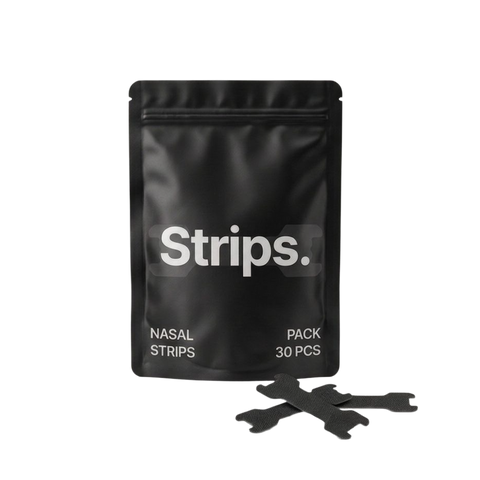
| Nasal strips | Open nasal passages externally | Nasal resistance, mild congestion | May not help if the mouth still falls open |
| Side sleeping | Reduce airway collapse from back sleeping | Positional snoring | Hard to maintain all night |
| Weight loss | Lower airway pressure from excess tissue | Weight-related snoring | Slow-burn strategy, not immediate |
| Mandibular advancement device | Move jaw forward | Some airway narrowing patterns | Requires fitting, can affect jaw comfort |
| CPAP | Stabilize airway pressure | Obstructive sleep apnea | Medical device, requires diagnosis and adherence |
The table makes the key point clear: mouth taping is a targeted intervention, not a universal one.
What does the evidence actually say?
The evidence around mouth taping is still early and limited. There is growing consumer interest, anecdotal reporting, and a plausible mechanism, but that is not the same as robust proof across all populations.
A careful, evidence-backed position looks like this:
- There is reasonable logic behind using mouth taping to encourage nasal breathing.
- Some small studies and user reports suggest it may help certain people with mild snoring or mouth breathing.
- The existing evidence is not strong enough to claim that mouth taping broadly treats snoring disorders.
- It should not be positioned as a substitute for sleep apnea diagnosis or treatment.
That balanced framing is important because wellness trends often move faster than the research. The premium, responsible approach is not to overpromise. It is to identify the right use case, test safely, and pay attention to red flags.
Signs mouth taping might help your snoring
If you are deciding whether this is worth trying, look for pattern clues.
You may be a good fit if:
- you wake with dry mouth almost every morning
- your snoring is worse when your lips fall open
- your nasal breathing is comfortable during the day and before sleep
- a partner says your snoring is more like noisy breathing than choking or gasping
- nasal strips help somewhat, but you still mouth-breathe
It may be a poor fit if:
- your nose often feels blocked
- you snore in every position and at every intensity level
- you have witnessed breathing pauses
- you wake unrefreshed despite long sleep duration
- you have morning headaches, high blood pressure, or intense daytime sleepiness
Those latter signs deserve more than a consumer sleep hack. They deserve evaluation.
Can mouth taping help if you snore because of nasal congestion?
Short answer: Usually not by itself. If your nose is blocked, forcing the mouth closed misses the underlying issue. In that case, the first step is improving nasal airflow rather than assuming tape will compensate for poor nasal breathing.
Nasal congestion changes the equation completely. If your nose is obstructed, your body may be opening the mouth for a reason. That can happen with allergies, colds, chronic inflammation, structural issues, or dry indoor air.
For these sleepers, a better sequence is often:
- Address nasal resistance first.
- Reassess how often the mouth falls open.
- Only then test mouth taping if nasal breathing is comfortable.
This is one reason purpose-built sleep products often work best as part of a breathing optimization system, not as an isolated miracle fix.
Can mouth taping help if you have obstructive sleep apnea?
No. Mouth taping is not a treatment for obstructive sleep apnea.
Obstructive sleep apnea (OSA) involves repeated airway collapse or obstruction during sleep. That is a medical condition with real health implications, including poor sleep quality, cardiovascular stress, and safety concerns.
Mouth taping does not diagnose OSA. It does not replace sleep testing. It does not take the place of CPAP, oral appliance therapy, positional therapy, or physician-guided care where those are indicated.
If you or your partner notice any of the following, do not reduce the issue to “just snoring”:
- pauses in breathing
- choking or gasping during sleep
- very loud habitual snoring
- severe daytime sleepiness
- morning headaches
- high blood pressure
- waking with a racing heart
Persistent snoring may require medical evaluation, especially when those warning signs are present.
How to test mouth taping for snoring safely and realistically
If you decide to experiment, treat it like a controlled test, not a leap of faith.
Step 1: Confirm nasal breathing feels easy
Spend a few minutes before bed checking whether you can breathe calmly through the nose with the mouth closed. If that feels strained, stop there.
Step 2: Use a product designed for the lips
Do not improvise with aggressive household tape. A product made for overnight lip application is more likely to balance secure adhesion with skin comfort.
Step 3: Start on a low-risk night
Avoid your first test after alcohol, during illness, or when severely congested.
Step 4: Track more than one outcome
Pay attention to:
- snoring volume according to a partner or recording app
- morning dry mouth
- sleep continuity
- comfort level
- skin response
- whether the tape stayed on all night
Step 5: Run multiple nights
One night proves very little. Test across several nights to see whether the result repeats.
This is where quality matters. If the tape lifts early, feels harsh, or causes irritation, you are not really testing the breathing method fairly. A premium design with athlete-grade performance, dependable seal, and sensitive skin-friendly materials can make the experiment cleaner and more consistent.
What kind of mouth tape is best for snoring?
The best mouth tape for snoring is not simply the stickiest product. It is the one that balances secure hold, comfort, skin tolerance, and overnight reliability.
Look for these features:
- skin-safe adhesive designed for facial use
- enough hold to resist peeling during the night
- comfortable shape that supports the lips without feeling aggressive
- materials suitable for sensitive skin
- consistent wear for people who toss, turn, or sweat lightly
Why quality matters more than people think
A poor tape creates false negatives.
If it falls off at 2 a.m., irritates your skin, or feels intrusive enough that you remove it, you may conclude “mouth taping does not work,” when the real issue is that the product was not built for premium all-night performance.
That is the logic behind more refined options in the category: stronger adhesive where it counts, a comfort-first feel, and enough durability for serious sleepers who want premium breathing optimization, not a flimsy experiment.
Mouth taping myths vs facts
| Myth | Fact |
|---|---|
| “Mouth taping cures snoring.” | It may reduce one type of snoring, especially mild snoring linked to open-mouth sleep. It is not a universal cure. |
| “If it helps snoring, it must treat sleep apnea too.” | False. Mouth taping is not a treatment for obstructive sleep apnea. |
| “Any tape will do.” | Not ideal. Skin-safe, purpose-built mouth tape is generally a better choice than generic tape. |
| “If snoring stops, the problem is solved.” | Not necessarily. Quieting noise does not rule out a deeper sleep-breathing issue. |
| “More adhesive is always better.” | Strong hold matters, but so do comfort, removal, and sensitive-skin compatibility. |
Common objections, answered clearly
“Isn’t this dangerous?”
It can be inappropriate for some people, which is why screening matters. If you cannot breathe well through your nose or suspect sleep apnea, this is not the right self-experiment. For the right user, with clear nasal breathing and a purpose-built product, the goal is simply to support lip closure during sleep.
“What if I panic?”
If the idea makes you anxious, do not force it. A stress response defeats the purpose of a sleep routine. Start with daytime familiarity if needed, or skip the method entirely.
“Couldn’t I just use a nasal strip instead?”
Sometimes, yes. If nasal resistance is the real bottleneck, a nasal strip may be the better starting point. If the issue is mostly the mouth falling open despite decent nasal airflow, mouth taping may be more relevant.
“My partner says I snore loudly every night. Should I still try it?”
You can discuss it with a clinician, but loud chronic snoring deserves caution. Especially if there are breathing pauses, choking, or heavy fatigue, get evaluated rather than assuming a simple tape solution will be enough.
How quickly should you expect results?
Direct answer: If mouth taping is going to help your snoring, some change may show up quickly—sometimes the first night—but meaningful evaluation usually takes several nights. Snoring varies with sleep position, congestion, alcohol, sleep debt, and bedroom conditions, so consistency matters more than one dramatic result.
A smart way to judge results is to compare:
- 3 to 7 nights without tape
- 3 to 7 nights with tape
- notes on sleep position, alcohol, congestion, and partner feedback
That is more useful than relying on a single impression.
Potential benefits beyond snoring
People do not explore mouth taping only for snoring. Many are also trying to improve:
- dry mouth upon waking
- nighttime drooling
- perceived sleep quality
- breathing consistency
- morning freshness
- the feeling of waking less “parched” or depleted
These outcomes are subjective, but they matter in real-world use. In premium wellness, users often care about the total overnight experience: how comfortably they slept, how stable their breathing felt, and whether the product stayed in place without irritation.
Potential downsides and tradeoffs
A responsible article should also state what can go wrong.
Possible downsides include:
- skin irritation
- discomfort with removal
- anxiety or claustrophobic feeling
- poor sleep if the product feels distracting
- limited benefit if the underlying cause of snoring is different
This is why subtle product design details matter so much. A tape can fail because it is too weak, too harsh, too uncomfortable, or too generic. The best user experience is usually found in products that combine reliable all-night adhesion with a more refined, skin-conscious design.
Is mouth taping worth trying for snoring?
For the right sleeper, yes—it can be a practical and relatively simple experiment.
It is most worth trying when:
- your snoring appears linked to mouth opening
- you can breathe through your nose comfortably
- you want a non-bulky, low-complexity intervention
- you understand that this is a targeted tool, not a medical treatment
It is less worth trying when:
- the cause of snoring is clearly more serious or unclear
- your nasal breathing is poor
- you want certainty rather than experimentation
- you are using it to avoid getting evaluated for symptoms suggestive of sleep apnea
Best practices for a premium snoring-reduction routine
If you want the most useful test possible, pair mouth taping with good breathing hygiene.
Build the routine around airway quality
- keep the bedroom cool and not overly dry
- reduce late alcohol if it worsens snoring
- avoid testing during acute congestion
- consider side sleeping if back-sleep snoring is obvious
- support nasal hygiene and allergy management where appropriate
Build the product choice around consistency
A serious routine benefits from gear that is designed for repeat use. That means looking for a tape that offers:
- dependable hold without feeling abrasive
- comfort that lasts through the night
- compatibility with sensitive skin
- enough performance for active sleepers
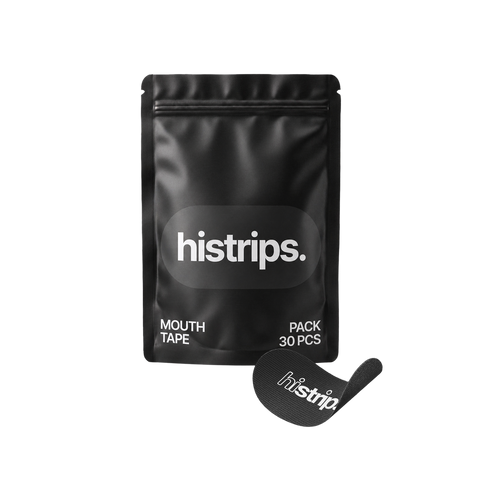
This is where HiStrips can be positioned naturally: not as a miracle medical solution, but as a premium breathing optimization tool for people who want stronger adhesive, comfortable all-night wear, athlete-grade performance, and a more refined overnight experience.
Final verdict: can mouth taping reduce snoring?
Yes, mouth taping can reduce snoring for some people—but only when the snoring is meaningfully related to open-mouth sleep and the person can breathe comfortably through the nose.
That is the honest answer.
It is not a cure-all. It is not a replacement for medical care. It is not a treatment for obstructive sleep apnea.
But for the right person—someone with dry mouth, open-mouth sleep, and mild snoring—it may be a useful, low-friction intervention worth testing.
The key is to approach it intelligently:
- identify the likely cause of the snoring
- screen for red flags
- use a purpose-built, skin-safe product
- judge results over multiple nights
- seek medical evaluation if symptoms suggest a deeper problem
That balance—curiosity without overclaiming—is the smartest way to use mouth taping in a premium sleep and recovery routine.
Frequently Asked Questions
Can mouth tape stop snoring completely?
It can reduce or even eliminate mild snoring in some people if open-mouth sleep is the primary trigger. But it will not stop all snoring, especially when the root cause involves nasal obstruction, body position, airway anatomy, or sleep apnea.
Why does mouth breathing make snoring worse?
Mouth breathing may allow the jaw to drop and the tongue to sit less favorably, which can make the airway less stable. That instability can increase tissue vibration and create noisier breathing during sleep.
Is mouth taping safe for everyone who snores?
No. It is not appropriate for everyone. People with suspected sleep apnea, severe congestion, breathing difficulty, or anxiety about restricted airflow should be cautious and may need medical guidance instead of self-experimentation.
Can mouth taping help with dry mouth and snoring at the same time?
Yes, that is one of the more common reasons people try it. If your mouth opens during sleep, keeping the lips closed may reduce overnight dryness and may also reduce snoring caused by mouth breathing.
What if my snoring gets worse even with mouth tape?
That suggests mouth opening may not be the main driver, or your nasal breathing may not be good enough to support the method. Stop the experiment and consider other causes, especially if there are any signs of sleep-disordered breathing.
Should I use mouth tape every night?
Only if it feels comfortable, your nasal breathing is clear, and it appears to help. There is no reason to force nightly use if it creates irritation, anxiety, or no measurable benefit.


Leave a comment
This site is protected by hCaptcha and the hCaptcha Privacy Policy and Terms of Service apply.