


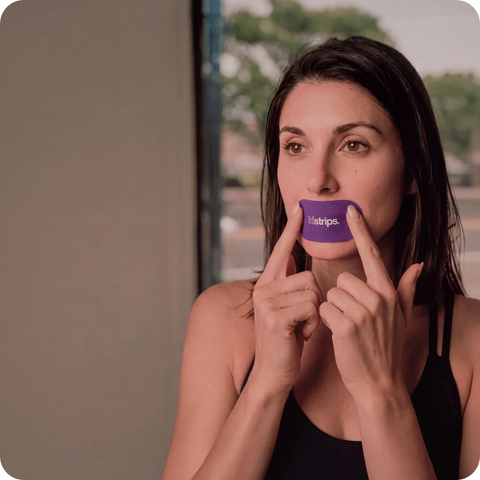




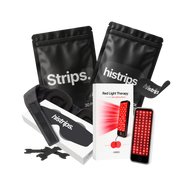

The recovery industry will sell you a cryotherapy pod for £50,000 or a hyperbaric oxygen chamber for your spare bedroom. And while those tools have their place, the most consistent, evidence-backed, and dramatically underutilised recovery intervention costs less than your morning flat white.
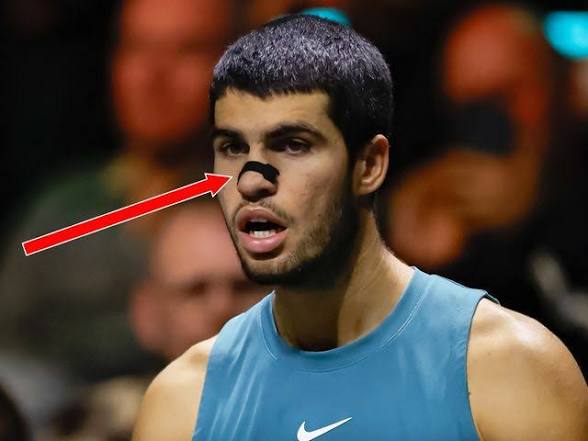
More than 20 Olympic athletes use it. Professional cyclists on WorldTour teams use it. Grand Slam tennis players use it. And the overwhelming majority of serious recreational athletes have never tried it.
We're talking about nasal strips — and more specifically, the breathing protocol they enable.
What Recovery Actually Is
Recovery isn't just rest. It's a cascade of active physiological processes: muscle protein synthesis, glycogen replenishment, hormonal rebalancing, neurological restoration, and sleep architecture. All of these processes require one thing above all else: efficient oxygen delivery.
Your body's ability to repair and adapt depends on cellular respiration — the process by which cells use oxygen to generate the energy needed for repair. Anything that impairs oxygen delivery — poor sleep quality, restricted breathing, elevated nighttime stress — directly impairs your capacity to recover.
This is why breathing isn't just a performance lever. It's a recovery lever.
The Sleep-Recovery Connection
The majority of physical recovery happens during sleep. Growth hormone — the primary driver of tissue repair — is released in pulses during deep, slow-wave sleep. Protein synthesis accelerates. Inflammatory markers reduce. The nervous system downregulates from training stress.
But here's the thing: none of this happens efficiently if your sleep is fragmented, shallow, or disrupted by poor breathing. Mouth breathing during sleep reduces blood oxygen saturation, triggers sympathetic nervous system activity, and prevents you from reaching — and staying in — the deep sleep stages where real recovery occurs.
In other words, if you're mouth breathing at night, you're leaving recovery on the table every single night.
Nasal Breathing and Nitric Oxide
The nose is a nitric oxide generator. As air passes through the nasal sinuses, nitric oxide is released into the airstream and inhaled directly into the lungs, where it causes bronchodilation — widening of the small airways — and vasodilation — widening of blood vessels. The result is better oxygen delivery to every tissue in the body.
This isn't a marginal effect. Nasal-derived nitric oxide has been shown to improve lung oxygen uptake by up to 18%. For recovery, this means more oxygen reaching damaged muscle tissue, faster clearance of metabolic waste products, and a more efficient repair process while you sleep.
The Cyclists Who Know the Secret
Professional cycling teams operate at the bleeding edge of human performance science. Marginal gains are the philosophy — the aggregation of every small advantage into a significant performance and recovery edge.
HiStrips is used by cyclists competing at the highest levels of professional road cycling. These are athletes who have access to altitude tents, sports scientists, and recovery protocols that cost millions to develop. They've chosen nasal strips as part of their stack — not instead of the other interventions, but alongside them — because nasal breathing during sleep demonstrably improves the quality of recovery.
That's not marketing. That's a performance team making decisions based on measured outcomes.
The Active Recovery Dimension
Recovery isn't only what happens while you sleep. Active recovery — low-intensity movement, Zone 1-2 cardio, mobility work — is designed to increase blood flow and accelerate the clearance of metabolic byproducts. The effectiveness of active recovery depends heavily on the quality of breathing during it.
Nasal breathing during active recovery keeps the nervous system in a parasympathetic (rest-and-digest) state, in contrast to mouth breathing which can tip you back toward a sympathetic stress response. Maintaining nasal breathing during your recovery walk, easy bike, or mobility session deepens the recovery stimulus and primes the body more effectively for the next training session.
How to Use Nasal Strips for Recovery
The protocol is straightforward:
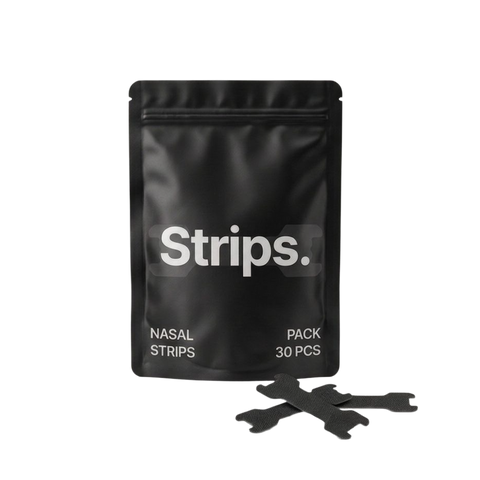
- Every night: Apply a HiStrips nasal strip before sleep. This is the non-negotiable baseline. Better breathing during sleep = better recovery. Full stop.
- During active recovery sessions: Wear HiStrips during your easy-effort recovery cardio or mobility work. Maintain nasal breathing throughout to keep the nervous system in recovery mode.
- Post-competition: Apply HiStrips immediately after competition or a hard training session to support the transition from sympathetic to parasympathetic state as quickly as possible.
The Cost-Benefit Calculation
A single HiStrips strip costs less than your post-workout coffee. The upside? Better sleep architecture, improved oxygen delivery during overnight recovery, faster muscle repair, and compounding adaptation gains over every training block of your year.
The 20+ Olympic athletes using HiStrips didn't get there by ignoring low-cost, high-impact interventions. They got there by stacking them.
You don't need to train like an Olympian to benefit from recovering like one.
Start tonight with HiStrips — the recovery tool that elite athletes don't talk about because they don't want you to catch up.
Ready to Try HiStrips?
Shop our most popular nasal strips:
- Black Nasal Strips — Most popular, extreme hold
- White Nasal Strips — Clean aesthetic
- Magnetic Nasal Strips — Reusable, up to 360 uses


Leave a comment
This site is protected by hCaptcha and the hCaptcha Privacy Policy and Terms of Service apply.