


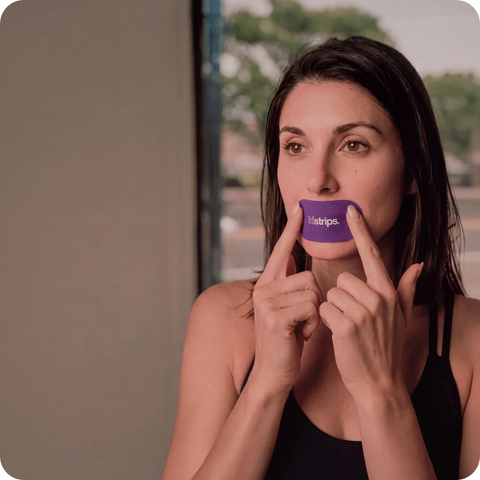





If you've watched professional cycling recently, you've noticed something. More and more riders — including those on one of the world's most technologically advanced teams — are crossing finish lines with a small adhesive strip across their nose.
It's not a medical device. It's not mandatory equipment. It's a performance choice. And when Team Visma makes a performance choice, the cycling world pays attention.
What Team Visma Knows About Breathing That Most Cyclists Don't
Professional cycling teams are among the most data-driven organizations in sport. They optimize everything: aerodynamics, nutrition timing, altitude camps, recovery protocols, sleep environments. Nothing is left to chance.
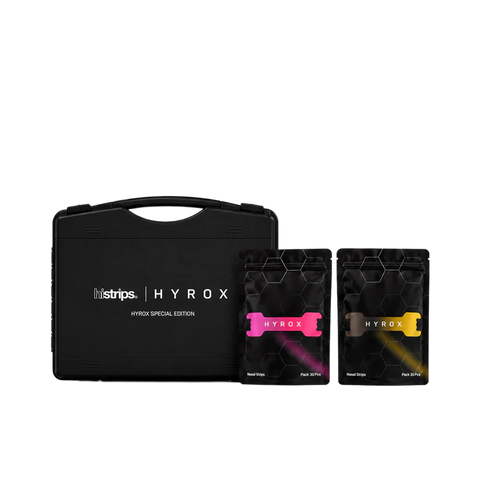
When Team Visma adopted HiStrips nasal strips as part of their race-day and recovery protocol, it wasn't a sponsorship decision — it was a performance decision rooted in physiology.
Here's the science they were responding to.
The Nasal Valve Problem in High-Intensity Cycling
The external nasal valve — the soft cartilage at the front of your nose — is the narrowest point of the nasal airway. Under the negative pressure created by fast, deep breathing, this valve tends to collapse inward, increasing nasal resistance at exactly the moment you need airflow most.
This is called external nasal valve collapse, and it's more common than most athletes realize. Studies estimate it affects 13–36% of the population to a clinically significant degree — but subclinical resistance affects virtually everyone during maximal aerobic effort.
The consequence: at high cycling intensities, your respiratory system switches to mouth breathing not because it's optimal, but because nasal resistance makes it feel necessary.
Why Mouth Breathing Is Suboptimal for Cyclists
Mouth breathing during cycling has several measurable disadvantages:
- No nitric oxide production. Nitric oxide — produced almost exclusively in the nasal sinuses — is a vasodilator that improves oxygen delivery to working muscles. Mouth breathing bypasses this entirely. Research has shown that nasal breathing can increase oxygen uptake by 10–15% compared to mouth breathing at equivalent workloads.
- Reduced CO2 tolerance. Mouth breathing tends toward hyperventilation, dropping CO2 levels and triggering the Bohr effect — making oxygen less available to muscles even when blood oxygen saturation is normal.
- Higher respiratory effort. The increased effort of breathing through a high-resistance nasal passage, or the inefficiency of mouth breathing, both divert energy from locomotion.
- Faster dehydration. Mouth breathing dramatically increases respiratory moisture loss — relevant for multi-hour cycling efforts in hot conditions.
How HiStrips Address the Problem
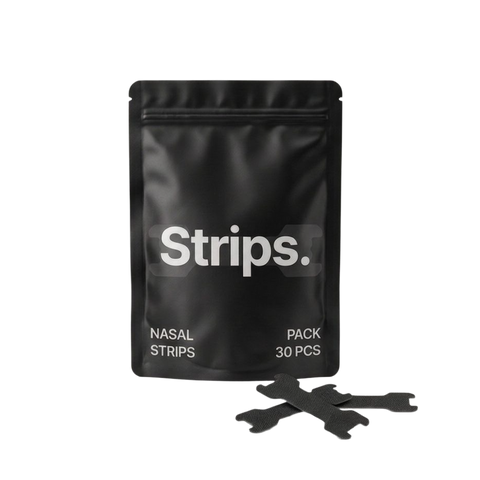
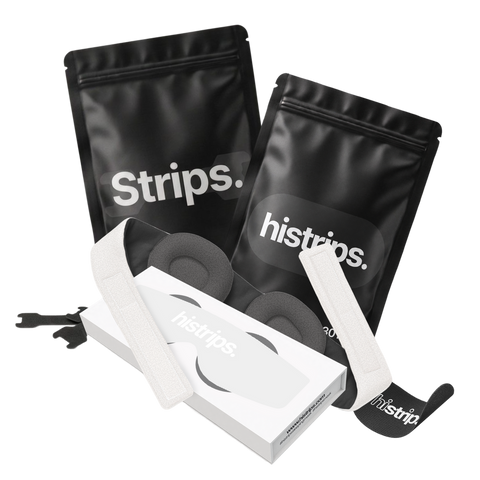
HiStrips work as an external nasal dilator — the adhesive band acts as a spring that gently lifts the nasal valve open, counteracting the inward collapse caused by inspiratory negative pressure.
The mechanism is simple, the physics are reliable, and the result is measurable: up to 31% more nasal airflow with the strip applied compared to without.
For cyclists, this means:
- Nasal breathing remains viable at higher power outputs
- Nitric oxide production is maintained during sustained efforts
- CO2 regulation stays more stable, improving oxygen delivery to muscles
- Perceived exertion decreases at equivalent power outputs
The Recovery Application
Team Visma's use of HiStrips isn't limited to race day. Stage racing — where riders compete for 3 weeks across 21 stages — places extreme demands on recovery. Sleep quality between stages becomes a critical competitive variable.
HiStrips worn during sleep optimize nasal breathing through the night, improving sleep stage architecture and HRV recovery scores. For riders completing 6+ hour stages at altitude, the compounding recovery benefit of better sleep breathing across a 3-week race can be significant.
Practical Application for Amateur Cyclists
You don't need to be racing the Tour to benefit from the same principles Team Visma applies.
For training rides: Apply HiStrips before any session over 45 minutes. Notice whether you can sustain nasal breathing longer and at higher intensities than without.
For long sportives and gran fondos: HiStrips are legal in all amateur competition and should be considered standard race-day equipment alongside your helmet, kit, and nutrition.
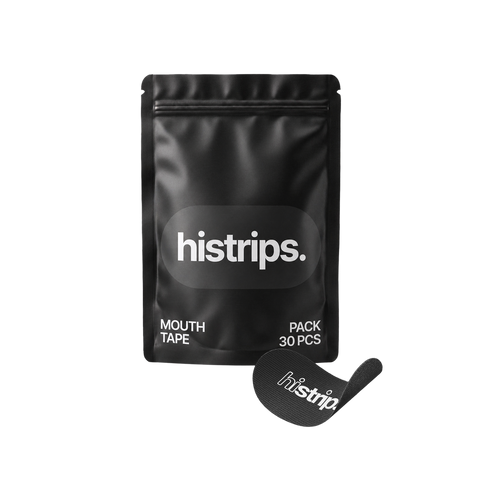
For recovery: Wear HiStrips every night during heavy training blocks. Combine with cotton mouth tape for full nasal breathing optimization during sleep.
For altitude training camps: Nasal breathing optimization is especially valuable at altitude, where oxygen partial pressure is lower and every percentage point of efficiency matters.
The professionals have already done the testing. The science explains why it works. The only question left is whether you'll adopt the same tools.
Train like a professional. Breathe like one too. Shop HiStrips →




Leave a comment
This site is protected by hCaptcha and the hCaptcha Privacy Policy and Terms of Service apply.