







Breathing Under the Helmet: How MotoGP Riders Use HISTRIPS Nasal Strips to Win
Nobody talks about what happens to your breathing inside a MotoGP helmet at full speed. They should. MotoGP breathing is one of the most underexplored performance factors in the world's premier motorcycle racing series — and HISTRIPS nasal strips are the quiet tool that elite riders are using to gain an edge where it matters most: inside their own physiology.
What Really Happens to Your Breathing in a MotoGP Helmet
A MotoGP helmet is an engineering marvel. It protects riders at 300km/h through crashes that would be fatal without it. But from a pure respiratory standpoint, it creates a semi-closed breathing environment that systematically works against optimal oxygen intake.
Even the most advanced MotoGP helmets — with sophisticated ventilation systems and aerodynamic airflow channels — create conditions that challenge the body's breathing mechanics:
- Warm, humid air recirculates inside the helmet — expelled breath creates a humid micro-environment, raising the effort required to extract oxygen from each breath cycle.
- CO₂ builds up faster with mouth breathing — the semi-enclosed space means carbon dioxide accumulates more rapidly than in open air, amplifying the negative effects of inefficient breathing patterns.
- Nasal breathing delays CO₂ buildup — but only when the nasal passages are fully open and unobstructed, allowing the maximum volume of fresh air per breath.
- Helmet temperature — internal temperatures can exceed 40°C in summer races, making every breath warm and dense, increasing respiratory effort throughout the race.
This is the environment that riders like Aleix Espargaró — one of the most fitness-focused riders in the MotoGP paddock, known for his meticulous physical preparation with Aprilia — navigate for 45 uninterrupted minutes. At this level, breathing optimisation is not a wellness trend. It is a performance imperative.
The Lap-by-Lap Breathing Challenge of MotoGP Racing
MotoGP racing is not a uniform cardiovascular effort. Each lap is a sequence of distinct physical demands, each imposing different challenges on the rider's breathing:
Maverick Viñales, the Aprilia rider renowned for his mental preparation and ability to read races with tactical precision, represents exactly the type of competitor for whom breathing optimisation is a natural extension of performance preparation. At that level of cognitive demand, the difference between a sharp mind and a fatigued one can be measured in tenths of a second.
Rising star Pedro Acosta — the KTM/GasGas sensation who has already demonstrated the raw speed and mental composure of a future world champion — is part of a generation of MotoGP riders who approach preparation scientifically. Cognitive sharpness mid-race is directly tied to oxygen delivery. Nasal breathing under a helmet is how you protect that delivery system.
How HISTRIPS Nasal Strips Solve the Helmet Breathing Problem
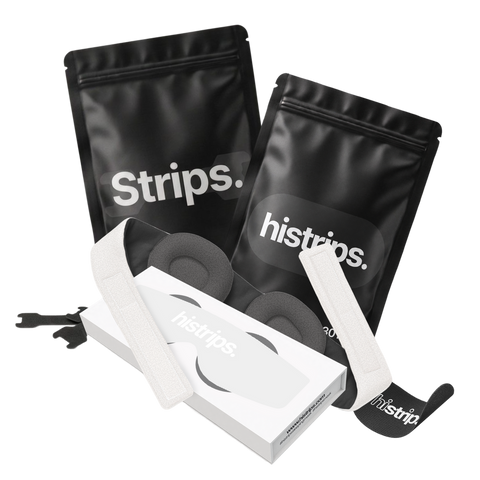
HISTRIPS addresses the fundamental bottleneck in motorsport breathing: nasal passage restriction. When the nasal passages are compressed — by helmet fit, adrenaline-induced congestion, or anatomical narrowing — the body's most efficient breathing pathway becomes limited. The result is a forced switch to mouth breathing that undermines performance at every level.
The HISTRIPS mechanism is elegantly simple:
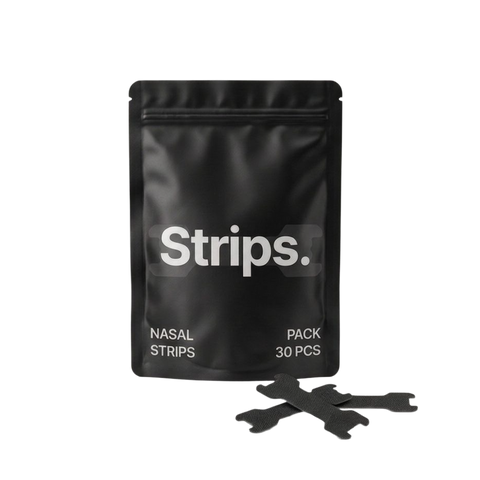
- Mechanical dilation, not pharmacological — HISTRIPS physically widens the nasal passages using a spring-loaded adhesive strip. No drugs. No side effects. No prohibited substances.
- 40%+ airflow improvement — the strip opens the nasal passages beyond their natural resting state, delivering measurably more oxygen per breath and reducing CO₂ buildup inside the helmet environment.
- Zero cognitive load — the rider does not think about it. It works passively from the moment it is applied to the moment the helmet comes off. There is no technique to practise, no protocol to follow.
- Applied in minutes — HISTRIPS is applied as part of the pre-race routine, after the helmet fitting check. It stays in place through sweat, heat, and the physical forces of racing.
- Tested adhesive for intense athletic use — unlike standard nasal strips, HISTRIPS maintains bond strength throughout the entire race distance, ensuring consistent performance from warm-up to cool-down.
What makes HISTRIPS particularly valuable in motorsport is that it requires nothing from the rider. In a discipline where cognitive bandwidth is constantly at maximum, adding even one more thing to think about is a cost. HISTRIPS eliminates that cost entirely. Better breathing is automatic.
Veterans like Brad Binder — the KTM factory rider whose consistency and racecraft have made him one of the most respected competitors in the paddock — and Johann Zarco, whose experience across multiple factory programmes has given him deep insight into performance optimisation, represent the type of athlete who understands that the simplest interventions are often the most powerful.
MotoGP Riders and the Breathing Performance Edge
The modern MotoGP paddock is one of the most data-rich sporting environments on the planet. Teams deploy telemetry systems that track hundreds of variables per second. Riders work with performance coaches who monitor heart rate variability, sleep quality, and body composition. The margins that elite competitors pursue are invisible to most observers.
Breathing optimisation sits in this category. It is not flashy. It does not generate headlines. But for riders operating at 300km/h, where the gap between the front row and seventh place in qualifying is often measured in two tenths of a second — the cumulative effect of cleaner, more efficient breathing across 25 laps represents a genuine competitive advantage.
Riders like Aleix Espargaró and Maverick Viñales are known across the paddock for their obsession with physical preparation. Espargaró in particular has spoken publicly about the role that fitness and body control play in his racing longevity. Breathing is part of that toolkit — and nasal breathing optimisation under a helmet is one of its most direct practical applications.
Understanding that cognitive sharpness mid-race is directly tied to oxygen delivery is not a new insight. It is fundamental exercise physiology. What HISTRIPS provides is the simplest possible way to protect and maximise that oxygen delivery in the specific environment of MotoGP racing — where the standard rules of breathing are reversed by a full-face helmet, extreme heat, and relentless physical demand.
"The helmet keeps you safe. HISTRIPS keeps you sharp."
How to Use HISTRIPS on Race Day
Integrating HISTRIPS into a MotoGP race day preparation routine takes less than two minutes and requires no modification to any existing protocol:
- Helmet fitting check — complete your normal pre-race helmet fitting and safety checks as usual. HISTRIPS is applied after this stage.
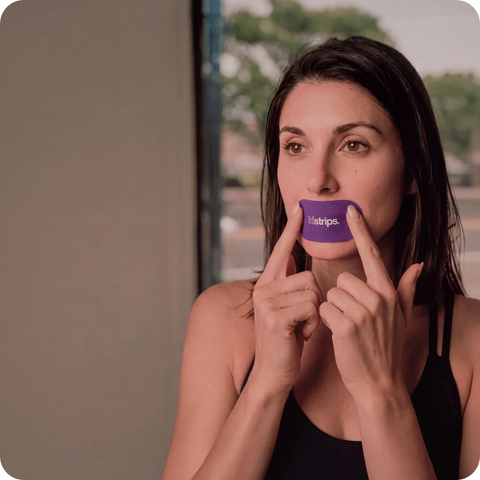
- Apply HISTRIPS — clean and dry the bridge of your nose. Apply the strip centrally across the nostrils. Press firmly along the full length to activate the adhesive.
- Warm-up lap — helmet on. The strip is already working. Nasal passages are dilated. Breathing is optimised from the moment the visor comes down.
- Race distance — HISTRIPS remains in place for the full race distance, regardless of sweat, heat, or physical exertion. No maintenance required.
- Post-race recovery — HISTRIPS continues to support nasal breathing during cool-down, accelerating the physiological recovery process as heart rate and core temperature return to baseline.
The strip doubles as a recovery tool post-race. Nasal breathing activates the parasympathetic nervous system — the body's physiological recovery mode — more effectively than mouth breathing. Keeping HISTRIPS on during the cool-down lap and the immediate post-race period supports faster physiological recovery between sessions.


Leave a comment
This site is protected by hCaptcha and the hCaptcha Privacy Policy and Terms of Service apply.