






Athlete Stories
From Struggling to Podium: How HiStrips Transformed My Race Performance
A HYROX competitor shares how switching to HiStrips changed the way they approach race-day breathing — and their results.
It Started with a Distraction
Every HYROX racer knows the feeling: you are deep into a workout, your heart rate is at its ceiling, and something is bothering you. For me, it was always my nasal strip. Sliding. Peeling. Pulling at the bridge of my nose. By lap 3 of the run between stations, I was tweaking it instead of pushing.
I thought it was just something you dealt with. Race conditions are harsh. Strips fail. You adapt. I kept adapting — until I stopped and asked myself why I was accepting a problem that should not exist.
The Real Cost of a Failing Strip
I decided to track it. In my three races before switching to HiStrips, I noted every time I adjusted or replaced a strip mid-workout. The average: four interventions per race. Each one cost roughly 3–5 seconds of lost focus and a small but measurable spike in heart rate as I reset my breathing.
More importantly: I noticed my nasal breathing collapsed earlier in races than it should have. The strip failure pushed me into mouth breathing faster — and that accelerated my aerobic fatigue.
Switching to HiStrips
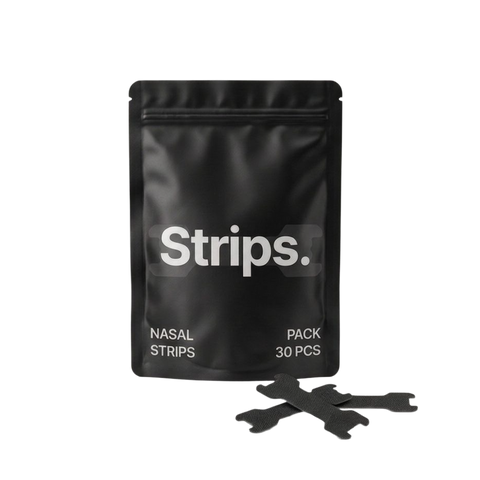
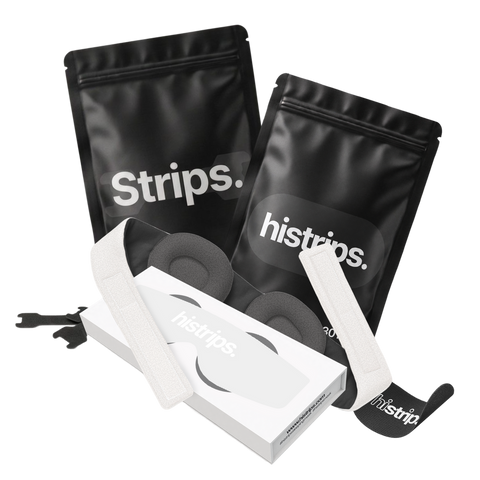
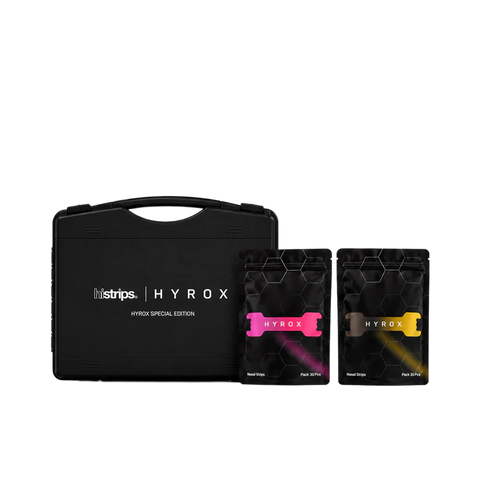
A fellow competitor mentioned HiStrips during training. The pitch was simple: the world's strongest adhesive, medical-grade comfort, engineered for performance. I was sceptical — I had tried other "performance" strips before and been disappointed.
What convinced me to try was the specific claim about adhesive. Not "stronger adhesive" in a marketing sense — but a proprietary formulation designed to maintain its bond under the exact sweat and movement conditions of a HYROX race. That is a specific engineering claim, not a general wellness claim.
Race Day Results
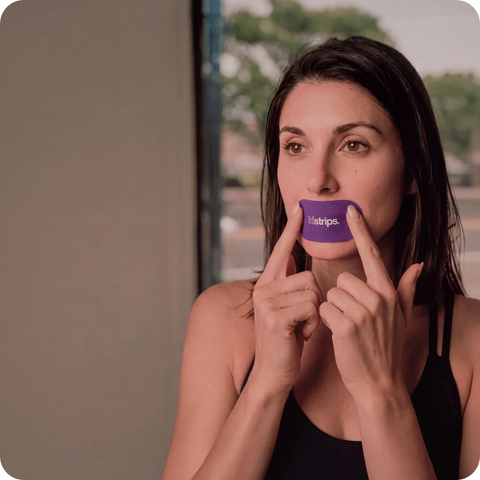
The difference was immediately obvious. My HiStrips stayed exactly where I applied them from the start gun to the finish line. No adjusting. No peeking. No readjustment between stations. I forgot the strip was there — which is exactly the point.
More importantly: I maintained nasal breathing through the entire race. My aerobic engine felt more consistent. The wall ball station — previously my biggest breathing struggle — felt more manageable because my airway was clear and reliable throughout.
My time that race was a personal best. I attribute a meaningful part of that improvement to the mental and physical consistency that HiStrips gave me on race day.
What I Would Tell Every Athlete
If you are using a generic nasal strip in HYROX or any high-intensity race, you are leaving performance on the table. Not because of the nasal dilation itself — but because a failing strip becomes a distraction, a physical problem, and an aerobic liability all at once.
HiStrips eliminated that entirely. For the first time, my nasal strip was not a variable I had to manage. It was simply a reliable part of my race kit that worked — every time, from warm-up to podium.


Leave a comment
This site is protected by hCaptcha and the hCaptcha Privacy Policy and Terms of Service apply.