







If you've been shopping for nasal strips recently, you've probably seen two main categories: traditional adhesive strips and the newer magnetic variants. Both claim to open your nasal passages. But how do they actually work, and which is better? Here's an honest comparison.
How Adhesive Nasal Strips Work
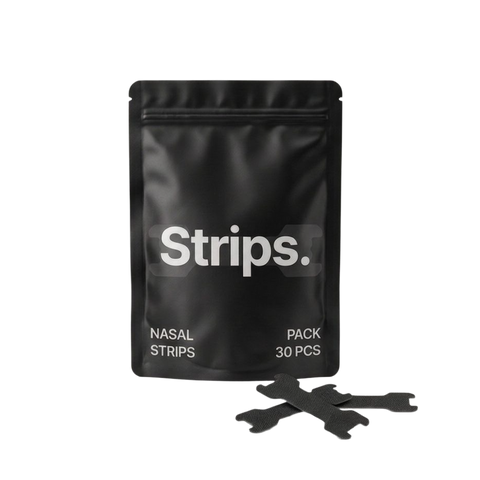
Adhesive nasal strips use a spring-like band — typically a thin strip of plastic or composite material — that adheres to the outside of your nose. When the strip adheres across the bridge of your nose, the tension in the band gently pulls the nasal passages open from the outside. It's a purely mechanical mechanism: the strip physically holds the nostril open by pulling the outer skin.
This approach has been used for decades and is well-understood. Adhesive strips are disposable, single-use devices. They work immediately upon application and require no learning curve or adjustment.
How Magnetic Nasal Strips Work
Magnetic nasal strips use small magnets placed inside the nostrils or against the sides of the nose. The idea is that the magnets create a magnetic field that supposedly "opens" nasal passages without physical adhesion. Some magnetic devices look like small clips that sit just inside the nostrils.
The claim is that magnetism somehow relaxes nasal tissue or improves airflow through a not-quite-explained mechanism. The evidence base for magnetic nasal devices is considerably weaker than for mechanical adhesive strips. There is no robust clinical evidence that magnets provide meaningful nasal dilation in the same way that physical spring tension does.
The Evidence on Effectiveness
Adhesive nasal strips have been studied extensively. Multiple peer-reviewed studies confirm they measurably increase nasal cross-sectional area and reduce airflow resistance. They perform reliably across different nose shapes and sizes.
Magnetic devices, by contrast, have limited clinical validation. The proposed mechanisms of action are not well-supported by the research literature. Anecdotal reports are mixed, and there's no standardized magnetic device with the same level of empirical support as adhesive strips.
Practical Differences for Athletes
Adhesive strips are disposable, inexpensive, and easy to use anywhere. They work on every workout without needing to clean or store a device. Magnetic devices require insertion, cleaning, and careful storage. For athletes who want a reliable, no-fuss solution before every workout, adhesive strips are far more practical.
Additionally, magnetic devices may shift or fall out during high-movement activities, while a well-adhered strip stays in place.
HiStrips: Engineered Adhesive Performance
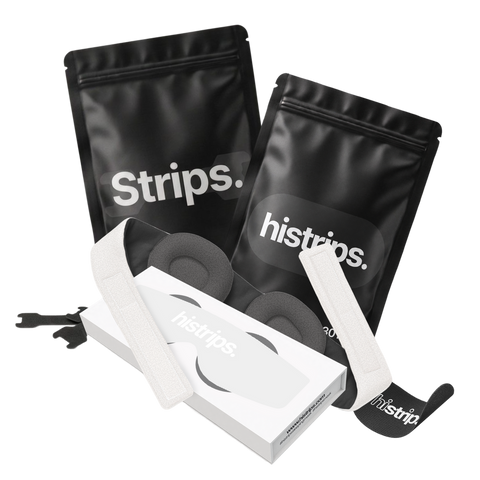
HiStrips focus on the approach with the strongest evidence: engineered adhesive strips with precise spring tension. Rather than chasing unproven magnetic mechanisms, HiStrips delivers proven mechanical dilation through medical-grade construction. For athletes who want reliable results every time they work out, HiStrips is the straightforward, evidence-backed choice.


Leave a comment
This site is protected by hCaptcha and the hCaptcha Privacy Policy and Terms of Service apply.