






Performance Science
The Science of Nasal Breathing for Athletes: Why Every Breath Counts
Understanding how nasal airflow drives VO₂ max, race endurance, and recovery — and why HiStrips are engineered to maximise every inhale.
Why Your Nose Matters More Than Your Mouth
Most athletes think about what they eat, how they train, and when they rest — but neglect the most basic element of performance: how they breathe. The nasal cavity is far more than a passive airway. It is a precision instrument for athletic efficiency.
When you breathe through your nose, the air is filtered, warmed, and humidified before it reaches your lungs. Nitric oxide — a potent vasodilator produced in the nasal sinuses — is released into each inhalation, dilating blood vessels and improving oxygen delivery to working muscles.
Studies in the Journal of Sports Science and Medicine found that nasal breathing during moderate exercise reduced heart rate and improved expired air efficiency compared to mouth breathing. For athletes competing in events lasting 60 minutes or more, this compounds into a meaningful performance edge.
Nasal Strips and Airway Resistance
Nasal airway resistance is a measurable barrier to airflow. Even mild congestion or structural narrowness in the nasal passage can reduce effective oxygen intake by 10–25% during maximal effort. HYROX athletes breathing at 85–95% of max heart rate need every cubic centimetre of airway they can get.
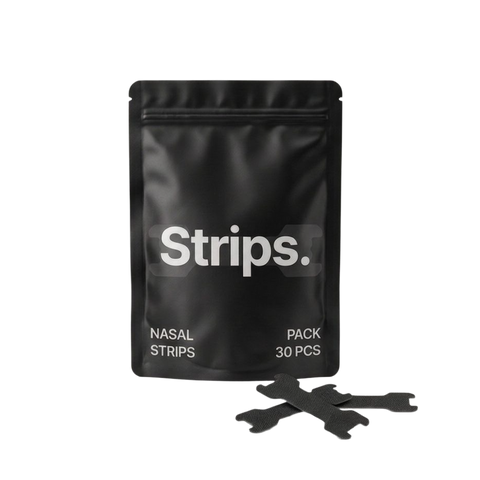
External nasal dilator strips — like HiStrips — work by physically propping open the nasal valve area, the narrowest part of the nasal airway. Laboratory studies (using peak nasal inspiratory flow meters) consistently show that properly applied nasal strips reduce airway resistance by 20–30% in individuals with septal deviation or narrow nasal anatomy.
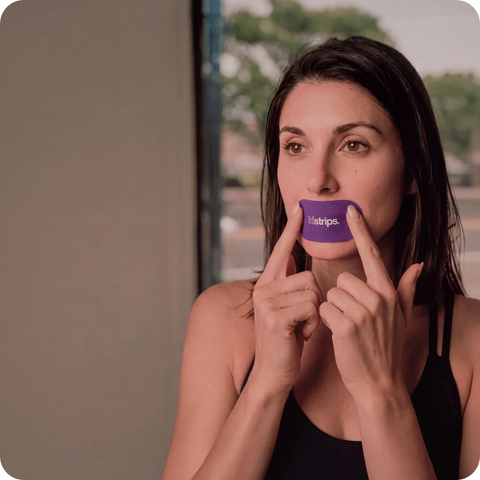
The key word is properly applied. Most generic strips fail under sweat and movement. HiStrips uses a high-tack adhesive that maintains optimal strip position throughout extended high-intensity effort, ensuring the airway stays open when it matters most.
The Performance Cost of Mouth Breathing During Exercise
Mouth breathing bypasses nasal filtration and nitric oxide delivery. During high-intensity exercise, mouth breathing is a compensatory mechanism — not an advantage. Athletes who rely on mouth breathing too early in a race are burning through their aerobic efficiency faster than those who maintain nasal breathing.
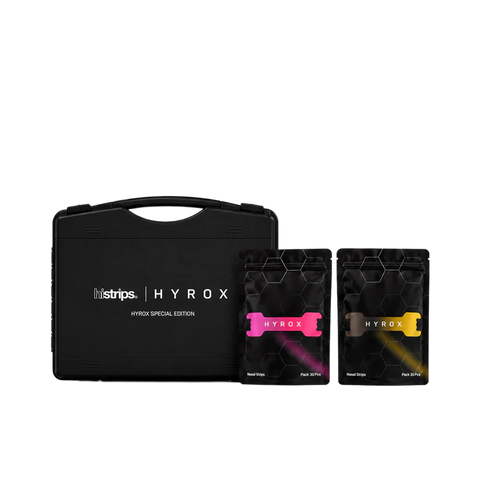
For HYROX racers, the sled push and wall balls are the moments where breathing technique breaks down most visibly. An athlete whose nasal strip has failed at lap 1 enters the wall ball station already compromised — with less oxygen available for the hardest movements of the race.
What HiStrips Does Differently
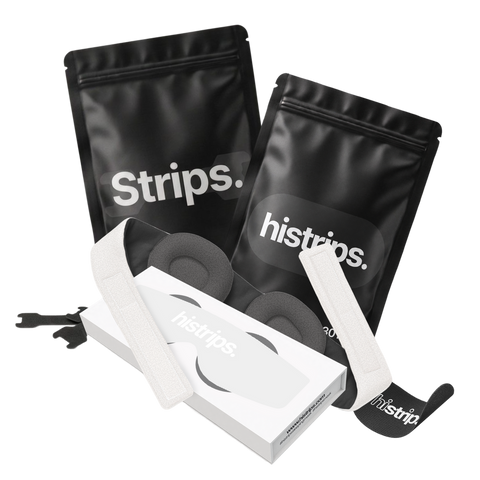
HiStrips were engineered from the ground up for athletic performance. The proprietary adhesive maintains a secure bond on moist, sweating skin for the full duration of a HYROX race. The strip material flexes naturally with facial movement without peeling or lifting.
The result: consistent nasal dilation from the first burpee to the final line. Athletes who previously struggled with strip failure can finally trust their breathing support through the most demanding race conditions.
The Bottom Line
Nasal breathing is not a soft wellness concept. It is a measurable performance variable. Every breath you take through your nose during a race delivers more oxygen to your muscles, more efficiently, than mouth breathing alone. Adding HiStrips to your race-day kit removes the structural bottleneck in your nasal airway and gives you the full benefit of nasal breathing throughout your entire performance.
When every breath counts — HiStrips keeps them coming.


Leave a comment
This site is protected by hCaptcha and the hCaptcha Privacy Policy and Terms of Service apply.