













Why Does My Mouth Stay Open When I Sleep?
Waking up with your mouth open is one of the most common complaints related to sleep breathing — and the question of why it happens is more interesting than most people expect. The answer involves a combination of anatomy, muscle tone, and habit.
The Mechanics of Mouth Opening During Sleep
During sleep, the muscles that maintain tone in the jaw, tongue, and throat relax significantly. This is normal — the body shifts into a state where it does not consciously maintain posture. In people who are habitual mouth breathers, the combination of relaxed jaw muscles and an open or compromised nasal airway creates the path of least resistance for airflow: the mouth.
The Habit Loop
Once mouth breathing during sleep becomes habitual, it is self-reinforcing. Chronic mouth breathing can cause the soft tissues of the palate and pharynx to adapt in ways that further narrow the nasal airway — creating a cycle. The more you mouth breathe, the more likely your nasal passages are to become restricted, and the more you breathe through your mouth.
Nasal Congestion as a Cause
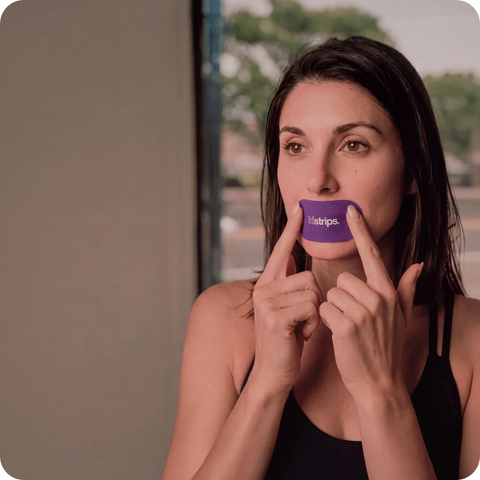
Often the initial trigger for mouth breathing during sleep is nasal congestion — from allergies, a deviated septum, sinus infections, or environmental irritants. If your nasal passages are blocked, the mouth opens as a compensatory mechanism. Mouth tape does not address this underlying congestion — but once the congestion is treated, mouth tape can help retrain the overnight breathing pattern.
Breaking the Habit
Mouth tape addresses the symptom (open mouth overnight) without addressing the root cause (nasal airway issues or poor tongue posture). The most effective approach is to treat any nasal congestion first, then use HiStrips Mouth Tape as a retraining tool to establish the new habitual pattern of nasal breathing during sleep.


Leave a comment
This site is protected by hCaptcha and the hCaptcha Privacy Policy and Terms of Service apply.