


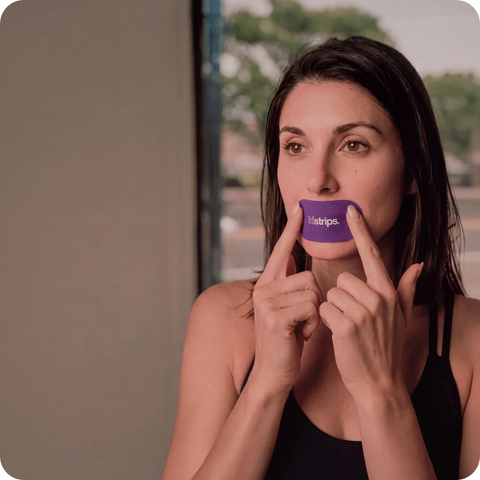
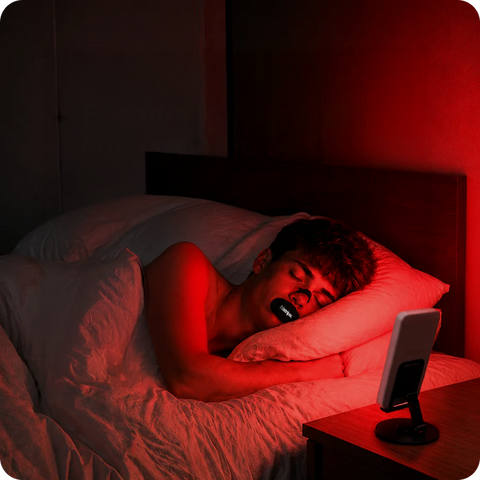



Waking up with a dry, sticky mouth is one of the most common and most ignored sleep complaints. It's uncomfortable, it's bad for your teeth, and it's a clear signal that something isn't right with your nighttime breathing.
The Primary Cause: Mouth Breathing
In the vast majority of cases, dry mouth on waking is caused by mouth breathing during sleep. With your mouth open for hours, saliva evaporates, oral bacteria multiply, and your throat and gums dry out. Saliva is your mouth's defence system — it buffers acid, kills bacteria, and remineralises enamel. Without it overnight, dental erosion and gum disease risk increase significantly.
Why You're Mouth Breathing
- Nasal congestion from allergies, colds, or anatomy
- High nasal airflow resistance — even without noticeable congestion
- Habit from years of suboptimal breathing
- Sleeping on your back
The Fix: Open Your Nose
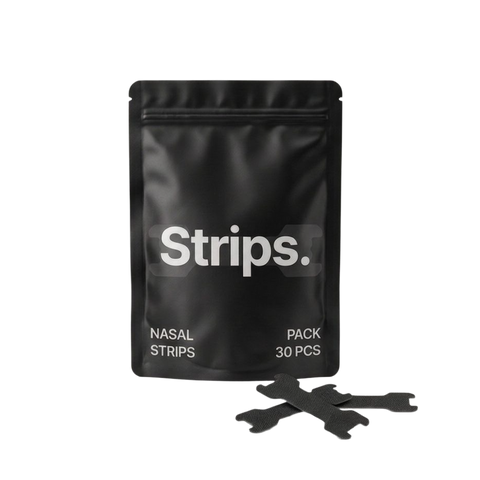
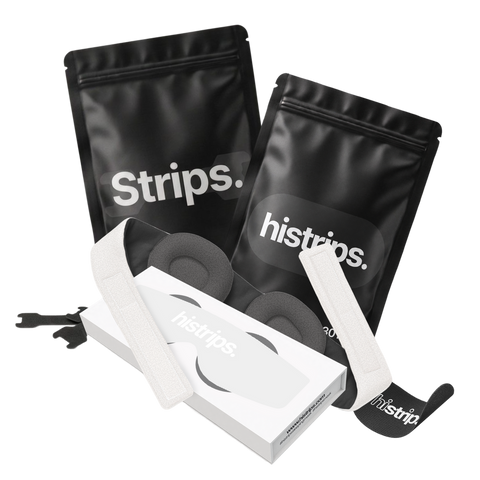
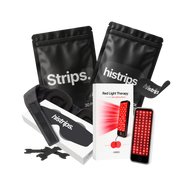
The simplest and most effective solution is to reduce nasal resistance so your body naturally chooses nasal breathing. HiStrips do exactly this — physically dilating the nasal valve to make nasal breathing the path of least resistance even during deep sleep. Most people notice the difference on the very first morning: no dry mouth, clearer head, fresher breath.
FAQ
Is dry mouth on waking bad for my teeth?
Yes. Chronic dry mouth increases risk of cavities, enamel erosion, and gum disease. It's worth fixing for dental health alone.
Can it cause bad breath?
Directly. Dry mouth lets bacteria proliferate overnight, producing the sulphur compounds that cause morning breath. Fix the mouth breathing, fix the breath.
How quickly will nasal strips fix my dry mouth?
Usually the first night. Switch to nasal breathing and you'll wake with a properly hydrated mouth.
Wake up refreshed. Try HiStrips tonight — your mouth will thank you.


Leave a comment
This site is protected by hCaptcha and the hCaptcha Privacy Policy and Terms of Service apply.