




Does Mouth Taping Help Sleep Apnea?
Short answer: mouth taping is not a treatment for sleep apnea. In some people, it may support nasal breathing and reduce dry mouth when mouth breathing is the issue. But if you suspect obstructive sleep apnea, snoring with breathing pauses, gasping, or daytime exhaustion, you need a proper medical evaluation rather than a strip of tape.
Quick answer box
>
Can mouth taping fix sleep apnea? No. Mouth taping does not treat the airway collapse that defines obstructive sleep apnea.
>
Can it help some symptoms around sleep? Sometimes. It may help reduce mouth breathing, dry mouth, and noisy open-mouth sleeping in people who can breathe comfortably through the nose.
>
Is it appropriate if you suspect sleep apnea? Not as a substitute for diagnosis or treatment. Suspected sleep apnea warrants evaluation by a qualified clinician.
Sleep optimization content online often treats mouth taping like a universal sleep hack. That is too simplistic, especially when the conversation turns to sleep apnea.
Sleep apnea is not just “bad sleep” or “snoring.” It is a disorder involving repeated disruptions in breathing during sleep. Mouth taping, by contrast, is simply a method intended to encourage lips-closed sleep and nasal breathing. Those are very different things.
This matters because many people who wake up tired, snore loudly, or have dry mouth assume one tool must solve the whole problem. In reality, there is a critical distinction between:
- supporting nasal breathing habits, and
- treating a sleep-related breathing disorder.
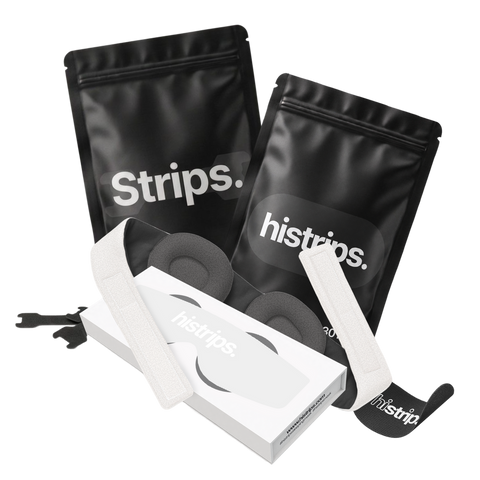
This article explains that distinction clearly. You will learn what sleep apnea is, what mouth taping may and may not do, who should be cautious, what evidence-informed logic supports nasal breathing, and how to think about premium mouth tape products such as HiStrips in a responsible, non-medical way.
What Is Sleep Apnea?
Direct answer snippet: Sleep apnea is a sleep-related breathing disorder in which breathing repeatedly becomes shallow or stops during sleep. The most common form, obstructive sleep apnea, happens when the upper airway partially or fully collapses. Because the issue is airway obstruction, mouth taping cannot be considered a treatment for sleep apnea.
Sleep apnea is a condition in which breathing repeatedly pauses or is reduced during sleep. These events can lower sleep quality, fragment deep sleep, reduce oxygen levels, and leave a person feeling unrefreshed even after spending enough time in bed.
The main types of sleep apnea
1. Obstructive sleep apnea (OSA)
This is the most common form. The airway narrows or collapses during sleep, often due to relaxed throat tissues, tongue position, anatomy, body weight, congestion, alcohol use, or other factors.
2. Central sleep apnea
This involves disrupted breathing drive from the brain rather than physical airway obstruction.
3. Mixed or complex presentations
Some people have overlapping patterns or develop more complex breathing issues during treatment.
When people ask whether mouth taping helps sleep apnea, they are usually asking about obstructive sleep apnea.
Common signs of obstructive sleep apnea
- Loud habitual snoring
- Witnessed pauses in breathing
- Gasping or choking during sleep
- Morning headaches
- Dry mouth on waking
- Excessive daytime sleepiness
- Difficulty concentrating
- Unrefreshing sleep despite adequate time in bed
- Frequent nighttime awakenings
Not everyone with these symptoms has sleep apnea. But these are signs that should not be brushed off.
What Is Mouth Taping?
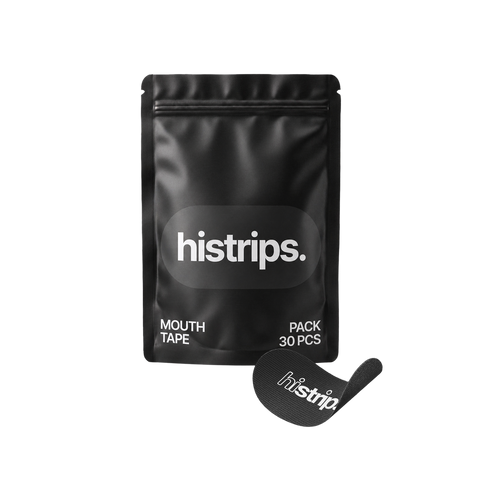
Direct answer snippet: Mouth taping is the practice of using a skin-safe strip over the lips to promote lips-closed sleep and encourage nasal breathing. It is a breathing habit tool, not a medical device for treating airway disorders such as obstructive sleep apnea.
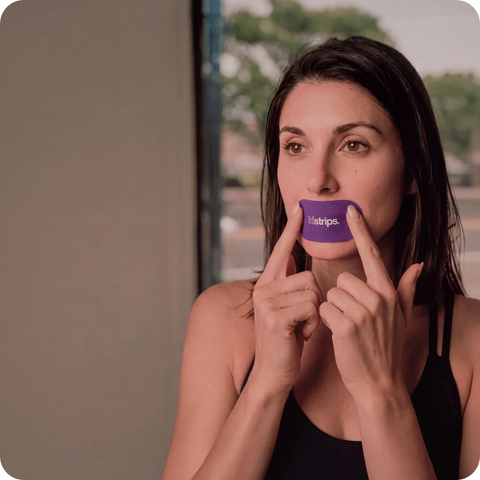
Mouth taping involves placing a gentle adhesive strip across the lips before sleep so the mouth is more likely to stay closed. The goal is to reduce open-mouth breathing and make nasal breathing the default when nasal airflow is comfortable.
At its best, mouth taping is positioned as a breathing optimization tool for the right person in the right context. It is not a cure-all. It is not a substitute for diagnosis. And it should never be framed as a treatment for sleep apnea.
Why people try it
People usually try mouth taping because they want to:
- reduce dry mouth on waking
- encourage nasal breathing at night
- improve sleep comfort
- reduce open-mouth snoring in some situations
- support a more consistent nighttime breathing pattern
That is where product quality matters. A premium strip designed for stronger adhesive, comfortable all-night wear, sensitive skin friendliness, and premium breathing optimization can improve user experience and consistency. But even the best strip cannot treat a collapsing airway.
Does Mouth Taping Help Sleep Apnea?
Direct answer snippet: Mouth taping may help some people reduce mouth breathing or dryness, but it does not treat the cause of obstructive sleep apnea. Sleep apnea involves repeated airway obstruction during sleep, and suspected apnea should be assessed medically rather than self-managed with tape.
The most accurate answer is: not as a treatment.
Mouth taping may indirectly improve a few things that coexist with poor sleep, such as open-mouth breathing, dry mouth, or noisy airflow caused by sleeping with the mouth open. But those improvements are not the same as treating sleep apnea.
Why the distinction matters
Obstructive sleep apnea is about airway collapse.
Mouth taping is about keeping the lips closed.
Those are related only in a limited way. A person can have:
- mouth breathing without sleep apnea
- sleep apnea without prominent mouth breathing
- both at the same time
If someone has actual airway obstruction during sleep, taping the mouth does not correct the underlying collapse in the throat or upper airway.
When people think it “helped”
Some people report they felt better after using mouth tape. That does not automatically mean sleep apnea improved. They may simply have:
- breathed more comfortably through the nose
- reduced overnight mouth dryness
- snored less from mouth-open airflow
- slept with fewer minor arousals related to mouth breathing discomfort
Those effects may be valuable. But they should not be confused with proven treatment of obstructive sleep apnea.
Why Nasal Breathing Still Matters
Direct answer snippet: Nasal breathing matters because the nose warms, humidifies, and filters air and often supports more comfortable, stable breathing during sleep. That can improve sleep experience for some people, but supportive nasal breathing habits do not replace medical treatment when sleep apnea is present.
It is still worth understanding why mouth taping became popular in the first place. The underlying logic is not random.
Potential advantages of nasal breathing during sleep
The nose helps:
- filter particles from incoming air
- warm and humidify airflow
- create a more comfortable breathing path
- reduce the dryness often associated with mouth breathing
- support a more natural oral posture in some people
If someone can breathe freely through the nose, lips-closed sleep may feel more stable and restorative.
What nasal breathing does not guarantee
Nasal breathing does not guarantee:
- that the throat stays open all night
- that oxygen levels remain normal
- that snoring disappears
- that apneas stop
- that fatigue has been solved
This is where social media often skips an important step. A breathing habit can be helpful without being a disease treatment.
Mouth Taping vs Sleep Apnea Treatment
Here is the simplest way to think about it:
| Topic | Mouth Taping | Sleep Apnea Treatment |
|---|---|---|
| Primary purpose | Encourage lips-closed sleep and nasal breathing | Reduce or control sleep-disordered breathing |
| What it may help | Mouth breathing, dry mouth, some mild mouth-open snoring | Airway obstruction, apneas, oxygen drops, sleep fragmentation |
| Medical treatment? | No | Yes |
| Appropriate for self-experimentation? | Sometimes, if nasal breathing is comfortable and no red flags are present | Requires medical guidance and diagnosis |
| Should replace evaluation for suspected apnea? | No | Not applicable |
That distinction should guide every decision.
Can Mouth Taping Make Sleep Apnea Riskier in Some People?
Direct answer snippet: It can be inappropriate or uncomfortable for some people, especially if they have nasal obstruction, suspected untreated sleep apnea, nighttime breathing distress, or other sleep-related breathing concerns. Anyone with apnea symptoms should speak with a clinician before experimenting with mouth taping.
Potentially, yes, which is why caution is essential.
If a person already struggles to breathe well through the nose, sealing the lips can create stress rather than relief. Even if a strip is breathable or designed for comfort, the core question remains: can this person actually maintain comfortable nasal airflow all night?
Situations that call for caution or avoidance
A person should be especially cautious if they have:
- suspected or diagnosed sleep apnea without guidance from a clinician
- chronic nasal congestion
- a deviated septum or severe nasal obstruction
- frequent nighttime gasping or choking
- significant anxiety about restricted breathing
- active illness causing blocked nasal passages
- heavy alcohol use before bed that worsens airway issues
- skin sensitivity to adhesives without appropriate product selection
Important reality check
Many people with sleep apnea already mouth-breathe because nasal airflow is poor or because their body is compensating for unstable breathing. In those cases, forcing the mouth closed is not necessarily solving the real issue.
Who Might Benefit From Mouth Taping Anyway?
Direct answer snippet: Mouth taping may be useful for adults who can breathe comfortably through the nose, mainly mouth-breathe out of habit, and want to reduce dry mouth or support nasal breathing during sleep. It makes more sense as a sleep comfort tool than as a response to suspected sleep apnea.
There is a reasonable use case for mouth taping, just not the one many people assume.
Mouth taping may be worth exploring if:
- you wake with a dry mouth but do not have red-flag sleep apnea symptoms
- you habitually sleep with your mouth open despite good nasal airflow
- you want to support nasal breathing as part of a broader sleep routine
- you are using it conservatively as a comfort tool, not a treatment claim
Product experience matters
If you are going to trial mouth taping responsibly, quality influences compliance. Premium strips are more likely to work well when they offer:
- secure hold that stays on overnight
- comfortable all-night wear
- athlete-grade performance for people who move in sleep
- skin-friendly materials for repeated use
- a design that makes consistent breathing optimization easier
That is the difference between a deliberate nightly routine and an uncomfortable DIY experiment.
Who Should Get Medical Evaluation Instead of Self-Experimenting?
Direct answer snippet: If you snore loudly, stop breathing in sleep, gasp awake, feel excessively sleepy during the day, or wake unrefreshed despite enough time in bed, you should prioritize medical evaluation. Mouth taping is not the right first response to suspected sleep apnea.
This is the most important section in the article.
Seek evaluation if you have any of the following:
- witnessed breathing pauses during sleep
- gasping, choking, or startling awake
- loud chronic snoring plus daytime fatigue
- persistent morning headaches
- excessive daytime sleepiness
- difficulty staying awake while driving or working
- high blood pressure together with sleep symptoms
- unrefreshing sleep that does not improve
A sleep-focused clinician can help determine whether testing is appropriate. That may include home sleep testing or in-lab evaluation depending on the situation.
Why People Confuse Snoring, Mouth Breathing, and Sleep Apnea
Direct answer snippet: People confuse them because they often overlap. Mouth breathing can contribute to dry mouth and noisy sleep, snoring can occur with or without apnea, and apnea can involve snoring and mouth breathing together. But they are not interchangeable problems, so they should not be treated as the same issue.
This confusion drives much of the online discussion.
Mouth breathing
A breathing pattern. Often linked to congestion, habit, anatomy, or oral posture.
Snoring
A sound created by vibration in the airway. Snoring can happen without apnea, but frequent loud snoring can also be a warning sign.
Sleep apnea
A disorder involving repeated breathing disruption during sleep.
Because these can overlap, people often assume a tool that helps one must solve the others. That leap is where trouble starts.
What the Research-Informed Takeaway Really Is
A careful, evidence-aligned position sounds less dramatic than online hacks, but it is more useful:
1. Nasal breathing is generally desirable when it is comfortable and natural.
2. Mouth taping may support nasal breathing habits in selected adults.
3. Mouth taping is not an established treatment for sleep apnea.
4. Symptoms suggesting sleep apnea deserve medical evaluation.
5. Sleep optimization tools should be matched to the actual problem, not the most viral solution.
That is the responsible position for brands, clinicians, and consumers alike.
Does Mouth Taping Help Snoring if Sleep Apnea Is Not the Issue?
Direct answer snippet: Sometimes it can help if the snoring is strongly linked to sleeping with the mouth open and nasal breathing is otherwise comfortable. But snoring has multiple causes, so improvement is not guaranteed, and loud habitual snoring still deserves attention if other symptoms are present.
This is where mouth taping may have a more logical role.
If snoring is driven partly by mouth-open sleep, improving lip seal may reduce some airflow noise. But snoring is highly individual. It can also be driven by nasal congestion, soft palate vibration, body position, alcohol, anatomy, and weight-related airway narrowing.
So the right framing is:
- possible help for some mouth-open snorers
- not a guaranteed anti-snoring fix
- not a sleep apnea treatment
Common Objections, Answered Clearly
“But I saw people say their sleep score improved.”
Consumer sleep scores can reflect many factors, including movement, heart rate trends, or subjective sleep quality. An improved score does not prove apneas were treated.
“If I breathe through my nose all night, doesn’t that mean my apnea is better?”
Not necessarily. A person can breathe nasally and still have airway obstruction lower in the upper airway.
“What if I only have mild symptoms?”
Even then, symptoms like witnessed pauses, gasping, or significant fatigue are worth evaluating properly rather than guessing.
“Is there any downside to just trying it?”
There can be, especially if nasal breathing is not reliably comfortable or if sleep-disordered breathing is already suspected.
Myth vs Fact
| Myth | Fact |
|---|---|
| Mouth taping treats sleep apnea. | Mouth taping is not a treatment for sleep apnea. |
| If you snore, you just need to tape your mouth shut. | Snoring can have multiple causes, and loud chronic snoring may warrant evaluation. |
| Nasal breathing and apnea treatment are the same thing. | Nasal breathing can support comfort, but apnea treatment addresses disordered breathing events. |
| If tape helps dry mouth, it must be helping airway collapse. | Reduced dry mouth does not prove apneas improved. |
| Any household tape works the same. | Product design matters for comfort, skin tolerance, and overnight consistency. |
How to Think About Mouth Taping Responsibly
A smart framework is to treat mouth taping as a sleep support behavior, not a medical intervention.
Good use case framing
- “I want to reduce dry mouth and support nasal breathing.”
- “I can already breathe well through my nose.”
- “I do not have red-flag apnea symptoms.”
- “I am using a skin-friendly, sleep-specific product.”
Poor use case framing
- “I snore loudly and stop breathing at night, so I will just tape my mouth.”
- “I wake gasping, but I want to avoid seeing a clinician.”
- “I have constant congestion, but I will force nasal breathing anyway.”
That second category is exactly where caution is needed.
A Better Step-by-Step Decision Process
| If this sounds like you | Better next step |
|---|---|
| You mostly want to reduce dry mouth and can breathe easily through your nose | Consider a cautious trial of a sleep-specific mouth tape |
| You snore sometimes but have no daytime fatigue or breathing-pause symptoms | Evaluate sleep position, alcohol timing, congestion, and breathing habits first |
| You snore loudly, wake up tired, or someone notices breathing pauses | Seek medical evaluation for possible sleep apnea |
| You cannot breathe comfortably through your nose at bedtime | Address nasal airflow issues before considering mouth taping |
| You have sensitive skin | Use a premium sensitive-skin-friendly tape rather than improvised materials |
What to Look for in a Premium Mouth Tape
If your goal is breathing optimization rather than medical treatment, the product should feel like a well-designed wellness tool, not an afterthought.
Key features that matter
Stronger adhesive without harsh removal
You want a strip that stays on through movement, facial oils, and a full night of wear, but still removes cleanly.
Comfortable all-night wear
If the tape feels distracting, stiff, or irritating, compliance drops quickly.
Sensitive skin friendliness
Repeated nightly use demands skin-aware materials.
Athlete-grade performance
People who travel, recover hard, train intensely, or sleep in varied environments tend to value consistency and durability.
Design focused on premium breathing optimization
A purpose-built product supports the routine better than makeshift tape from a drawer.
This is where HiStrips can be positioned appropriately: not as a sleep apnea treatment, but as a premium option for adults pursuing better breathing habits, better comfort, and higher-quality sleep routines.
Is Mouth Taping Ever a Substitute for CPAP or Other Medical Sleep Apnea Therapies?
Direct answer snippet: No. Mouth taping should not be viewed as a substitute for CPAP or other clinician-directed sleep apnea treatments. It may play a separate comfort or breathing-habit role for some individuals, but it does not replace evidence-based therapy for diagnosed sleep apnea.
This needs to be stated plainly.
If you have diagnosed sleep apnea, do not swap proven therapy for a viral sleep hack because it sounds simpler or more natural. Simpler is not always equivalent. The key issue is whether the intervention addresses breathing events and airway stability.
Mouth taping does not do the same job.
How to Talk About Mouth Taping Without Overclaiming
For consumers, creators, and brands, accurate language matters.
Responsible language
- supports nasal breathing
- may reduce dry mouth from mouth breathing
- encourages lips-closed sleep
- intended for adults who can breathe comfortably through the nose
- not intended to diagnose, treat, or cure sleep apnea
Language to avoid
- fixes sleep apnea
- cures snoring in everyone
- replaces sleep testing
- medical treatment for airway collapse
The more careful the claim, the more trustworthy the guidance.
FAQ
Can mouth taping cure sleep apnea?
No. Mouth taping does not cure sleep apnea and should not be described as a treatment for it. Sleep apnea is a medical condition involving repeated breathing disruption during sleep and requires proper evaluation and management.
Can mouth taping help with dry mouth?
It may help if your dry mouth is mainly caused by sleeping with your mouth open and you can breathe comfortably through your nose. That is a comfort benefit, not evidence that sleep apnea has been treated.
Is mouth taping safe if I snore?
Not always. Occasional mild snoring is different from loud chronic snoring with fatigue, gasping, or witnessed pauses in breathing. If those symptoms are present, a medical evaluation is more appropriate than self-experimenting.
What if I think I have sleep apnea but want to try mouth taping first?
It is better to seek medical guidance first. Suspected sleep apnea should be evaluated rather than self-managed with tape, especially if you have breathing pauses, choking awakenings, or significant daytime sleepiness.
Can mouth taping improve nasal breathing habits?
For some adults, yes. It may encourage lips-closed sleep and reinforce nasal breathing when nasal airflow is already comfortable and unobstructed.
What makes a good mouth tape product?
A good product should be designed for overnight comfort, secure hold, skin friendliness, and consistent performance. Premium options are generally preferable to improvised household tape because they are purpose-built for sleep use.
FAQ JSON-LD
{ "@context": "https://schema.org", "@type": "FAQPage", "mainEntity": [ { "@type": "Question", "name": "Can mouth taping cure sleep apnea?", "acceptedAnswer": { "@type": "Answer", "text": "No. Mouth taping does not cure sleep apnea and should not be described as a treatment for it. Sleep apnea is a medical condition involving repeated breathing disruption during sleep and requires proper evaluation and management." } }, { "@type": "Question", "name": "Can mouth taping help with dry mouth?", "acceptedAnswer": { "@type": "Answer", "text": "It may help if dry mouth is mainly caused by sleeping with the mouth open and the person can breathe comfortably through the nose. That is a comfort benefit, not proof that sleep apnea has been treated." } }, { "@type": "Question", "name": "Is mouth taping safe if I snore?", "acceptedAnswer": { "@type": "Answer", "text": "Not always. Occasional mild snoring is different from loud chronic snoring with fatigue, gasping, or witnessed pauses in breathing. If those symptoms are present, medical evaluation is more appropriate than self-experimenting." } }, { "@type": "Question", "name": "What if I think I have sleep apnea but want to try mouth taping first?", "acceptedAnswer": { "@type": "Answer", "text": "It is better to seek medical guidance first. Suspected sleep apnea should be evaluated rather than self-managed with tape, especially if there are breathing pauses, choking awakenings, or significant daytime sleepiness." } }, { "@type": "Question", "name": "Can mouth taping improve nasal breathing habits?", "acceptedAnswer": { "@type": "Answer", "text": "For some adults, yes. It may encourage lips-closed sleep and reinforce nasal breathing when nasal airflow is already comfortable and unobstructed." } }, { "@type": "Question", "name": "What makes a good mouth tape product?", "acceptedAnswer": { "@type": "Answer", "text": "A good product should be designed for overnight comfort, secure hold, skin friendliness, and consistent performance. Premium options are generally preferable to improvised household tape because they are purpose-built for sleep use." } } ] }
Final Takeaway
Mouth taping can be a useful breathing habit tool for the right adult: someone who already breathes comfortably through the nose, wants to reduce dry mouth, and is using a sleep-specific product as part of a broader sleep routine.
But it is not a treatment for sleep apnea.
That distinction should stay non-negotiable. If you suspect sleep apnea, the high-performance move is not to guess harder. It is to get the right evaluation, understand what is actually disrupting your sleep, and then choose tools that match the real problem.
For people pursuing premium nightly breathing routines, a product like HiStrips may fit well as a comfort-first, skin-conscious, stronger-hold option for nasal-breathing support. Just keep the claims honest: optimized breathing habits are one thing; treating sleep apnea is another.
Internal Linking Opportunities
- What Is Mouth Taping? Benefits, Risks, and Best Practices — foundational article explaining how mouth taping works and who it is for
- Mouth Taping for Snoring: Can It Actually Help? — follow-up article distinguishing snoring from sleep apnea
- Benefits of Nasal Breathing During Sleep — educational piece on humidity, airflow comfort, and breathing quality
- How to Use Mouth Tape Safely for Sleep — practical guide covering patch testing, fit, and routine setup
- Best Mouth Tape for Sensitive Skin — product-focused comparison and materials education
- HiStrips vs DIY Mouth Tape — brand comparison article emphasizing comfort, adhesion, and premium performance


Leave a comment
This site is protected by hCaptcha and the hCaptcha Privacy Policy and Terms of Service apply.