



We spend enormous energy optimizing how we fall asleep — sleep hygiene protocols, supplement stacks, light management, temperature control. Almost no one spends equivalent energy optimizing how they wake up.
This is a significant oversight. The wake transition is a distinct physiological event with measurable consequences for the entire subsequent day. The cortisol profile, cognitive readiness, HRV trajectory, and mood state you carry through your training session or workday are substantially shaped by what happens in the 5 minutes around waking.
Sleep Architecture and the Wake Transition
Sleep cycles last approximately 90 minutes and progress through a predictable sequence: N1 (light sleep) → N2 (light sleep) → N3 (deep slow-wave sleep) → REM → N1 again. As the night progresses, the proportion of N3 in each cycle decreases and REM duration increases. By the final cycles before natural waking, most sleep is either N2 or REM.
The natural wake transition begins with the body's circadian cortisol awakening response (CAR) — a pre-programmed cortisol rise that begins approximately 30–45 minutes before your target wake time. This gradual rise is the body's own alarm system — warming up the stress response, raising core temperature, increasing norepinephrine, and preparing the brain for wakefulness.
When this natural process completes undisturbed, you wake at the end of a light sleep stage feeling genuinely ready to be awake. This is the "good morning" experience that becomes rarer as people use harsh alarm methods.
What Audio Alarms Do to This Process
A sudden audio alarm — especially at high volume or with a startling ringtone — fires regardless of where you are in the sleep cycle. If it fires during N3 (deep sleep), which is statistically likely at least once per week for most people on fixed alarm schedules, several things happen simultaneously:
- The amygdala (threat detection) activates before the cortex can contextualize the sound as "just an alarm"
- Cortisol spikes acutely — superimposed on the CAR curve — creating an elevated cortisol profile that persists for 1–2 hours
- Heart rate variability is suppressed relative to a natural wake transition
- Cognitive processing speed is measurably impaired for 20–30 minutes (sleep inertia severity correlates with depth of sleep stage at wake)
- Reactive oxygen species increase acutely — a small but real oxidative stress event
Research using cortisol measurement in the morning has shown that sudden audio alarm awakening produces significantly higher morning cortisol AUC (area under the curve) compared to natural awakening or gradual vibration-based awakening.
Why This Matters for Athletic Performance
Cortisol is catabolic. Elevated morning cortisol — above the natural CAR response — promotes muscle protein breakdown, reduces insulin sensitivity (reducing glucose uptake into muscles during morning training), and competes with anabolic hormones including growth hormone and testosterone.
For an athlete doing morning training, beginning that session with an elevated cortisol state reduces the anabolic benefit of the session and starts the day's HRV at a lower baseline, from which it may not fully recover before evening.
This is a trainable and measurable variable. Athletes who track morning HRV with devices like WHOOP, Oura, or Garmin and then change their alarm method to vibration-based wake often see measurable improvements in morning HRV baseline within 1–2 weeks.
The Vibration Wake Mechanism
Vibration alarms bypass the amygdala's threat-detection pathway. Somatosensory stimulation — physical touch and vibration — is processed differently in the nervous system than sudden auditory inputs. Gradual, escalating vibration mimics the sensory experience of being gently roused by someone physically waking you — the system that humans experienced for most of evolutionary history.
The cortisol response to vibration-based waking is significantly lower than audio alarms, particularly when the vibration escalates gradually rather than activating at full intensity immediately. The brain has time to contextualize the sensation before the stress response fully activates.
Practical result: you wake up feeling like you woke up naturally, rather than like you were startled awake. The difference in morning cognitive performance and mood is noticeable within days for most people who make the switch.
The HiStrips Onyx Vibration Alarm
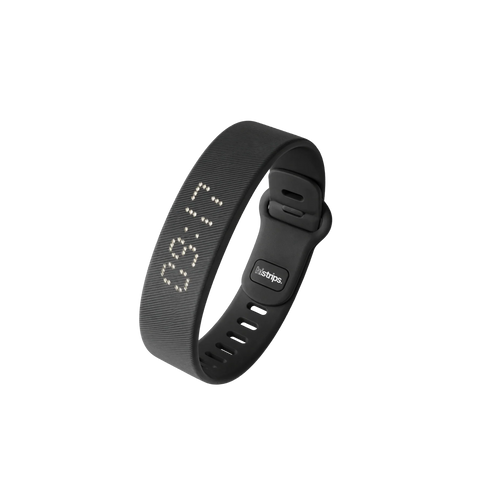
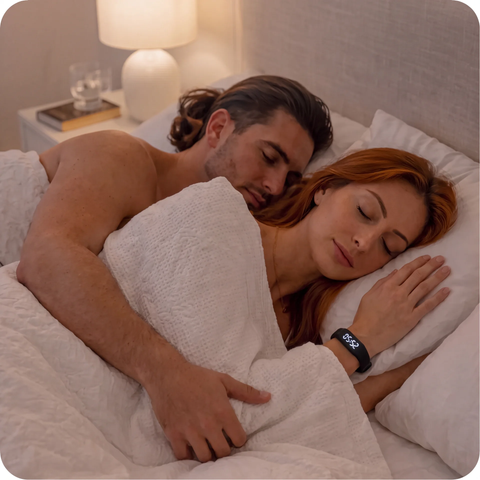
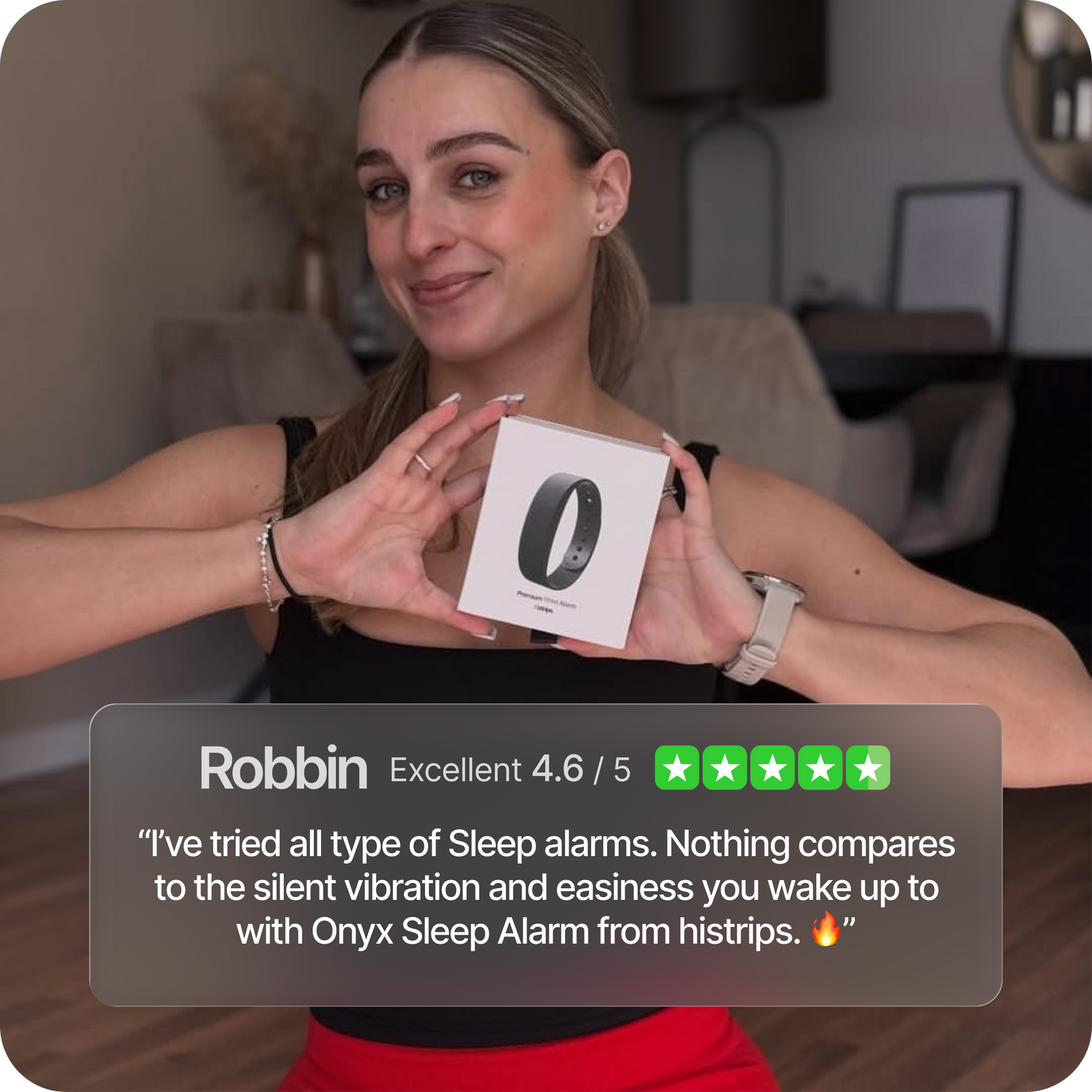
The Onyx is a wrist-worn vibration alarm designed specifically for sleep-quality-conscious athletes and professionals. It delivers precise, wrist-based vibration at your set time — waking you without sound, without disturbing partners, and without triggering the auditory startle response.
Features that matter for athletes:
- Silent operation — completely inaudible to partners and roommates
- Wrist-worn — impossible to sleep through, unlike phone vibration under a pillow
- Long battery life — reliable through multi-night travel without daily charging
- Travel-optimized — essential for jet lag management and shared race accommodations
The Complete Morning Protocol
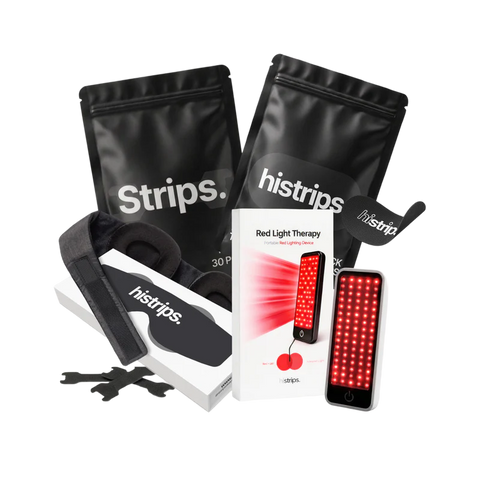
Used as part of the HiStrips sleep optimization system, the Onyx supports a complete, evidence-based sleep and wake protocol:
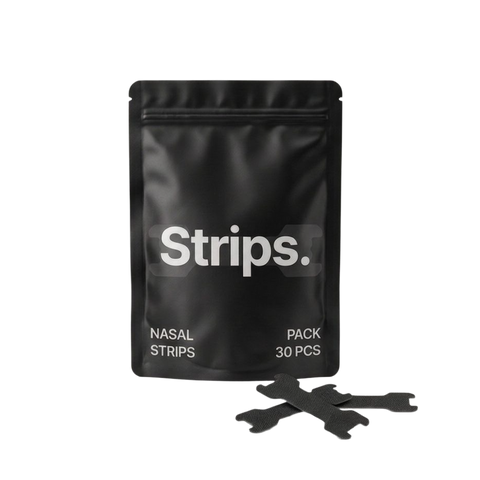
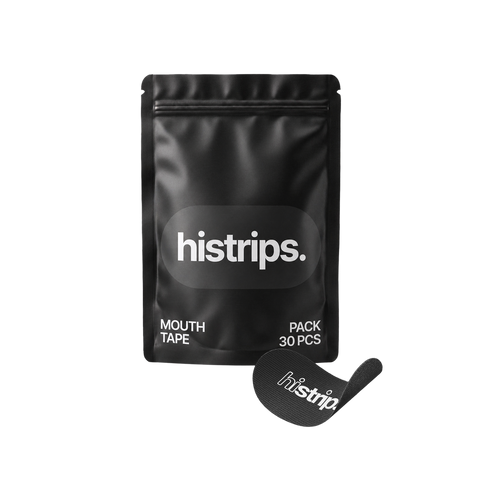
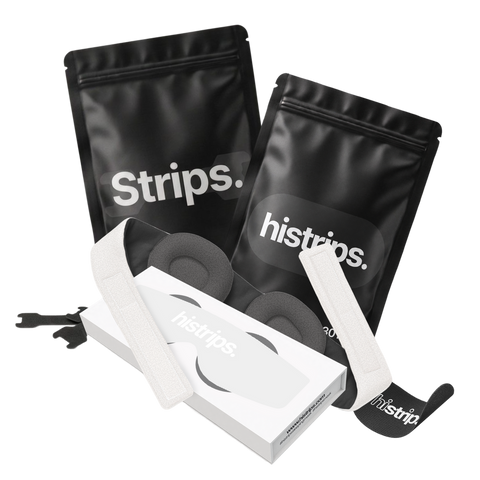
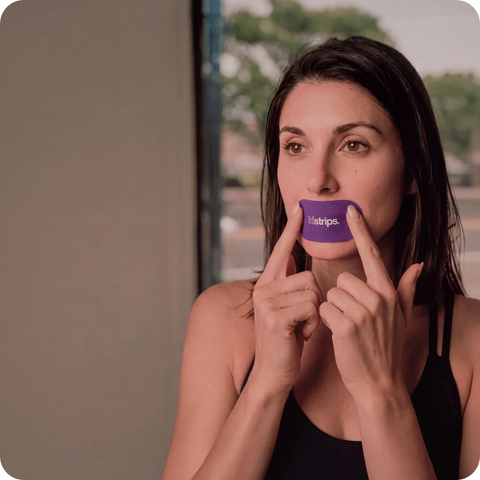
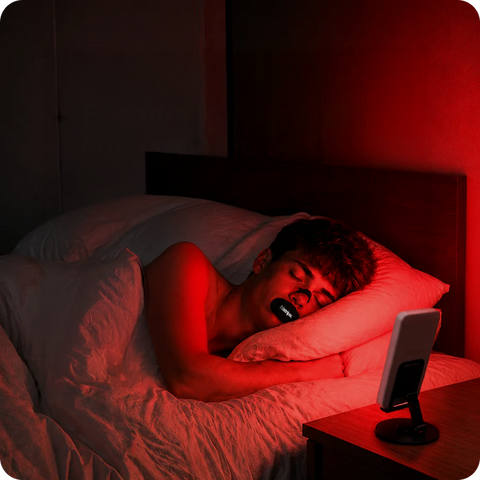
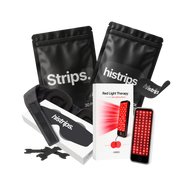
Before sleep: HiStrips nasal strip + mouth tape + Eclipse Sleep Mask → optimal sleep architecture
During sleep: Nasal breathing maintained → higher HRV, more deep sleep, better REM
On waking: Onyx vibration alarm → low cortisol wake transition, no sleep inertia
Result: A genuinely recovered athlete who woke up ready to perform
The details compound. Wake up better every day for 90 days and you will notice the difference in your training quality, cognitive performance, and how you feel — not just on recovery days, but during the hardest sessions of your training block.



Leave a comment
This site is protected by hCaptcha and the hCaptcha Privacy Policy and Terms of Service apply.