








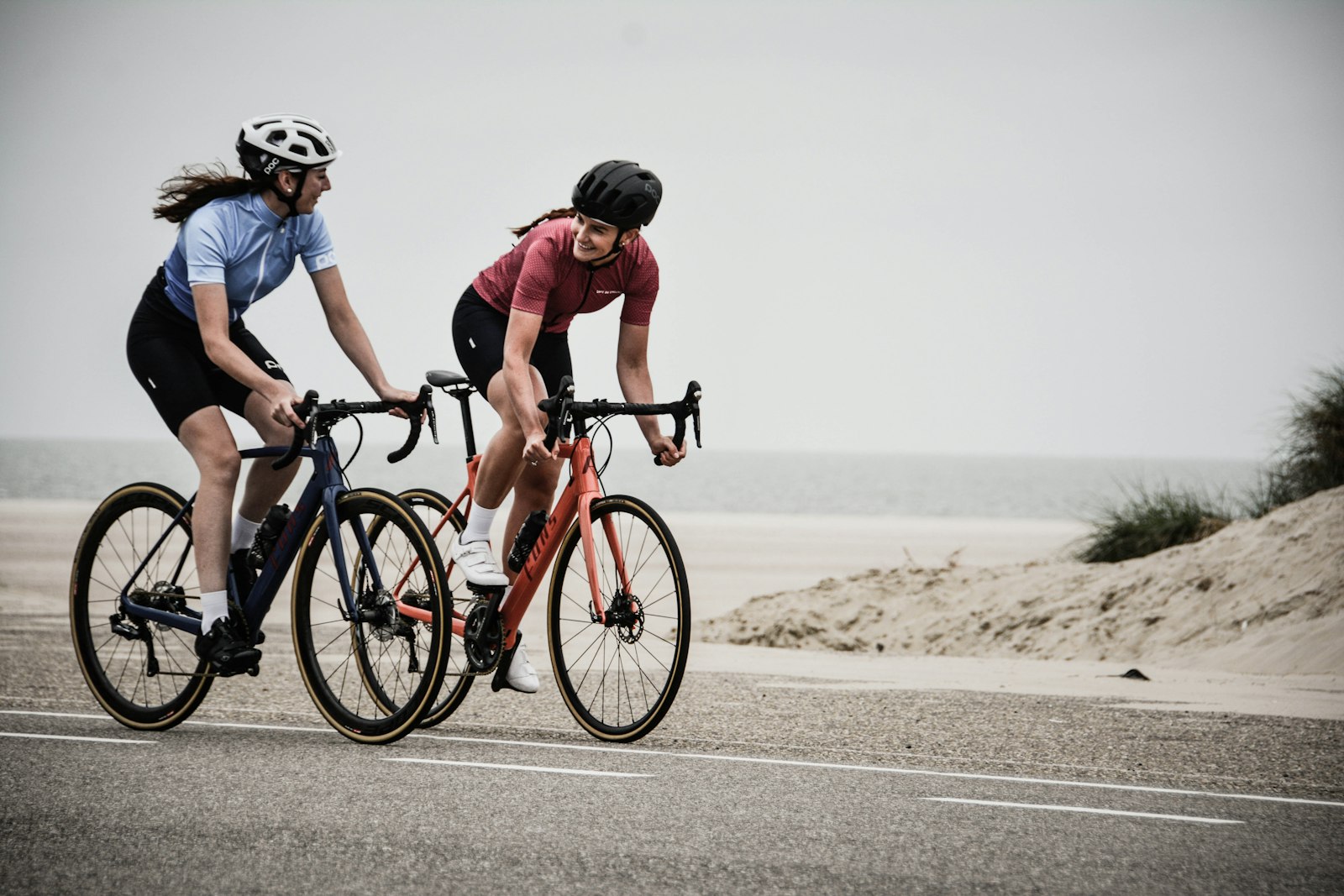
How Team Visma–Lease a Bike Use Nasal Breathing to Dominate the Tour de France
At the Tour de France, the margins are razor-thin. But one of the most powerful performance levers available to elite cyclists isn't aerodynamics, nutrition, or even training load — it's how they breathe.
The Overlooked Science of Nasal Breathing in Cycling
When riders push through a brutal Alpine climb or sprint into a stage finish, the body's demand for oxygen spikes dramatically. Most athletes default to mouth breathing under high exertion — it feels intuitive, faster, more urgent. But the science tells a very different story.
Nasal breathing filters, humidifies, and warms incoming air before it reaches the lungs. More crucially, it drives the production of nitric oxide — a vasodilator that relaxes blood vessel walls, improves blood flow to working muscles, and enhances oxygen uptake at the cellular level. This isn't marginal: studies show nasal breathing can improve oxygen uptake efficiency by up to 18% compared to mouth breathing under equivalent effort levels.
For a professional cyclist riding 3,400 km over 21 stages, that efficiency compounds into a decisive advantage.
VO2 Max, Nitric Oxide, and the Nasal Advantage
VO2 max — the maximum rate at which the body can consume oxygen during exercise — is the gold standard of aerobic fitness. World-class cyclists like Jonas Vingegaard and Wout van Aert operate at VO2 max values exceeding 90 ml/kg/min, elite even by Tour de France standards.
But raw VO2 max is only half the equation. The other half is oxygen utilisation efficiency — how effectively the body extracts and deploys every millilitre of oxygen delivered. This is where nasal breathing, and the nitric oxide it produces, becomes critical.
The nasal passages are lined with nitric oxide-producing sinuses. Every nasal breath carries a pulse of nitric oxide into the lungs, where it helps dilate the pulmonary vasculature and improve gas exchange. The result: more oxygen transferred to the bloodstream per breath cycle, and less cardiac strain to achieve the same power output.
Why Team Visma Prioritises Airflow
Team Visma–Lease a Bike is one of the most analytically rigorous teams in professional cycling. Their performance staff leave no stone unturned — from altitude training camps and sleep protocols to nutritional periodisation and equipment aerodynamics. Breathing optimisation sits at the core of their performance philosophy.
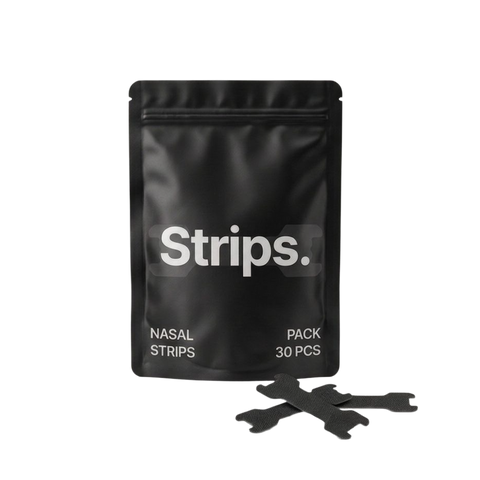
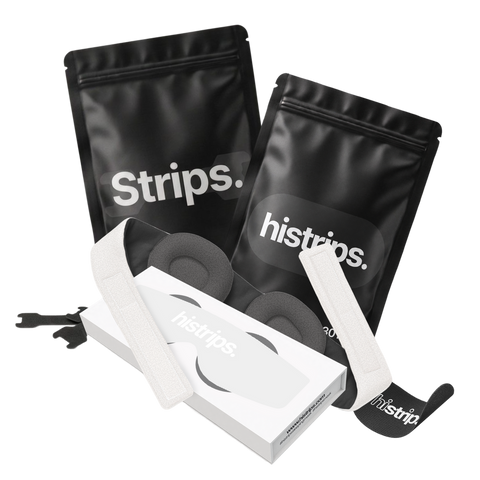
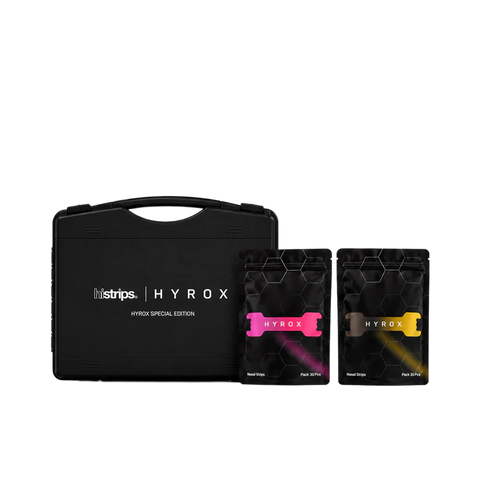
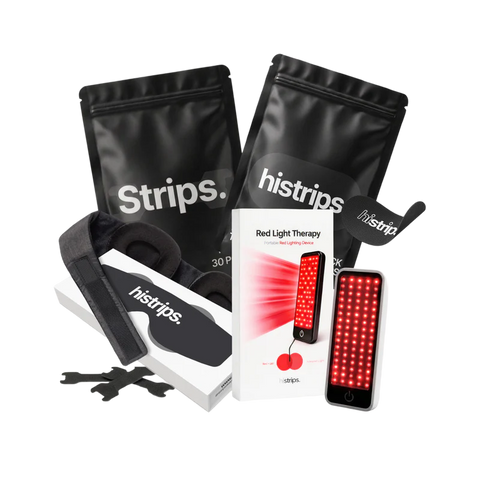
HISTRIPS nasal strips are part of the team's daily protocol, applied both during training and on race days. The strips work by mechanically opening the nasal passages — specifically the flexible cartilage walls of the nose — increasing nasal airflow by over 40%. This reduces nasal resistance, the primary bottleneck to nasal breathing under exertion, and allows riders to sustain the nasal breathing benefits even at high intensities.
How HISTRIPS Nasal Strips Work
A HISTRIPS strip is a spring-like adhesive band placed across the bridge of the nose. As the band attempts to return to its flat shape, it gently lifts the nasal walls outward, widening the nasal valve — the narrowest point of the nasal airway. This single anatomical bottleneck is responsible for most of the resistance cyclists feel when breathing hard through the nose.
- Increases nasal airflow by 40%+ in clinical tests
- Reduces the effort required to breathe nasally at high intensities
- Drug-free and approved for use in professional competition
- Worn during racing, training, and overnight recovery
- Compatible with all helmet and eyewear configurations
The Breathwork Training Dimension
Team Visma's coaching staff incorporate structured breathwork sessions into riders' training blocks — particularly during lower-intensity base periods and altitude camps. These sessions train the respiratory muscles, recondition the body's CO2 tolerance, and establish nasal breathing as the default pattern even under rising effort levels.
HISTRIPS strips are worn during these sessions to ensure the nasal passages are fully open, allowing riders to focus entirely on breathing pattern rather than fighting nasal resistance. Over weeks and months, this conditioning creates a measurable shift in breathing economy — riders consume less energy per breath at the same power outputs.
Race Day Application: From Neutralisation to Final Kilometre
On race mornings, HISTRIPS strips go on before the warm-up. They stay on through the neutralised zone, the mountain passes, the time trial efforts, and the sprint finishes. The riders don't think about breathing — the optimisation is passive, structural, built into the protocol.
In the critical final kilometres of mountain stages, where lactic acid accumulates and oxygen debt mounts, every percentage point of breathing efficiency translates directly into sustainable power output. The rider who can supply more oxygen to working muscles at a lower cost maintains higher wattage for longer — and that's the difference between attacking and being dropped.
The Bottom Line
Nasal breathing is not a wellness trend. It is a biomechanical performance lever backed by decades of respiratory physiology research. For Team Visma–Lease a Bike, HISTRIPS nasal strips are the delivery mechanism that makes nasal breathing viable even at Tour de France intensities — reducing resistance, optimising airflow, and enabling the full cascade of nitric oxide and oxygen efficiency benefits that define elite aerobic performance.
If it matters to the world's best cyclists, it matters to yours.
Experience HISTRIPS Performance
The same nasal strips trusted by Team Visma–Lease a Bike at the Tour de France. Breathe better. Perform better.
Shop HISTRIPS Now


Leave a comment
This site is protected by hCaptcha and the hCaptcha Privacy Policy and Terms of Service apply.