







Red Light vs Infrared Light: What's the Difference?
This is one of the most common sources of confusion in the red light therapy space — and one that manufacturers often exploit by marketing panels that emit only red light (visible, 630-660nm) while implying the benefits of near-infrared (NIR, invisible, 850nm). Here is exactly what the difference means and why it matters for your results.
The Wavelength Spectrum
Visible red light occupies 620-700nm — it is the red light you can see. Near-infrared occupies 700-1100nm — it is invisible to the human eye. Both are used therapeutically, but they work differently. Red light (around 660nm) is absorbed primarily by surface tissues — skin, subcutaneous fat, and superficial muscle. Near-infrared (around 850nm) penetrates deeper — reaching muscle tissue, joints, and bone.
Why Dual-Wavelength Panels Are Superior
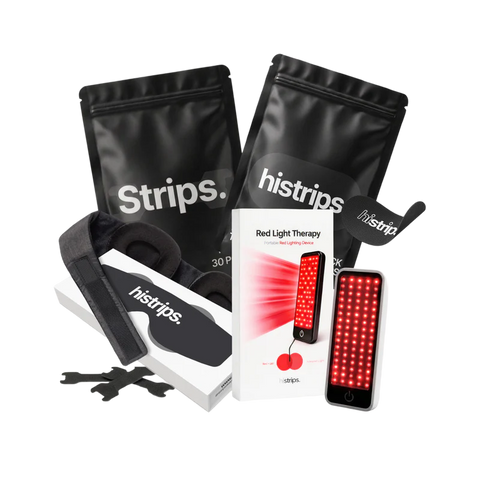
A panel that emits only red light will benefit skin health and superficial tissues but will not effectively reach deeper muscle tissue, joints, or bone. A panel that emits only near-infrared will penetrate deeper but misses the skin-level benefits. HiStrips Red Light Panels emit both 660nm AND 850nm simultaneously — giving you both surface and deep tissue benefits in a single session. This is the clinically optimal approach.
The Depth Penetration Reality
Marketing claims about penetration depth should be viewed sceptically. Both 660nm and 850nm are absorbed significantly by melanin and water in tissues. However, NIR's longer wavelength is scattered less and is absorbed differently — meaning it does reach deeper tissues more effectively. For joint, tendon, and deep muscle recovery, NIR wavelengths are more relevant. For skin, collagen, and superficial tissue, red wavelengths are more targeted.


Leave a comment
This site is protected by hCaptcha and the hCaptcha Privacy Policy and Terms of Service apply.