
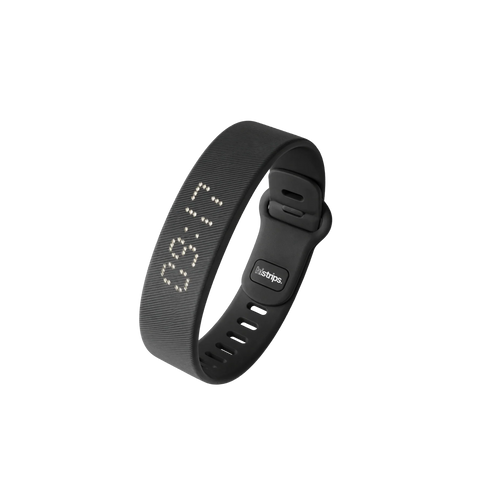
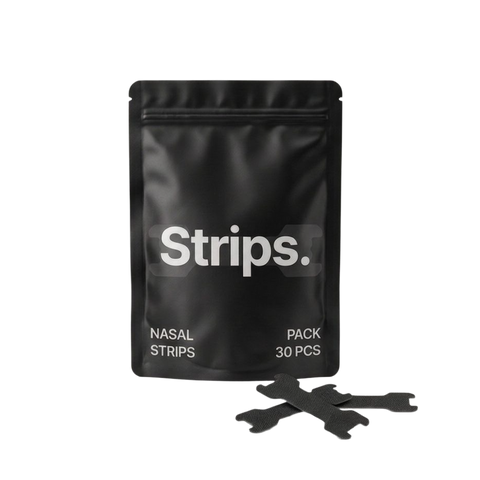
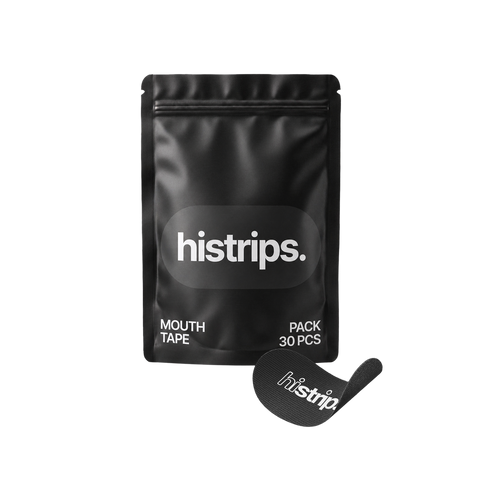
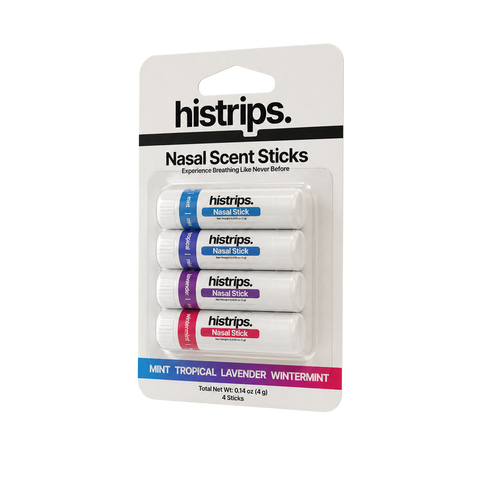
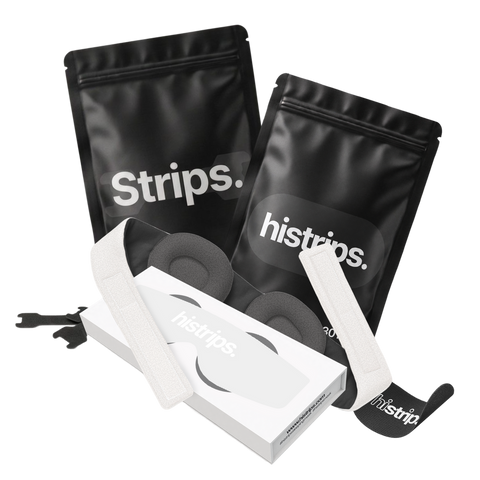
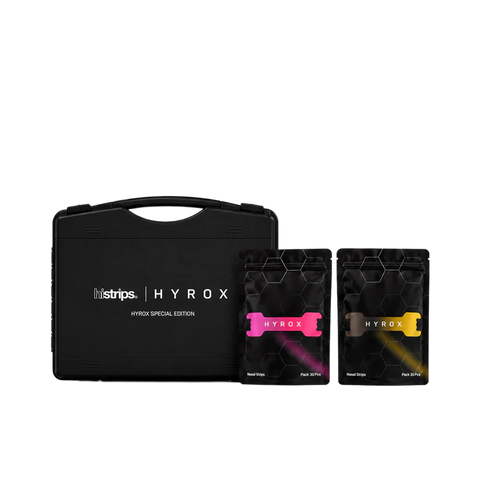
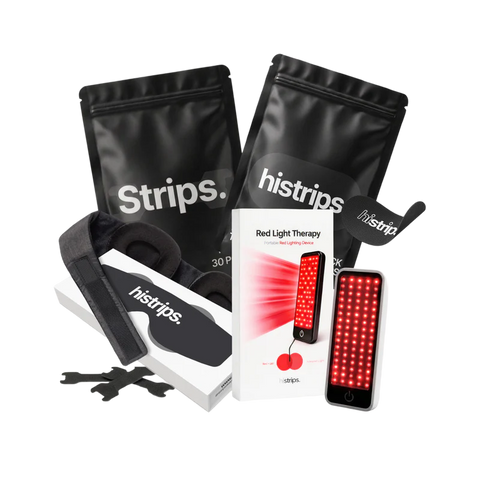


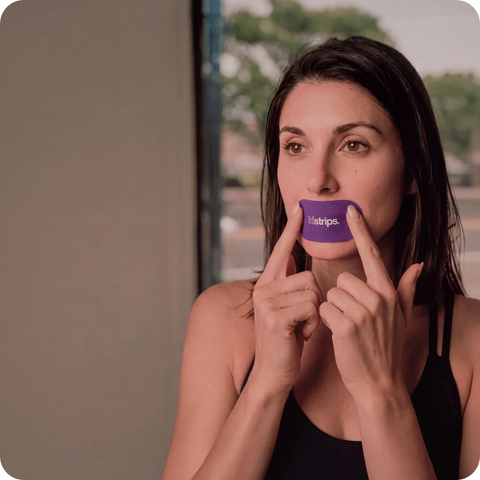




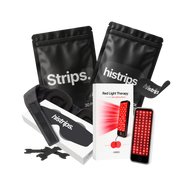

Your HYROX finish time is decided long before the final Wall Ball goes up. It's decided by how well you manage your HYROX breathing through all 8 stations — the accumulation of every breath taken, every transition navigated, every moment of respiratory control held under maximum physical stress. HYROX nasal strips from HISTRIPS give you a tool to manage that breathing with precision, from the SkiErg all the way to the last rep of Wall Balls.
This is the complete station-by-station breathing guide for HYROX athletes — covering the specific demands of each station, the breathing technique for HYROX that works, and exactly how HISTRIPS nasal strips support your airflow at every step.
Why HYROX Stations Destroy Your Breathing (And How to Fight Back)
HYROX is a uniquely savage event for the respiratory system. Unlike a pure running race — where breathing demand is steady and progressive — HYROX throws your lungs through a series of violent transitions. You're running at threshold pace, then suddenly you're loading a sled or picking up a sandbag. The shift from aerobic running to loaded functional work creates an acute respiratory crisis for athletes who haven't trained for it.
The result is predictable: uncontrolled mouth breathing, rising respiratory rate, increasing CO₂, and the progressive depletion of your breathing reserves. By the time you reach Stations 6, 7, and 8, athletes who mismanaged their functional fitness breathing in the early stations are paying a heavy price. Nasal breathing — maximised by HISTRIPS — is your primary defence.
Elite HYROX competitors such as Mathew Osborne (UK) and Leonie Küchler (Germany) approach each station with a clear breathing protocol. They understand that nasal strips are part of their HYROX gear essentials — a tool that keeps the respiratory system from becoming the limiting factor before the legs or strength give out.
HISTRIPS Nasal Strips Station-by-Station Guide
The SkiErg is a full-body aerobic demand from the first pull. It's the opening station after your first 1km run, so you arrive already breathing hard. The biggest mistake here is immediately going anaerobic by pulling too hard and switching to frantic mouth breathing.
HISTRIPS: Keeps nasal passages fully open to absorb oxygen between each SkiErg pull. Establish a nasal breathing rhythm — inhale on recovery, exhale on the pull. HISTRIPS makes this easier by maximising the airflow available through the nose.
Sled Push is a maximum-effort station. The instinct under maximum exertion is to hold the breath or revert to gasped mouth breathing. Athletes who surrender nasal breathing at the Sled Push begin accumulating oxygen debt that follows them through every subsequent station.
HISTRIPS: Prevents nasal passage constriction under peak exertion. Focus on exhaling through the nose on each drive step. HISTRIPS increases the available airflow to make nasal breathing viable even at maximum intensity.
The Sled Pull follows immediately after the Sled Push, and the body is still under maximum cardiovascular load. Breathing cadence is critical here — a controlled rhythm prevents the respiratory system from spinning into anaerobic overdrive.
HISTRIPS: Maintains steady nasal airflow during each pull. Match your breath to your steps — inhale during approach, exhale on the pull. The strip keeps passages open so each breath delivers maximum oxygen efficiency.
Burpee Broad Jumps are simultaneously explosive and aerobic — each rep demands a full-body effort and a rapid breath cycle. The repetitive nature means breathing rhythm becomes a performance multiplier. Get the rhythm right and you find a sustainable pace; lose it and you're gasping within 20 metres.
HISTRIPS: Supports rhythmic nasal breathing through each burpee cycle. Inhale at the bottom, exhale on the jump. HISTRIPS ensures nasal passages stay clear through the continuous demand of 80 metres of jumps.
Rowing is the cyclical station — and it's the best opportunity in the entire HYROX course to establish a strong nasal breathing rhythm. The stroke cycle perfectly synchronises with a controlled breathing pattern. Athletes who use this station to restore nasal breathing control arrive at Station 6 in significantly better shape.
HISTRIPS: Maximises airflow through each stroke cycle. Inhale on the recovery (coming forward), exhale on the drive (pulling back). HISTRIPS keeps passages wide open so every breath delivers maximum oxygen per stroke.
The Farmers Carry introduces a loaded carry position that physically compresses the ribcage and restricts breathing. Athletes who arrive here with collapsed nasal passages will find every breath is a battle. This is where HISTRIPS makes a particularly noticeable difference.
HISTRIPS: Counters the physical nasal passage constriction that occurs under heavy carry load. Breathe diaphragmatically — expand the belly, not the chest. HISTRIPS keeps the upper airway fully open so diaphragmatic breathing can deliver its full benefit.
Sandbag Lunges at 100m are a grinding combination of constant movement and heavy load. Fatigue is building. The respiratory system is under sustained pressure. Maintaining nasal breathing here requires genuine discipline — and genuine support from a high-quality nasal strip.
HISTRIPS: Supports diaphragmatic nasal breathing through the full 100m lunge. Match your breath to your steps — find a 2:2 or 3:3 pattern. HISTRIPS helps maintain open passages so each breath is efficient despite the accumulating fatigue.
Wall Balls are the final station. The respiratory system is at peak fatigue. This is where athletes break. The temptation to gasping, uncontrolled mouth breathing is at its highest — and the cost of giving in is the greatest, because there's nothing left to save for.
HISTRIPS: Helps prevent respiratory collapse at peak fatigue. Exhale sharply on the throw, inhale on the catch. HISTRIPS keeps nasal passages open so controlled nasal breathing remains viable right through the final rep, when every breath counts most.
The Running Segments: Recovering Your Breath With HISTRIPS
Between every station is a 1km run. That's eight recovery opportunities — and most athletes waste them. The 1km runs should be your breathing reset: slow your respiratory rate, return to nasal breathing, lower your heart rate, and arrive at the next station in control. HISTRIPS nasal strips are the tool that makes this recovery window actually work.
With fully open nasal passages, the recovery run delivers significantly more oxygen with each breath. Athletes who use the runs to actively recover their nasal breathing fitness — rather than simply survive them — arrive at each subsequent station with more reserves. Competitors like Venla Hovi (Finland) and Patrick Hagenbuch (Switzerland) who operate at elite HYROX level understand that the run segments aren't just transitions — they're strategic breathing opportunities.
The protocol is simple: as soon as you leave a station, deliberately slow your breathing. Nasal inhale for 3 steps, nasal exhale for 3 steps. Let HISTRIPS do its work. By the halfway point of the 1km, your respiratory rate should be dropping. Arrive at the next station in control, not in crisis.
"The athletes who win HYROX don't just train harder. They breathe smarter."
What Elite HYROX Athletes Know About Breathing
At the elite end of HYROX competition, the margins are tiny. Athletes such as Elise Harrington (UK), who competes at the highest level of women's HYROX, understand that race strategy is as much about breathing management as it is about raw fitness. You can be the fittest person on the start line and still lose to someone who manages their respiratory system better.
The principle elite HYROX athletes apply is this: nasal breathing is the default state. Mouth breathing is the emergency reserve. The job of your training — and the job of HISTRIPS — is to extend how long you can stay nasal before the emergency reserve is needed. The longer you stay nasal, the more efficient you are. The more efficient you are, the faster you go, and the more you have left at the end.
HYROX Race Day Breathing Protocol
Apply HISTRIPS 15–20 minutes before warm-up. Use nasal breathing as your default through every station and every run. Reserve mouth breathing only for absolute peak-effort moments. Use the 1km runs to actively recover nasal control before each station.
The complete HYROX race strategy built around nasal breathing and HISTRIPS is straightforward: prepare your breathing in training (wear HISTRIPS in every simulation session), commit to it on race day (apply HISTRIPS before warm-up), and execute it station by station. Your lungs are your engine. HISTRIPS is the tool that keeps the engine running clean.


Leave a comment
This site is protected by hCaptcha and the hCaptcha Privacy Policy and Terms of Service apply.