






You track your macros. You optimize your training split. You time your protein within 30 minutes of your session. But if you're breathing through your mouth during training and sleeping with your mouth open at night, you're undermining all of it in ways most fitness content never talks about.
This is the mouth breathing problem — and it's likely more relevant to your performance and gains than your current supplement stack.
What Actually Happens When You Mouth Breathe During Training
Mouth breathing feels natural during hard exercise. You're working hard, you need air, you open the biggest hole in your face. The problem is that "feels natural" and "is optimal" are not the same thing.
When you breathe through your mouth during training, several things happen simultaneously:
1. You lose nitric oxide
Nitric oxide (NO) is produced in the nasal passages and sinuses. It's one of the most important vasodilators in the body — it widens blood vessels, improving blood flow and oxygen delivery to working muscles. When you breathe through your mouth, you bypass NO production entirely.
Research from the Karolinska Institute shows that nasal breathing increases blood oxygen saturation by up to 18% compared to mouth breathing at equivalent ventilation volumes. That's the nitric oxide effect — and it's significant enough that some elite coaches now treat nasal breathing optimization as a primary training variable.
2. Your CO2 tolerance drops
This is the counterintuitive one. Most people think mouth breathing means more oxygen — wider opening, more air in. But what actually matters for muscle performance isn't how much oxygen you inhale — it's how efficiently you deliver it to the muscles.
That delivery is regulated by CO2. When CO2 drops (as it does during mouth breathing and hyperventilation), hemoglobin holds onto oxygen more tightly — the Bohr effect. The result: you can have full blood oxygen saturation and still have muscles starving for O2 at the cellular level.
Nasal breathing naturally regulates CO2 levels, keeping them in the optimal range for oxygen delivery. The slight resistance of nasal breathing acts as a CO2 regulator — preventing the hyperventilation that undermines oxygen delivery.
3. Your recovery is compromised
The effects don't stop when training ends. If you sleep with your mouth open — which the majority of habitual mouth breathers do — you spend 7–8 hours in a state of mild physiological stress. Cortisol is elevated. HRV is suppressed. Deep sleep stages are shortened.
The result: you train hard, eat well, and still wake up feeling like you haven't recovered. Because you haven't — not fully.
The Gains Equation Nobody Talks About
Muscle growth and strength adaptation happen during recovery — specifically during deep sleep, when growth hormone is released and protein synthesis is at its highest. Anything that compromises sleep quality directly compromises your gains.
Consider: if mouth breathing during sleep reduces your time in deep sleep by 20%, you're effectively running a 20% deficit on the recovery phase of your training. No amount of extra protein or creatine compensates for that deficit.
The Fix: A Two-Phase Protocol
Phase 1: Optimize training breathing
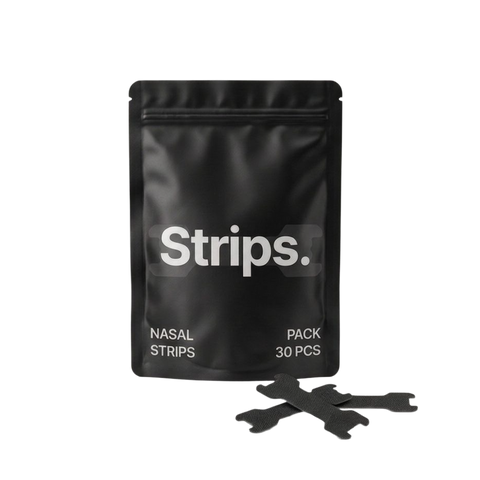
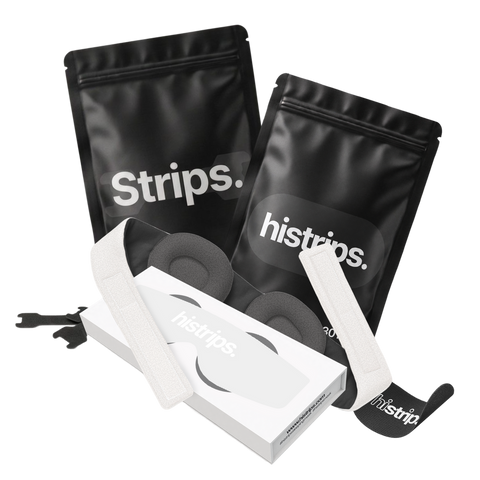
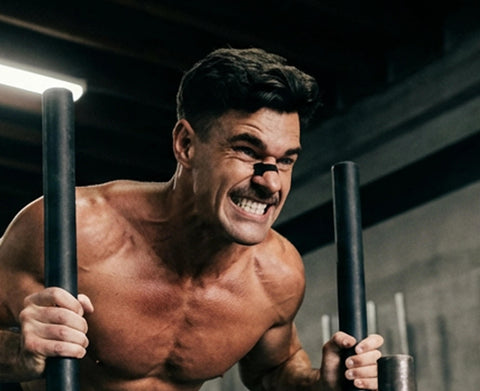
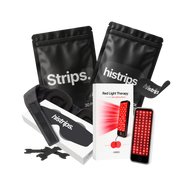
- Apply HiStrips before every training session. The external nasal dilator increases airflow by up to 31%, making nasal breathing viable at higher intensities
- Begin incorporating nasal-only breathing during your warm-up and Zone 2 work. It'll feel restrictive initially — this is normal and temporary
- At max effort (true 95%+ HR), mouth breathing is inevitable. Accept it. The goal is to raise the intensity threshold at which you switch from nasal to mouth
Phase 2: Optimize sleep breathing
- Wear HiStrips every night — use the sleep-specific version for extra comfort
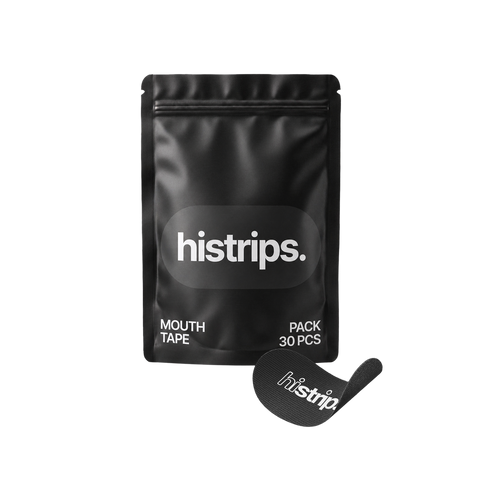
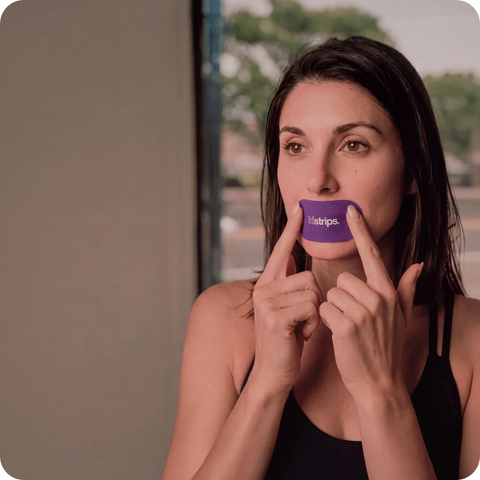
- Add cotton mouth tape across your lips at bedtime. The tape is gentle, easily removed, and simply prevents your mouth from falling open during sleep
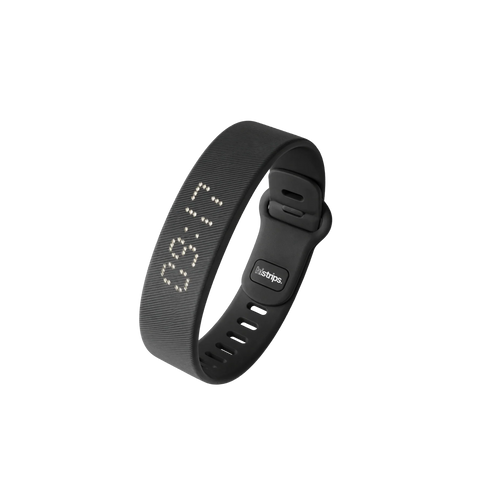
- Track your HRV over 4 weeks with any wearable. You will see the difference in the data
What Athletes Who've Made the Switch Report
Based on community feedback and athlete testing, the consistent improvements reported after 4–6 weeks of nasal breathing optimization include:
- Waking up feeling genuinely rested (not just technically having slept)
- Reduced DOMS — faster recovery between sessions
- Improved cardio performance — able to hold higher intensities at lower perceived effort
- Better sleep quality scores on wearables (WHOOP, Oura, Garmin)
- Reduced morning dry mouth and improved hydration status upon waking
The Investment
HiStrips cost less per night than your pre-workout. The cotton mouth tape costs less per month than a single protein shake. For what they address — the fundamental inefficiency at the core of how your body takes in and uses oxygen — they are the highest ROI intervention available to training athletes.
Stop leaving gains on the table. Start with HiStrips today →



Leave a comment
This site is protected by hCaptcha and the hCaptcha Privacy Policy and Terms of Service apply.