






Do Nasal Strips Help With Breathing During Exercise?
Breathing is the most fundamental aspect of exercise — without oxygen, there's no energy, no performance, no adaptation. So the question of whether nasal strips actually help with breathing during exercise is worth taking seriously.
The short answer: yes, when they stay on. The longer answer involves some fascinating physiology.
Nasal vs. Mouth Breathing During Exercise
Your nasal passages do much more than just filter air. The turbinates in your nasal cavity warm and humidify incoming air, and the nasal mucosa produces nitric oxide — a molecule that plays a critical role in vasodilation and oxygen uptake efficiency. When you breathe through your nose during exercise, you benefit from this nitric oxide delivery directly into your bloodstream.
Mouth breathing bypasses this system entirely. While you can sustain higher ventilation rates through your mouth during intense exercise, you lose the nitric oxide benefit and increase water loss through respiration.
How Nasal Strips Reduce Airway Resistance
Nasal valve collapse is extremely common — studies suggest the majority of people experience some degree of it, particularly during physical exertion when nasal resistance naturally increases. When you inhale through a partially collapsed nose, you're working much harder to move the same volume of air.
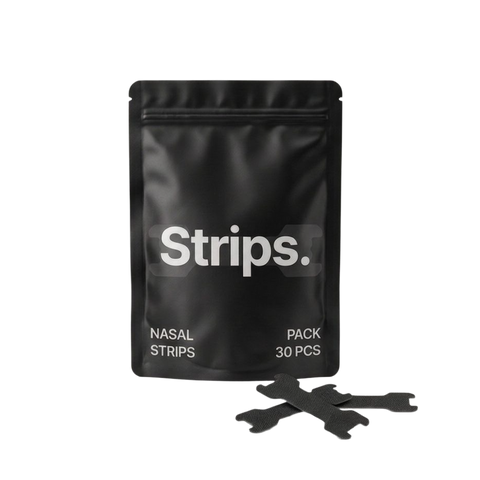
A nasal strip's spring mechanism pulls the nasal valve open, reducing airway resistance by up to 50%. This means your body spends less energy on breathing and more on the work that matters — running, lifting, competing.
Breathing Efficiency at Different Intensities
Research on nasal strips during exercise shows measurable improvements in breathing efficiency at moderate intensities. Cyclists and runners using nasal strips demonstrate lower respiratory rate at the same work output, meaning each breath is doing more work.
At near-maximum intensities, most athletes naturally shift to mouth breathing regardless of nasal strip use. The strip's benefit is most pronounced during warm-up, steady-state aerobic work, and the moderate-to-hard zone where nasal breathing remains a viable option.
What the Research Shows
Studies in the European Journal of Applied Physiology found that nasal dilator strips improved breathing pattern efficiency during submaximal exercise. Participants using strips maintained nasal breathing longer before requiring oral breathing, suggesting the strips genuinely extend the exercise intensity range at which nasal breathing remains sustainable.
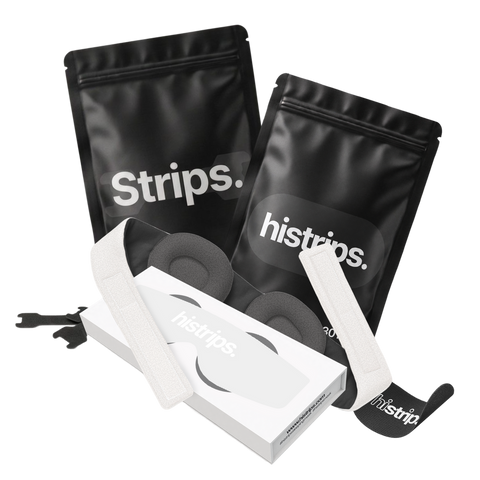
The key caveat: these benefits only manifest if the strip remains bonded to the skin throughout the exercise bout. HiStrips are engineered with performance-grade adhesive that maintains its bond through sweat, heat, and the sustained movement of endurance exercise — so the physiological benefits the strip promises actually materialize in real training conditions.


Leave a comment
This site is protected by hCaptcha and the hCaptcha Privacy Policy and Terms of Service apply.