
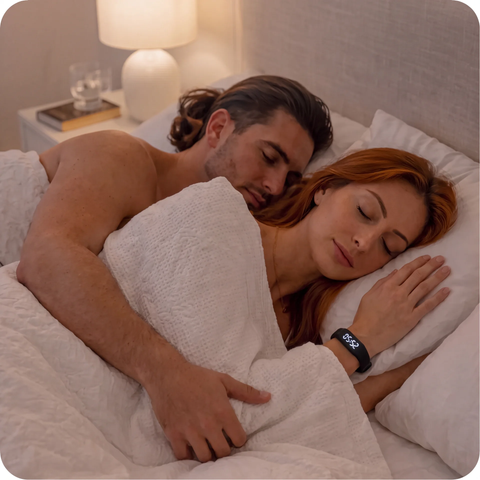

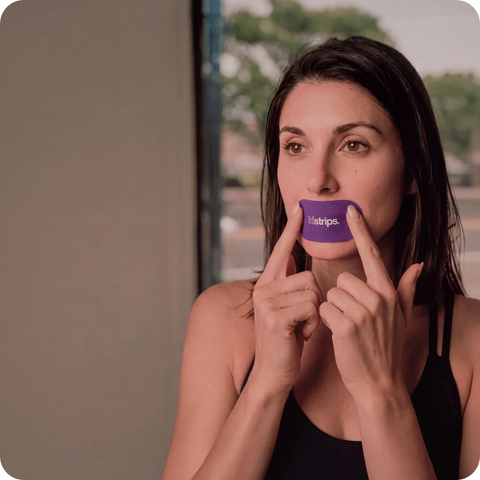
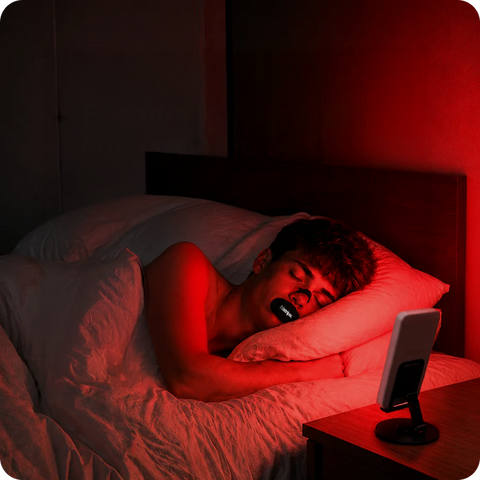



If you or your partner snores, you've probably encountered every gadget, pillow, and spray that promises a silent night. But one of the most effective and evidence-backed solutions is also one of the simplest: the nasal strip. Here's the science behind why nasal strips help with snoring — and when they might not be enough on their own.
Why Do People Snore?
Snoring is the sound of turbulent airflow through a partially obstructed airway. During sleep, the muscles of the throat and mouth relax. If the nasal passages are narrow or congested, the body compensates by breathing through the mouth. This mouth breathing creates turbulent, high-velocity air passing through the soft palate and uvula — causing them to vibrate.
The key word here is nasal. When nasal airflow is restricted, mouth breathing increases, and snoring gets worse. This is exactly where nasal strips intervene.
How Nasal Strips Reduce Snoring
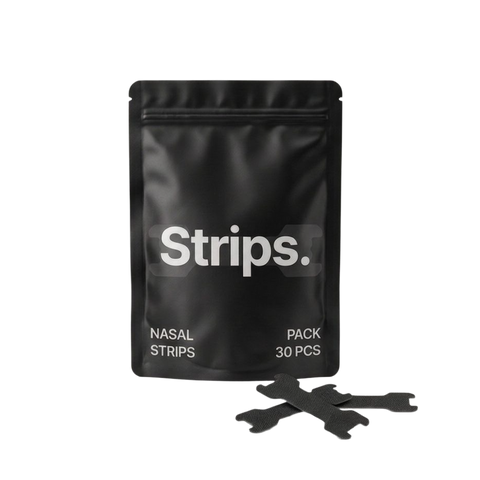
Nasal strips work by gently lifting the sides of the nose to widen the nasal valve — the narrowest segment of the nasal airway. By reducing resistance at this point, more air can pass through the nose with each breath, reducing or eliminating the need for mouth breathing.
When nasal breathing is re-established, airflow becomes smooth and laminar rather than turbulent. Less turbulence means less vibration of the soft palate — and less snoring.
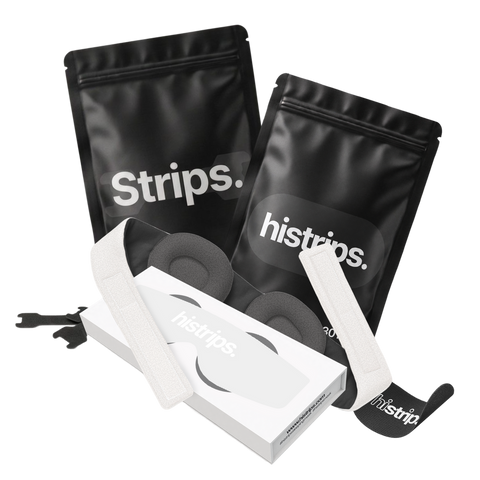
HiStrips' precision dual-spring mechanism delivers a meaningful, clinically relevant lift at the nasal valve, not just cosmetic positioning. This is the difference between a strip that actually works and one that simply sits on your nose.
What Does the Clinical Evidence Say?
The evidence for nasal strips as a snoring intervention is solid. A study published in Sleep found that external nasal dilators reduced snoring time and intensity in patients whose snoring was primarily nasal in origin. Another study in the American Journal of Rhinology confirmed significant reductions in nasal resistance following nasal strip application.
Importantly, these are objective measures — not just patient-reported perceptions. The mechanical effect of nasal strips on airflow is measurable, repeatable, and clinically meaningful.
Do Nasal Strips Help with Sleep Apnea?
This is an important distinction. Nasal strips address nasal obstruction-related snoring — but sleep apnea is a more complex condition involving complete or partial collapse of the upper airway during sleep, not just nasal restriction.
For those with diagnosed obstructive sleep apnea (OSA), nasal strips are not a replacement for CPAP therapy or other medical interventions. However, they can be used alongside these treatments to reduce nasal resistance, making CPAP masks more comfortable and improving overall airflow.
If you suspect you have sleep apnea (characterised by gasping, choking, or extreme daytime fatigue), consult a sleep specialist. Nasal strips are a snoring aid, not an apnea treatment.
Best Practices for Using HiStrips for Snoring
- Apply to clean, dry skin before bed. Oily skin reduces adhesion and the strip may fall off during the night.
- Centre the strip correctly — over the nasal flare, not the bony bridge. Correct placement is what delivers the airflow benefit.
- Use every night for best results. The body adapts to nasal breathing patterns over time, and consistent use supports this adaptation.
- Address congestion if present. If a blocked nose is contributing to your snoring, HiStrips can help open the passages mechanically — no antihistamines required.
Frequently Asked Questions
Do nasal strips stop snoring completely?
For snoring that is primarily caused by nasal obstruction, nasal strips are highly effective and can eliminate or dramatically reduce snoring. For snoring caused by other factors (tongue position, obesity, anatomical issues), nasal strips will help but may not resolve the issue entirely. Most users experience significant improvement.
How quickly do nasal strips work for snoring?
The effect is immediate. Nasal strips open the nasal valve within seconds of application. The snoring reduction benefit is present from the first night of use. Many partners of HiStrips users report a noticeable improvement on night one.
Can I use nasal strips alongside a sleep apnea device?
Yes. Nasal strips are commonly used alongside CPAP machines to reduce nasal resistance and make the therapy more comfortable. If you use a nasal mask CPAP, the nasal strip can be applied around the mask interface area. Consult your sleep specialist for specific guidance based on your setup.
Are nasal strips safe to wear every night?
Yes. Nasal strips are drug-free and mechanical — there is no tolerance, dependency, or rebound effect. HiStrips are formulated with a skin-safe, latex-free adhesive suitable for nightly use.
Sleep Silently. Recover Deeply.
Snoring costs you sleep quality, energy, and recovery. A simple nasal strip applied before bed can be the most effective, drug-free intervention you've tried.
Try HiStrips at histrips.com and give your sleep — and your partner — the quiet they deserve.


Leave a comment
This site is protected by hCaptcha and the hCaptcha Privacy Policy and Terms of Service apply.