







MotoGP Nasal Strips: Why the World's Fastest Riders Choose HISTRIPS
At 300km/h, inside a full-face helmet, under extreme G-forces — every breath is harder to take. And harder to afford to miss. MotoGP nasal strips have emerged as a genuine performance tool for the world's elite riders, and HISTRIPS is the brand leading that revolution. This is not a gimmick. This is physiological optimisation at the most extreme level of motorsport.
The Physical Reality of Breathing in a MotoGP Helmet
Most people have never worn a full-face motorcycle helmet at race speed. Those who have know immediately: breathing is different. Harder. More conscious. At race pace, under the physical load of MotoGP competition, it becomes one of the most demanding physiological challenges a human body faces.
Here is what actually happens inside a MotoGP helmet during a race:
- Helmet compression restricts natural airflow — the face padding and chin bar limit how freely the nasal passages can dilate and expand.
- Neck brace and helmet forces during braking — up to 1.5G of deceleration slams the helmet forward, compressing the face and reducing nasal passage diameter at the exact moment the body needs more oxygen.
- Adrenaline triggers involuntary mouth breathing — the fight-or-flight response causes riders to switch to mouth breathing, drastically reducing oxygen absorption efficiency.
- 40 to 45 minutes of sustained high-intensity effort — unlike a sprint, MotoGP racing demands continuous cardiovascular output, making oxygen delivery critical from lap one to the final corner.
- Heat buildup increases respiratory effort — helmet temperatures can exceed 40°C during a race. The hotter and more humid the air, the harder the body works to extract oxygen from each breath.
Elite riders competing at this level — riders like Marc Márquez, the 8-time World Champion, or Francesco "Pecco" Bagnaia, who has dominated the modern Ducati era — are competing at the absolute limits of human reaction time and physical endurance. For athletes operating at these margins, every physiological variable matters. Breathing optimisation under a MotoGP helmet is not optional. It is essential.
Why MotoGP Nasal Strips Are a Performance Tool, Not a Gimmick
The nasal passage is the body's most efficient breathing pathway. Unlike the mouth, the nose filters particulates, warms and humidifies incoming air, and activates nitric oxide production — a vasodilator that improves oxygen uptake in the lungs. Under the conditions of a MotoGP helmet, these functions become even more critical.
When the nasal passages are restricted — whether by the physical compression of a tight-fitting helmet, adrenaline-induced nasal congestion, or simple anatomical narrowing — the body's ability to breathe optimally is compromised. The result is an unconscious switch to mouth breathing. And for a MotoGP rider, mouth breathing mid-race is a direct performance liability:
- Mouth breathing bypasses the nasal filtration and humidification system, increasing respiratory effort inside the hot helmet environment.
- It triggers the sympathetic nervous system — keeping the rider in a state of elevated fight-or-flight arousal, which impairs fine motor control and split-second decision-making.
- CO₂ buildup inside the helmet accelerates with mouth breathing, contributing to cognitive fatigue in the later stages of a race.
At the level of Jorge Martín — the 2024 MotoGP World Champion who took the title with Aprilia — or Fabio Quartararo ("El Diablo"), whose raw pace made him a Yamaha icon, the margins that separate a podium finish from a points position are paper-thin. Nasal strips designed for motorsport performance are not marketing fluff. They are part of the marginal gains toolkit that defines elite sport.
The Science Behind HISTRIPS and Motorsport Performance
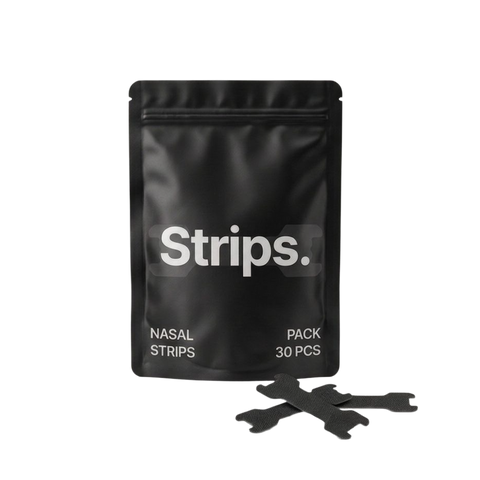
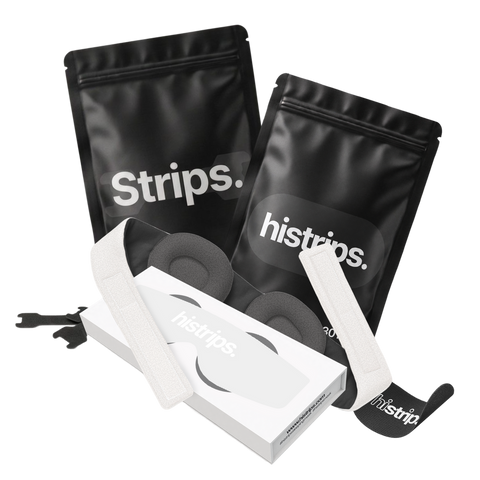
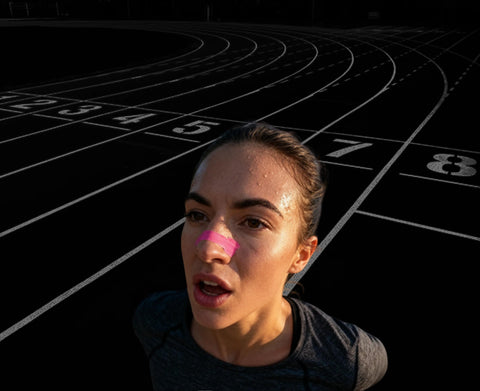
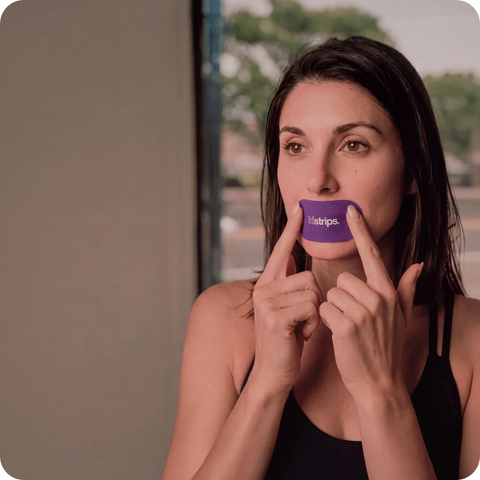
HISTRIPS works through a deceptively simple mechanism: a spring-loaded adhesive strip applied across the bridge of the nose physically widens the nasal passages, opening them by more than 40% compared to their natural resting state. This mechanical dilation requires zero effort from the athlete — it works passively, throughout the entire race, without the rider needing to think about it.
More nasal airflow means more oxygen reaching the lungs with every breath. In a 45-minute MotoGP race with thousands of breath cycles, that cumulative advantage in oxygen delivery directly supports muscular endurance, cardiovascular output, and cognitive function — the three pillars of race performance.
The nasal breathing pathway, when fully unobstructed, also activates the parasympathetic nervous system — the body's "rest and digest" mode. This does not make a rider slow or complacent. It keeps them in the optimal arousal zone: focused, precise, and calm under pressure. For a rider entering a 200km/h corner with two competitors alongside them, that physiological state is the difference between a clean overtake and a costly error.
HISTRIPS is formulated to stay in place through sweat, heat, and movement — conditions that disqualify most conventional nasal strips from motorsport use. Applied in minutes before the race, it remains effective throughout the full race distance and into the cool-down lap.
How Elite MotoGP Riders Approach Breathing Optimisation
The modern MotoGP paddock is a laboratory of performance science. Riders work with physios, biomechanics coaches, sleep specialists, and nutritionists. Breathing is not an afterthought — it is a fundamental component of physical preparation.
Enea Bastianini — "The Beast" — is one of the most physically explosive riders on the Ducati factory squad. His riding style demands full-throttle bursts and aggressive late braking, both of which place enormous demands on cardiovascular function and breath control. At his level, nasal breathing optimisation is part of the preparation stack, not a novelty.
Elite MotoGP competitors such as Jorge Martín, Fabio Quartararo, and Enea Bastianini understand that the 40 milliseconds saved through clearer thinking, faster reactions, and better oxygen delivery compound across 25 laps. The gap between first and fifth in MotoGP is often less than two seconds across a full race distance. Every marginal advantage matters.
Breathing optimisation is a recognised element of motorsport fitness programmes. Riders who compete at 300km/h understand that managing the body's stress response — keeping the nervous system regulated, maintaining cognitive sharpness under g-load — is as important as raw physical conditioning. HISTRIPS supports exactly this. Better nasal airflow. Better oxygen delivery. Better decisions at race speed.
Why HISTRIPS Is the Nasal Strip of Choice for Motorsport Athletes
Not all nasal strips are built for motorsport conditions. Standard drug-store strips were designed for bedroom use — lightweight adhesion, minimal durability. A MotoGP helmet environment is entirely different: ambient temperatures exceeding 40°C, sweat saturation, physical vibration, and the mechanical stress of a tight-fitting helmet pressed against the face for 45 minutes.
HISTRIPS is engineered for this environment:
- Medical-grade adhesive that maintains bond strength through sweat and heat — no mid-race slippage.
- Low-profile design that fits cleanly under a full-face MotoGP or road helmet without creating pressure points or discomfort.
- Hypoallergenic formulation — safe for sensitive skin and sustained wear across race weekends.
- Consistent spring-force delivering repeatable 40%+ nasal dilation across every race, every time.
- Tested for intense athletic use — designed specifically for high-performance sport, not adapted from consumer wellness products.
For riders competing at the level of Marc Márquez or Francesco Bagnaia — athletes whose preparation regimens leave nothing to chance — HISTRIPS represents a tool that is both proven in science and practical in the paddock. No complexity. No cognitive load. Apply it. Breathe better. Race sharper.
"At 300km/h, the margin between winning and losing is measured in milliseconds. And in breaths."
HISTRIPS is not asking riders to change their breathing technique, adopt a protocol, or add complexity to their race day preparation. It is a passive, zero-effort physiological upgrade. One strip. 40% more airflow. The rest happens naturally.
The modern MotoGP performance stack — data engineering, aerodynamic suits, tyre management strategy — is relentlessly optimised. Breathing should be too. HISTRIPS nasal strips for motorsport represent the simplest, most direct upgrade available to any competitive rider, from world championship level to amateur club racing.
The world's fastest riders understand that peak performance is the sum of thousands of marginal decisions. Air is the most fundamental input to human performance. HISTRIPS ensures that input is maximised — lap after lap, corner after corner, breath after breath.


Leave a comment
This site is protected by hCaptcha and the hCaptcha Privacy Policy and Terms of Service apply.