






Do Nasal Strips Help Runners Breathe Better?
For runners, breathing is not just background biology. It is part of performance.
You can have the right shoes, the right pacing plan, and the right fueling strategy, but if breathing feels restricted, everything upstream gets harder. Your effort climbs faster. Your rhythm gets messy. Your easy pace stops feeling easy.
That is why more runners, Hyrox athletes, and endurance athletes are paying attention to nasal breathing and external nasal strips.
So, do nasal strips help runners breathe better?
Yes, for many runners they can help breathing feel easier by mechanically opening the nasal passage and reducing nasal resistance. That does not mean they are a magic performance hack or a substitute for fitness. But they can be a useful tool for athletes who want smoother airflow, better breathing comfort, and a more efficient setup for training, racing, and recovery.
The key is understanding what nasal strips actually do, where they help most, and what realistic benefits look like.
The short answer
Nasal strips can help runners breathe better by gently lifting the sides of the nose to widen the nasal valve area, which is one of the narrowest parts of the nasal airway. When that area opens up, airflow through the nose can improve and breathing resistance can drop.
For runners, that may translate into:
- Easier nasal breathing during warm-ups and easy runs
- Less “blocked nose” feeling when intensity rises
- Lower perceived breathing effort at submaximal pace
- Better breathing comfort in dry air, cold weather, or allergy season
- A smoother transition between nasal breathing and mixed breathing during harder work
What nasal strips do not do is increase your VO2 max overnight, replace training adaptations, or cure medical causes of breathing problems.
Why nasal airflow matters for runners
Running performance is not just about how much oxygen you can take in. It is also about how efficiently you move air, how calm your breathing stays, and how much unnecessary tension you create while doing it.
When your nasal airway feels restricted, you often compensate without realizing it. You may breathe faster, switch to mouth breathing earlier, shrug the shoulders, tense the jaw, or lose control of your rhythm.
That matters because efficient breathing supports efficient running.
Nasal breathing helps condition the air you inhale
Your nose does more than act as an entry point for air. It helps:
- Filter particles
- Warm incoming air
- Add humidity before air reaches the lungs
- Regulate airflow dynamics better than open-mouth breathing alone
For runners training in cold air, dusty environments, or dry indoor settings, that can make breathing feel more comfortable.
The nose plays a role in nitric oxide delivery
The nasal passages and sinuses contribute nitric oxide, a signaling molecule involved in vascular and airway function. When you breathe through the nose, inhaled air carries some of that nitric oxide into the respiratory tract.
In practical terms, this is one reason nasal breathing is often discussed in endurance and biohacking circles. The performance takeaway is not that nasal strips create nitric oxide or suddenly supercharge endurance. It is that keeping nasal breathing available for longer may support a more efficient breathing pattern at lower and moderate intensities.
Lower resistance can reduce wasted effort
Breathing takes energy. The harder your body has to work just to pull air through the nose, the more effort is spent on the mechanics of breathing itself.
If a nasal strip reduces airflow resistance even modestly, that can make breathing feel smoother, especially during:
- Easy runs
- Long runs
- Tempo warm-ups
- Recovery sessions
- Intervals where recovery between efforts matters
For endurance athletes, marginal gains matter. Not because one gain changes everything, but because small improvements in comfort, rhythm, and repeatability can stack over time.
What nasal strips actually do
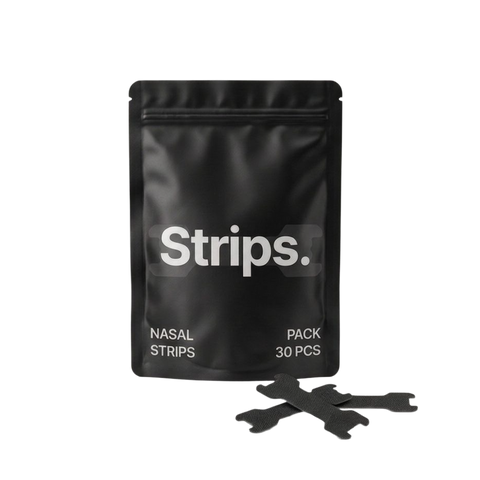
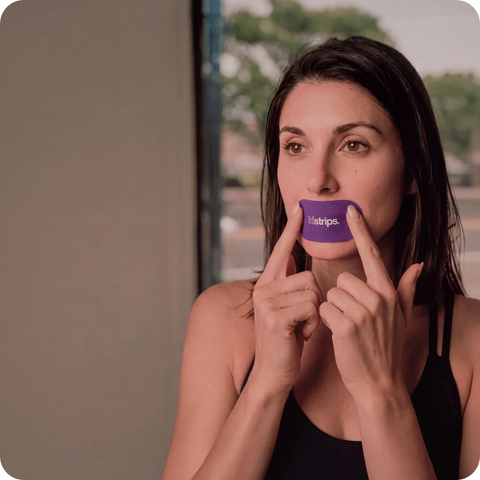
Nasal strips are external dilators. They sit across the bridge and sides of the nose and use spring-like tension to lift the soft tissue outward.
That mechanical action can help open the front part of the nasal airway, especially around the nasal valve region.
This is important because many athletes do not have a fully “blocked” nose. They simply have a nose that becomes a bottleneck under effort, heat, stress, or mild swelling. In those cases, opening the passage a little can make a noticeable difference.
Think of it this way: if breathing through the nose feels like drawing air through a narrow straw, widening that pathway slightly can make the whole system feel less strained.
What the evidence suggests
The most consistent finding around external nasal dilators is that they can reduce nasal resistance and improve subjective breathing comfort.
That is an important distinction.
Research and athlete experience tend to support three careful conclusions:
- Nasal strips can physically open the nose. This is the most established effect.
- Many users feel that breathing is easier during sleep or exercise. Perceived effort matters in sport because it influences pacing, confidence, and comfort.
- Performance effects are usually subtle, not dramatic. Some runners notice a meaningful difference. Others notice only a small change. A few notice none.
This is exactly how many legitimate performance tools work. They are not miracles. They are small levers.
For most runners, the best way to think about nasal strips is not “Will this transform my race?” but rather:
“Will this help me breathe more freely and more comfortably when breathing quality matters?”
For many athletes, the answer is yes.
When runners are most likely to notice a benefit
Not every run creates the same breathing demand. Nasal strips tend to make the most sense in situations where nasal airflow is useful but feels limited.
1. Easy runs and Zone 2 training
This is one of the best use cases.
At aerobic intensities, many runners want to stay primarily nasal or at least keep breathing controlled for longer. A strip can make that easier by reducing the sense of nasal restriction.
That is especially relevant for runners doing:
- Base building
- Fat oxidation work
- Low-heart-rate training
- Recovery jogs
- Long easy miles
2. Warm-ups before hard sessions or races
A calm, controlled warm-up matters.
If you can breathe more comfortably through the nose during the first part of your warm-up, you may feel less frantic, less dry, and more settled before the work begins. That can be valuable for runners who tend to start sessions feeling tight or over-aroused.
3. Long runs
Long runs expose every inefficiency.
If your nose starts to feel congested as the session goes on, or if you default into shallow upper-chest breathing, a nasal strip can help maintain a cleaner airflow pattern for more of the run.
4. Allergy season, cold weather, or dry environments
Some runners do not struggle year-round. They struggle when pollen is high, the air is cold, or indoor heating dries everything out.
A nasal strip will not treat allergies, but it may help offset the feeling of narrowed airflow enough to make training more comfortable.
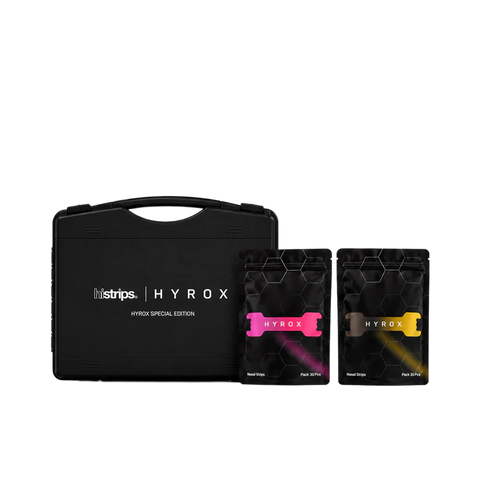
5. Hyrox and hybrid endurance training
Hyrox athletes live in the uncomfortable middle ground between pure engine work and repeated high-output efforts. You need to manage breathing under fatigue, then recover fast enough to perform again at the next station.
In that context, anything that helps airflow feel cleaner during running segments, SkiErg work, row intervals, or recovery periods can have practical value.
When nasal strips probably help less
They are not equally useful in every scenario.
All-out intensity
At very high intensities, most runners will naturally use a mix of nose and mouth breathing or switch heavily toward the mouth. That is normal. Nasal strips may still help at the margin, but the benefit is usually less noticeable than during aerobic or submaximal work.
Structural or medical breathing issues
If someone has a significant deviated septum, chronic sinus disease, nasal polyps, or suspected sleep apnea, a strip is not the right place to stop the conversation. It may help a little, but it is not a medical fix.
If the product does not stay on
This is more practical than scientific, but it matters. Cheap strips often fail when runners sweat. If the adhesive lifts mid-session, the benefit disappears.
That is one reason athletic use is a different category from bedtime-only use.
Common myths runners should ignore
Myth 1: Nasal strips are just placebo
No. The core mechanism is mechanical. A nasal strip physically pulls outward on the nose. That does not guarantee a performance boost for every person, but it is not imaginary.
Myth 2: If you still mouth breathe, the strip failed
Not true. Mouth breathing is normal as intensity climbs. The goal is not to force nasal-only breathing in every phase of every workout. The goal is to make nasal breathing easier when it is useful and to reduce the feeling of restriction.
Myth 3: If a strip works, it should feel dramatic
Not necessarily. The benefit is often subtle: smoother airflow, less panic, cleaner rhythm, easier recovery breathing, less dryness, or a better-feeling long run. Subtle does not mean worthless.
Myth 4: All nasal strips are basically the same
Also not true. Tension, shape, and adhesive quality matter. For athletes, sweat-resistance and hold are part of performance.
How runners can test nasal strips the right way
If you want a real answer, do not judge them from one random run.
Use them in a simple test block:
Session ideas to compare
- One easy Zone 2 run with a strip, one without
- One long run with similar weather and pace
- One warm-up before a tempo or track session
- One Hyrox-style interval session
What to pay attention to
Track a few simple markers:
- How quickly breathing settles during warm-up
- Whether nasal breathing feels available for longer
- Perceived effort at the same pace
- Dry mouth or throat by the end of the run
- Breathing comfort during recovery between intervals
You are not looking for magic. You are looking for repeatable improvement in breathing feel.
Where HiStrips fit in
For athletic use, the product has to do two things well:
- Open the nose effectively
- Stay on when training gets messy
That is where a premium athletic strip matters.
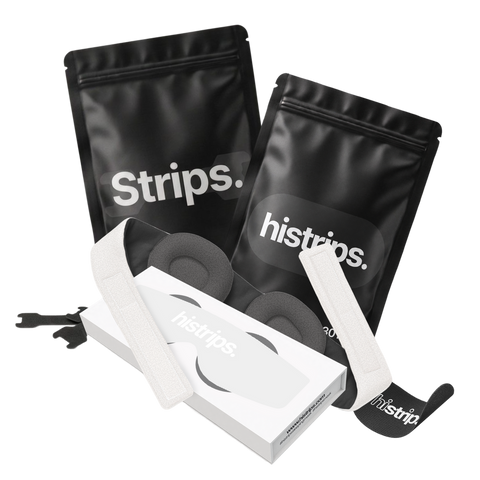
HiStrips are positioned for runners and performance-focused athletes who want a stronger hold and a more reliable fit than sleep-first pharmacy strips often provide. For runners, that matters in the real world:
- Sweat happens
- Warm-ups become workouts
- Long runs become humid
- Race-day nerves amplify every breathing annoyance
A strip that lifts early or underperforms under movement is not much use to an athlete.
A more natural way to use HiStrips is not as a miracle product, but as part of a broader breathing optimization stack:
- Good aerobic conditioning
- Smart pacing
- Nasal breathing practice where appropriate
- Better sleep and recovery habits
- A reliable strip for training, race prep, and overnight recovery
Can nasal strips help recovery too?
Potentially, yes.
Recovery is not just about what happens during the run. It is also about how well you sleep and how well you breathe overnight.
Athletes who tend to get stuffy at night, breathe through the mouth, or wake up with a dry throat may find nasal strips useful outside of training as well. Better overnight nasal airflow can support a more comfortable sleep environment, which is relevant because sleep quality underpins everything from recovery perception to training consistency.
Again, careful claims matter here: nasal strips are not a treatment for sleep disorders. But for runners trying to reduce simple nasal restriction at night, they can be a practical tool.
Final verdict: do nasal strips help runners breathe better?
For many runners, yes.
Nasal strips can help runners breathe better by mechanically opening the nose, reducing airflow resistance, and making nasal breathing feel easier during warm-ups, easy runs, long runs, and recovery periods.
The benefits are usually most noticeable in athletes who:
- Want to maintain nasal breathing longer at lower intensities
- Feel mildly restricted through the nose when running
- Train in cold, dry, or high-pollen conditions
- Care about marginal gains in comfort and breathing efficiency
- Want a simple, low-risk tool for training and recovery
They are not a shortcut to fitness. They are not a cure for medical breathing issues. But as a performance support tool, they are credible, practical, and worth testing.
If you are serious about breathing optimization, the smart move is simple: test them in training, not just once, and pay attention to how your body responds.
For runners, Hyrox athletes, and endurance athletes looking for a premium option built for real movement, HiStrips are an easy addition to the kit.
FAQ
Do nasal strips help runners breathe better during a race?
They can help some runners feel less restricted through the nose, especially in the early and moderate-intensity phases of a race. The effect is usually more about breathing comfort and reduced resistance than a dramatic speed increase.
Do nasal strips improve running performance?
They may improve the breathing experience and perceived effort for some runners, which can support performance indirectly. They are best seen as a marginal-gains tool, not a guaranteed performance booster.
Are nasal strips better for long-distance runners than sprinters?
Generally, yes. Long-distance runners and endurance athletes are more likely to notice a benefit because nasal breathing and breathing efficiency matter more over extended submaximal efforts.
Can Hyrox athletes use nasal strips too?
Yes. Hyrox athletes may find them useful during running segments, engine work, and recovery between high-output stations, especially if they feel limited by nasal airflow.
Can nasal strips replace breathing training?
No. They can support better airflow, but they do not replace aerobic fitness, pacing skill, or deliberate breathing practice.
Are nasal strips safe for everyday training use?
For most healthy adults, they are a low-risk product when used as directed on intact skin. Anyone with ongoing breathing problems, skin reactions, or suspected medical issues should speak with a qualified professional.


Leave a comment
This site is protected by hCaptcha and the hCaptcha Privacy Policy and Terms of Service apply.