



How Elite Athletes Use Red Light Therapy to Recover Faster
Introduction
Elite athletes do not rely on one recovery hack. They build systems.
That system usually includes disciplined sleep, precise nutrition, hydration, soft-tissue work, mobility, breathwork, and load management. Increasingly, red light therapy is being added to that mix—not because it replaces fundamentals, but because it may help support them.
The real lesson from elite performance is not that red light therapy is a miracle. It is that high-level athletes use marginal gains intelligently. When recovery quality improves even slightly, the effect can compound across weeks of training.
Why Elite Athletes Care About Recovery Turnaround
At the top end of sport, the difference between progress and breakdown is often recovery speed.
If an athlete can recover more efficiently between sessions, they may be able to:
- Maintain higher-quality training output
- Reduce the drag of accumulated soreness
- Improve consistency across dense training blocks
- Show up more ready for competition and repeat efforts
This is why passive recovery tools have become more attractive. They add support without adding more training stress.
Where Red Light Therapy Fits in a Pro-Level Routine
Elite athletes typically use red light therapy as one part of a layered protocol. It works best when inserted into existing systems rather than treated like a standalone fix.
Common use cases include:
1. Post-training recovery windows
After intense track work, heavy lifting, contact sessions, or repeated sprint efforts, athletes may use red and near-infrared exposure as part of their cooldown and recovery sequence.
2. Dense competition schedules
When there is limited time between events or sessions, athletes often prioritize tools that are passive, repeatable, and easy to standardize.
3. High-load body regions
Athletes frequently target areas that take repeated mechanical stress, such as hamstrings, glutes, shoulders, quads, calves, hips, and lower back.
4. Recovery environment stacking
The best performance teams stack tools. Red light therapy may be used alongside compression, contrast routines, breath-led downregulation, protein feeding, and optimized sleep environments.
The Performance Logic Behind It
From a performance perspective, red light therapy is attractive for one reason: it may support cellular recovery without creating another recovery cost.
Research in photobiomodulation points to possible benefits related to energy metabolism and recovery processes in tissue. Athletes and coaches are interested because the mechanism makes practical sense: if the body can manage training stress more efficiently, the athlete may recover more effectively.
Again, careful language matters. “Recover faster” does not mean bypassing physiology. It means supporting the body's normal post-exercise recovery response.
How Elite Athletes Tend to Think About It
High performers usually evaluate tools through four filters:
- Is it safe and low-friction?
- Can it be repeated consistently?
- Does it fit our schedule?
- Does it complement the fundamentals?
Red light therapy checks those boxes when the device is well-built and the routine is realistic.
Building an Athlete-Level Routine
You do not need a pro team to apply the same thinking. A strong athlete routine might look like this:
After lower-body training
Use the panel on quads, hamstrings, glutes, and calves during the recovery window after training.
After upper-body work
Target shoulders, chest, upper back, and elbows if those areas carry repeated loading.
During heavy blocks
Increase consistency during weeks with high volume, more field sessions, or competition density.
Combine with recovery basics
Always pair it with protein intake, hydration, quality sleep, and smart programming.
Why the Device Matters for Serious Athletes
Athletes need equipment that is built for repeat use, not novelty. A panel-based option is often more practical than inconsistent handheld use when multiple muscle groups need attention.
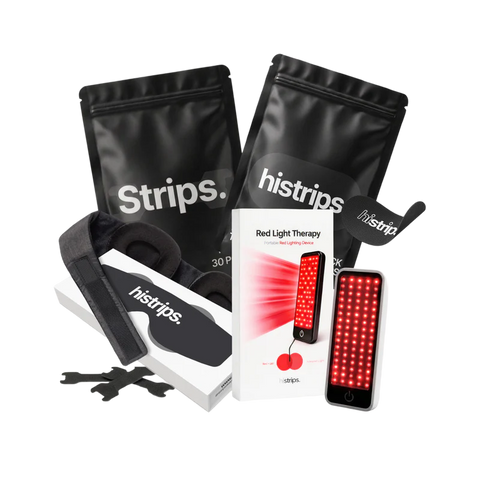
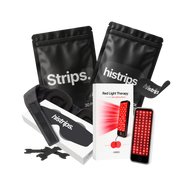
The HiStrips red and infrared recovery light panel makes sense for this audience because it is positioned as a serious recovery tool for athletes who want performance-grade light exposure as part of a complete recovery ecosystem.
Common Mistakes to Avoid
Mistake 1: Expecting instant results
Recovery tools usually work through repetition and accumulation.
Mistake 2: Using light instead of fixing fundamentals
No light therapy routine can compensate for poor sleep, low protein intake, or unmanaged training load.
Mistake 3: Being inconsistent
The athletes who get value from recovery tools are the ones who turn them into habits.
Final Take
Elite athletes use red light therapy the same way they use most advanced recovery tools: strategically, consistently, and without hype. It is not a substitute for the basics. It is a force multiplier for athletes who already respect them.
CTA
If you are building a more complete recovery protocol, consider the HiStrips red and infrared recovery light panel as a practical tool to support faster training turnaround.


Leave a comment
This site is protected by hCaptcha and the hCaptcha Privacy Policy and Terms of Service apply.