







Tennis looks explosive on the surface—serves that crack like gunshots, sprints that last only seconds, rallies that swing from finesse to all-out chaos in a heartbeat. But beneath the speed, power, and precision, there’s a quieter force deciding who lasts longest, who recovers fastest, and who stays sharp deep into the match.
Breathing.
Not just breathing—but how you breathe.
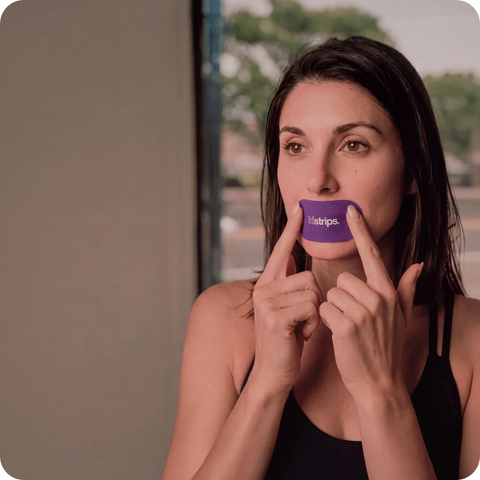
The athlete in this image captures it perfectly: intense focus, controlled aggression, and a small but powerful detail across the nose. A nasal strip. Not for style. For function. For airflow. For control.
In modern tennis, oxygen is strategy.
Tennis Is an Endurance Sport Disguised as a Power Sport
Most people think tennis is about:
-
Forehands and backhands
-
Serve speed
-
Footwork
-
Mental toughness
All true. But what separates a good player from an elite one is how well they sustain those outputs under fatigue.
A three-set match can last two to three hours. Grand Slam matches can push past five. Points may be short, but recovery windows are razor thin. You’re sprinting, stopping, changing direction, decelerating, and re-accelerating—over and over again.
That cycle puts enormous demand on your respiratory system.
If breathing falters, everything else follows:
-
Reaction time slows
-
Footwork becomes sloppy
-
Shot selection degrades
-
Mental composure cracks
In tennis, you don’t just lose power when you lose your breath—you lose clarity.
Why Mouth Breathing Is Costing Athletes Matches
Under pressure, most athletes default to mouth breathing. It feels faster. Easier. More urgent.
But physiologically, it’s inefficient.
Mouth breathing:
-
Increases heart rate faster
-
Triggers stress responses
-
Dries the airways
-
Reduces oxygen absorption efficiency
-
Speeds up fatigue
It helps you survive intensity—but not sustain it.
Nasal breathing, on the other hand, is what elite endurance systems are built on. It:
-
Filters and warms air
-
Improves oxygen uptake through nitric oxide production
-
Stabilizes breathing rhythm
-
Keeps the nervous system more regulated
-
Improves recovery between high-output bursts
For a tennis player, this means better control between points, steadier hands under pressure, and more energy late in sets.
The Problem: The Nose Collapses Under Intensity
Here’s the brutal truth most athletes never learn:
During hard effort, the soft tissue inside the nose collapses inward. Airflow can drop by up to 50%—right when you need it most.
That’s when you feel:
-
Tightness in the chest
-
Breath stacking
-
Panic breathing
-
Loss of rhythm between points
You don’t lose because your legs are weak.
You lose because your airway collapses first.
The HiStrips Solution: Mechanical Airflow Advantage
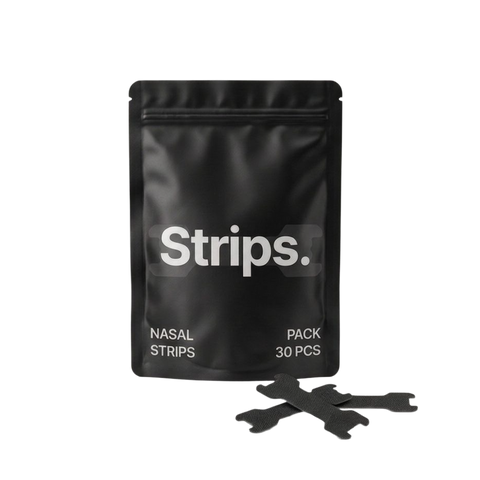
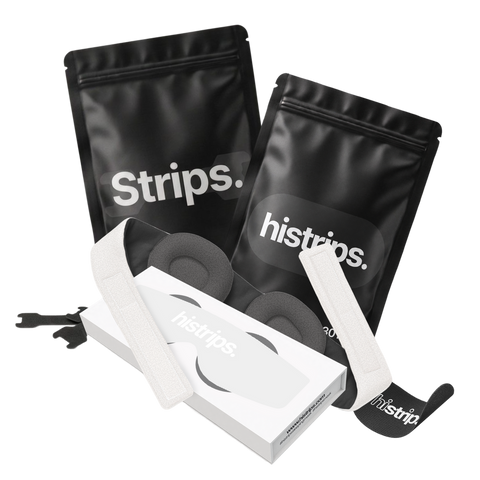
HiStrips don’t rely on tricks, scents, or placebo effects. They work mechanically.
They gently lift and stabilize the nasal passages, preventing collapse during sprints, long rallies, and high-tension points. That means:
-
More consistent airflow
-
Deeper, smoother nasal breaths
-
Faster recovery between points
-
Lower heart rate spikes
-
Better emotional regulation under pressure
In tennis, where one shaky service game can flip an entire match, that control is priceless.
Why More Tennis Players Are Turning to Nasal Strips
At every level of the sport—from club players to professionals—athletes are starting to understand something fundamental:
You can’t separate breathing from performance anymore.
Players who use HiStrips report:
-
Feeling calmer on return points
-
More stable breathing during long rallies
-
Faster recovery during changeovers
-
Less “air hunger” in third sets
-
Better consistency under fatigue
And consistency is what wins matches.
Performance Is Physical — But Also Neurological
Breathing isn’t just about oxygen. It’s about the nervous system.
When breathing becomes chaotic, the brain reads danger. Cortisol rises. Decision-making tightens. You rush shots. You overhit. You tense up.
Nasal breathing does the opposite. It tells the body:
“You’re safe. You’re in control. Stay sharp.”
That mental calm shows up in:
-
Cleaner ball striking
-
Better shot patience
-
Fewer unforced errors
-
Smarter point construction
Tennis is often decided by who breaks first mentally—not physically.
Built for Sweat, Heat, and Match Pressure
HiStrips are designed to perform where cheap nasal strips fail:
-
High-sweat adhesion that stays locked through humidity and long sets
-
Premium structure that holds the nasal valve open under max effort
-
Minimal, athletic design that looks clean on and off court
-
Hypoallergenic materials for sensitive skin
This is not a drugstore gimmick.
It’s performance equipment.
The Smallest Detail That Changes the Whole Match
Tennis is a game of margins:
-
A half-step slower
-
A fraction late on the return
-
One rushed decision
Those margins are often decided by how well you breathe under stress.
HiStrips don’t swing the racket for you.
They don’t choose your shots.
They simply give your body what it needs to do both at the highest level:
consistent oxygen.
And in a sport where consistency beats chaos every time, that’s everything.
Why the Best Athletes Obsess Over Invisible Advantages
Elite athletes don’t just train harder—they optimize what others ignore:
-
Sleep
-
Recovery
-
Hydration
-
Nervous system regulation
-
Breathing
HiStrips live in that final category—the invisible edge.
It’s the difference between feeling like you’re surviving points…
and feeling like you’re dictating them.
Final Word: Control the Breath, Control the Match
Tennis will always demand speed, power, and skill.
But the athletes who dominate consistently are the ones who master their physiology first.
If your breathing collapses, your game follows.
HiStrips exist to make sure that never happens.
Because when your airway stays open—
Your game stays sharp.
Your mind stays calm.
And your performance stays dangerous.




Leave a comment
This site is protected by hCaptcha and the hCaptcha Privacy Policy and Terms of Service apply.