






Best Nasal Strips for Running: A Complete Comparison
Running presents a unique set of challenges for nasal strips that most other activities simply don't create. Between sweat, wind, hours of continuous movement, and the high respiratory demands of distance running, a nasal strip for running needs to be engineered to a completely different standard than a basic sleep strip.
Here's what you need to know to choose the right strip for your runs.
Why Running Demands More from Nasal Strips
When you run, your body produces significantly more heat, your sweat rate spikes, and your skin becomes moist — often within the first few minutes. Most nasal strips are designed for dry, low-output conditions, so they begin losing their bond almost immediately once you start moving.
Wind exposure adds another challenge. At race pace, airflow across your face creates additional shear forces that work to lift strip edges. Long-duration runs — a half marathon, a marathon, even a challenging 10K — mean the strip must hold for one, two, three, or more hours without shifting or peeling.
What to Look for in Running-Specific Nasal Strips
Sweat-proof adhesive: This is the #1 differentiator. Look for strips specifically engineered for athletic use, not standard drugstore varieties. Adhesive technology matters enormously here.
Durability under prolonged wear: A strip that works for 20 minutes is useless for a marathon. You need evidence of multi-hour adhesion.
Secure bridge design: The spring mechanism needs to be robust enough to maintain dilation despite facial movement and wind pressure.
Comfort during long efforts: Irritation that you'd tolerate for 20 minutes becomes unbearable over three hours. Material and skin compatibility matter.
Distance Running vs. Short Sprints: Different Demands
Sprinters need maximum initial nasal dilation for short, explosive efforts — adhesive security matters for the duration of the effort, but heat and sweat are less of a factor in short events.
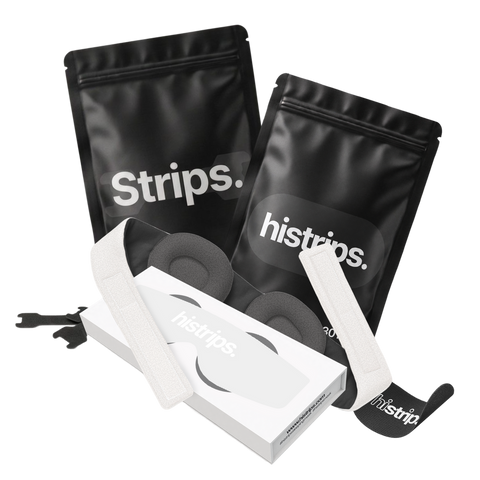
Distance runners face the full gauntlet: heat accumulation over time, sustained sweat exposure, and the psychological challenge of maintaining breathing efficiency for hours. HiStrips are engineered for exactly this scenario — distance athletes who need guaranteed performance throughout their entire run, not just the first 15 minutes.
Key Features Comparison
When comparing nasal strips for running, prioritize adhesive engineering and sweat resistance above all else. A strip with a mediocre spring mechanism that stays on your nose will outperform a theoretically superior strip that falls off at kilometer three.
Look for independent testing data, athlete reviews from endurance events, and — if available — the specific adhesive technology being used. HiStrips use a proprietary sweat-proof adhesive developed specifically for high-output athletic conditions, delivering consistent nasal dilation from start to finish of even the longest races.


Leave a comment
This site is protected by hCaptcha and the hCaptcha Privacy Policy and Terms of Service apply.