







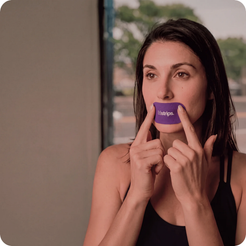


Do Nasal Strips Actually Work for Athletes?
You've probably seen elite runners and NBA players wearing those small, flexible strips across the bridge of their nose. But do nasal strips actually work, or is it just a placebo effect that athletes are chasing?
Let's cut through the noise and look at what the science actually says — and what that means for you as an athlete.
What Nasal Strips Actually Do
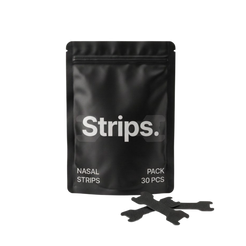
Nasal strips are designed around a simple mechanical principle: they use spring-like bands to physically pull open the nasal valves — the narrowest part of your nasal airway. When the sides of your nose collapse inward during breathing, airway resistance increases dramatically. A nasal strip prevents that collapse, reducing the effort required to move air through your nasal passages.
Think of it like a tent pole holding up a tent. Without the pole, the fabric collapses and restricts space. With it, air flows freely.
The Evidence on Athletic Performance
Multiple peer-reviewed studies have examined nasal strips in athletic contexts. Research published in the Journal of Strength and Conditioning Research found that nasal strips reduced nasal airway resistance by approximately 50% in participants with nasal valve collapse. In separate studies with cyclists and runners, subjects using nasal strips showed improved exercise tolerance and reduced perception of breathing effort.
However — and this is critical — the performance benefit is only realized when the strip stays on throughout the activity. A nasal strip that lifts off your nose mid-workout delivers zero benefit, no matter how well-engineered the spring mechanism is.
The Adhesive Quality Problem
Here's where most commercial nasal strips fall short for athletes. Standard drugstore nasal strips are designed for brief, low-sweat use — think sleeping, light activities, or casual wear. They use pressure-sensitive adhesives that work fine when your skin is dry and your heart rate is normal.
Start running, and everything changes. Sweat dissolves the adhesive bond. Heat softens it further. Movement shear tears at the edges. Within minutes, the strip is hanging by a thread — if it's still there at all.
Who Benefits Most?
Nasal strips are most effective for athletes who have some degree of nasal valve collapse (present in a significant percentage of the population) and who train at moderate intensities where nasal breathing remains viable. At near-maximum effort, most athletes will need oral breathing regardless.
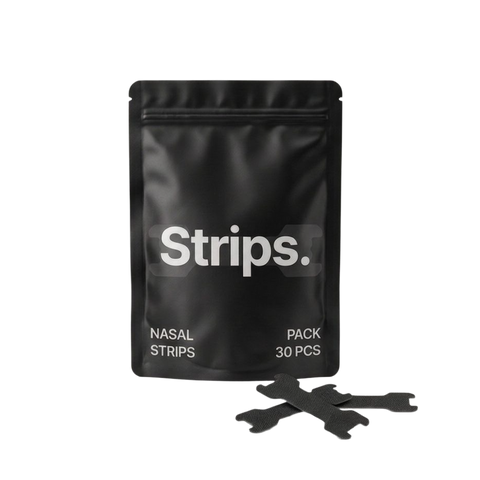
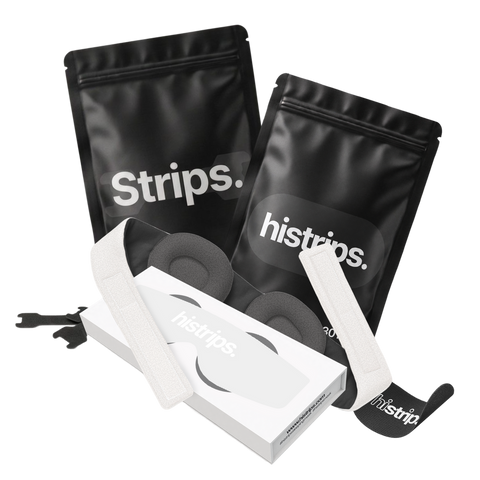
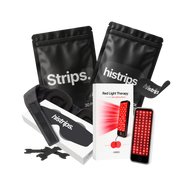
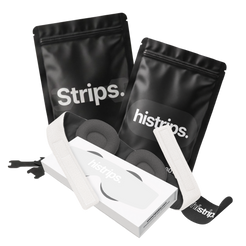
HiStrips were engineered specifically for the demands of real athletic training. The adhesive is sweat-proof, stays bonded through high-intensity intervals and long endurance sessions, and delivers the promised nasal dilation effect consistently. If you've tried nasal strips before and been disappointed, the issue was almost certainly the adhesive — not the concept.


Leave a comment
This site is protected by hCaptcha and the hCaptcha Privacy Policy and Terms of Service apply.