






Walk the start line of any marathon, trail race, or track event and you'll spot them: the telltale strips across athletes' noses. Nasal strips have become a fixture of endurance sport — but do they actually improve running performance, or is it all psychological? The science says they work. Here's why.
The Oxygen Bottleneck in Endurance Running
At moderate-to-high intensities, your cardiovascular system is working hard to deliver oxygenated blood to working muscles. The efficiency of this system depends, in part, on how much oxygen you can extract per breath. Nasal breathing plays a critical role here that most runners overlook.
The nose filters, warms, and humidifies air before it reaches the lungs. Crucially, it is also where nitric oxide — a powerful vasodilator — is produced. Nitric oxide is absorbed into the bloodstream during nasal breathing, relaxing blood vessels, improving blood flow to muscles, and enhancing oxygen utilisation at the cellular level. Mouth breathing bypasses most of this nitric oxide production.
How Nasal Strips Improve Airflow for Runners
During running, breathing rate and depth increase significantly. For many runners, this increase in demand creates restriction at the nasal valve — the narrowest part of the nasal passage. The result is that runners unconsciously switch to partial or full mouth breathing, losing the nitric oxide advantage and the filtering and humidification benefits of nasal breathing.
Nasal strips address this directly. By lifting the sides of the nose and widening the nasal valve, nose strips reduce resistance and allow more air through with each breath. This keeps nasal breathing viable at higher effort levels — and keeps the nitric oxide pathway open.
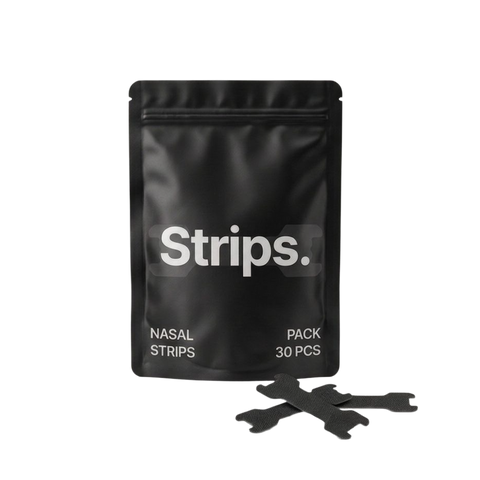
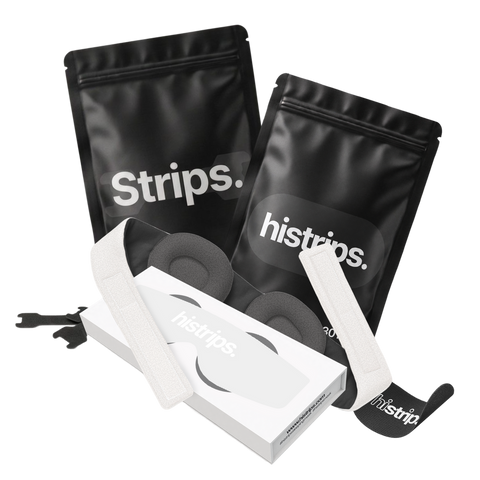
HiStrips are engineered with a precision dual-spring system that delivers maximum nasal valve lift, designed specifically for the demands of athletic breathing. They stay firmly in place through sweat and heavy breathing, unlike generic strips that may peel at the edges during hard efforts.
What Runners Experience with Nasal Strips
Elite and recreational runners who use nasal strips consistently report several subjective improvements:
- Reduced perceived breathlessness at a given pace
- Easier nasal breathing at tempo and threshold intensities
- Better breathing rhythm during interval training
- Less dry mouth after long efforts, suggesting more nasal breathing is maintained
- Improved post-run recovery through more efficient breathing during cool-down
Nitric Oxide: The Runner's Secret Weapon
Nitric oxide (NO) deserves its own attention. This molecule is produced in the nasal sinuses during nasal breathing and plays multiple performance-relevant roles: vasodilation (wider blood vessels = better blood flow), bronchodilation (wider airways), and improved mitochondrial oxygen utilisation.
Research published in the Journal of Applied Physiology has confirmed that nasal breathing during exercise results in meaningfully higher blood NO levels compared to mouth breathing. For distance runners, this translates to more efficient oxygen delivery over the course of a long run — which compounds over hours of racing or training.
How to Use HiStrips for Running
- Apply 5–10 minutes before your warm-up so you can assess adhesion before your heart rate climbs.
- Ensure clean, dry skin before application — use a face wipe if needed at the start of a race or outdoor training.
- Position correctly over the nasal flare, not the bony bridge, for maximum valve opening.
- Train with nasal strips before racing with them — your breathing patterns adapt over time and you'll extract more benefit as your nasal breathing capacity improves.
Running Races with Nasal Strips
Nasal strips contain no prohibited substances and are fully compliant with all athletic competition rules including WADA regulations. Many professional marathon runners, trail ultramarathon athletes, and triathletes use them in competition. HiStrips' sweat-resistant adhesive is designed to last through the full duration of a race effort in hot, humid conditions.
Frequently Asked Questions
Do nasal strips actually help running performance?
Yes — there is good scientific evidence that nasal strips increase nasal airflow and support nasal breathing during exercise. The nitric oxide mechanism provides a physiological basis for performance improvement in endurance running. Many runners report subjective and measurable improvements in breathing ease and recovery.
When should I apply nasal strips before a race?
Apply HiStrips 5–10 minutes before your warm-up begins. This gives the adhesive time to fully bond to your skin before you start sweating. Check adhesion during your warm-up and re-centre if needed before the start.
Are nasal strips legal in running competitions?
Yes, completely. Nasal strips are mechanical devices with no pharmacological effect. They are not on the WADA prohibited list and are fully legal in all athletic competitions at every level.
Can nasal strips help with breathing through the nose during hard efforts?
Yes — this is their primary function. By reducing nasal resistance at the valve, HiStrips make it physically easier to breathe through the nose at intensities where most people default to mouth breathing. With consistent use, many athletes find they can maintain nasal breathing at higher effort levels over time.
Run Harder. Breathe Better.
Your lungs and legs are ready. Is your nose? Give your running the breathing infrastructure it deserves with HiStrips — the nasal strip built for athletes.
Shop HiStrips at histrips.com and start your next run breathing at full capacity.


Leave a comment
This site is protected by hCaptcha and the hCaptcha Privacy Policy and Terms of Service apply.