





Learn whether nasal strips really work for snoring, sleep, congestion, and exercise, plus how to choose a high-quality strip and use it correctly.
Quick answer
Yes—nasal strips can really work for the right problem. They do not medicate, sedate, or treat every cause of poor sleep, but they can mechanically lift the outer nasal passages to help some people breathe more easily through the nose. That may reduce nasal resistance, improve comfort during sleep, make exercise breathing feel easier, and help with snoring that is partly driven by nasal blockage. They are less likely to help if snoring or breathing disruption mainly comes from the throat, obesity, alcohol use, or untreated sleep apnea.
Key takeaways
- Nasal strips work by opening the external nasal valve, often the narrowest part of the nose.
- They can help with temporary congestion, mild nasal restriction, exercise breathing, and some snoring cases.
- They do not cure sleep apnea and should not replace medical evaluation if you have choking, gasping, severe daytime fatigue, or witnessed breathing pauses.
- Best results usually come from strong adhesive, correct placement, clean skin, and the right strip size.
- High-quality strips combine noticeable lift, comfortable wear, reliable all-night adhesion, and skin-friendly materials.
What are nasal strips?
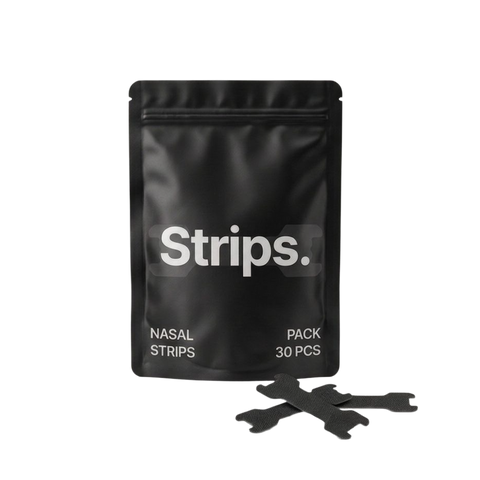
Nasal strips are drug-free adhesive bands worn across the bridge and sides of the nose. They contain spring-like bands that gently pull outward on the nostrils to widen the nasal passage opening.
In simple terms, nasal strips lift the outside of the nose to make nasal breathing easier. They do not go inside the body and they do not contain medication.
For many people, the biggest airflow bottleneck is near the external nasal valve—the front part of the nasal passage that can narrow during sleep, congestion, or exercise. Nasal strips target that area directly.
How do nasal strips work?
| Question | Short answer |
|---|---|
| Do nasal strips really work? | Often yes, if the issue is reduced nasal airflow near the front of the nose. |
| Do they work instantly? | Usually within minutes once placed correctly. |
| Do they contain medicine? | No, they are drug-free. |
| Do they help everyone? | No. Results depend on the cause of the breathing problem. |
They work by mechanically pulling the outer nasal walls outward. This can reduce collapse at the narrowest part of the nose and improve airflow through the nostrils.
The most accurate way to describe the benefit is simple: nasal strips do not force more oxygen into the body or act like a medical treatment. They reduce resistance at the nose for some users.
Do nasal strips really work for snoring?
Sometimes they can reduce snoring, but they do not stop all snoring. They work best when snoring is linked to nasal congestion, narrow nasal passages, or difficulty keeping the nose open during sleep.
Snoring happens when airflow causes tissue vibration somewhere in the airway. If your nose is blocked, you may be more likely to breathe through your mouth, which can worsen snoring for some sleepers. By improving nasal airflow, strips may reduce one of those triggers.
They tend to be more promising when snoring gets worse during allergy season or a cold, when you feel blocked on one or both sides of the nose at night, or when lifting the sides of your nose noticeably improves airflow.
They are less likely to solve the problem when snoring is mainly driven by throat-based airway collapse, alcohol or sedative use before bed, excess weight, enlarged tonsils, or untreated obstructive sleep apnea.
What to look for in a snoring-focused strip
- Strong adhesive that stays in place through the night.
- Structured spring bands that create noticeable lift.
- Comfortable all-night wear that does not distract from sleep.
- Sensitive-skin-friendly materials for repeat use.
- Consistent sizing and shape so placement is easy night after night.
| Feature | Why it matters for snoring |
|---|---|
| Adhesive strength | A strip that lifts early but peels off by 2 a.m. will not deliver full-night benefit. |
| Lift strength | Too weak and the airway opening barely changes. |
| Comfort | If it pinches, it can disrupt sleep even if airflow improves. |
| Skin friendliness | Important for nightly or frequent use. |
| Shape consistency | Makes placement more repeatable and effective. |
Can nasal strips improve sleep quality?
They can improve sleep quality for people whose sleep is disturbed by nasal blockage, stuffiness, or snoring related to restricted nasal airflow. They do not improve sleep in every case.
When people say a strip helped them sleep better, they usually mean breathing through the nose felt easier, they woke up less from feeling stuffy, their partner noticed less snoring, or they felt less dry mouth from reduced mouth breathing.
That does not mean the strip changed sleep architecture for everyone. It means it may have improved sleep comfort and breathing ease, which can matter a great deal in day-to-day life.
Who may notice better sleep with nasal strips?
- People with seasonal congestion
- Side or back sleepers with mild nasal restriction
- Snorers whose issue is partly driven by blocked nasal airflow
- People who wake with a dry mouth because they tend to mouth breathe
Can nasal strips help sleep apnea or mild sleep apnea?
Nasal strips are not a treatment for obstructive sleep apnea. They may make nasal breathing feel easier, but they should not be relied on to manage a condition involving repeated airway obstruction during sleep.
They may help some people with mild sleep apnea feel more comfortable breathing through the nose, but that is not the same as treating the condition itself.
If you suspect sleep apnea, the right next step is medical evaluation, especially if you have loud habitual snoring, gasping or choking during sleep, witnessed breathing pauses, morning headaches, or significant daytime sleepiness.
Can nasal strips help congestion, post-nasal drip, or a deviated septum?
| Condition | Can nasal strips help? | Important nuance |
|---|---|---|
| Temporary congestion | Often yes | They are drug-free and can improve airflow comfort. |
| Allergies or colds | Sometimes | They do not treat the underlying inflammation. |
| Post-nasal drip | Indirectly sometimes | They may ease nasal breathing, but do not treat the cause of the drip. |
| Deviated septum | Sometimes partly | They may help external airflow, but cannot correct the structure. |
Nasal strips can help some people feel less blocked by physically opening the nose. They are a drug-free congestion solution, but they do not cure the cause of congestion.
They may help post-nasal drip indirectly if the main issue is feeling blocked and switching to mouth breathing, but they do not address why mucus is present.
They can help some people with a deviated septum breathe a little easier through the nose, particularly if part of the restriction is near the outer nasal wall. They cannot straighten the septum or fix the anatomical deviation itself.
Nasal strips do not permanently change nose shape. Any visible outward lift disappears when the strip is removed.
Do nasal strips help athletes breathe better during exercise?
They can help some athletes feel smoother, easier nasal airflow during exercise, especially during warm-ups, steady runs, and recovery work.
During exercise, airflow demand rises. If the nasal valve area narrows under increased inspiratory effort, the nose can feel like a bottleneck. Nasal strips can reduce that bottleneck by holding the nasal walls open.
| Performance factor | Why it matters |
|---|---|
| Strong adhesive | Helps the strip stay put during sweat and movement. |
| Flexible comfort | Important during long training sessions or overnight recovery. |
| Reliable lift | Needed to keep the airway support noticeable. |
| Skin-friendly design | Reduces irritation from repeated use. |
Nasal strips vs nasal sprays vs internal nasal dilators
| Option | How it works | Best for | Pros | Cons |
|---|---|---|---|---|
| External nasal strips | Pull outer nasal walls outward | Sleep, snoring, congestion, exercise | Drug-free, simple, non-invasive | Adhesive quality matters |
| Internal nasal dilators | Sit inside nostrils to hold them open | Strong mechanical opening | Reusable, powerful effect for some | Can feel intrusive or uncomfortable |
| Saline spray | Moisturizes and clears mucus | Dryness and mild congestion | Drug-free and gentle | Short-term effect |
| Medicated nasal spray | Reduces swelling or inflammation depending on type | Allergies or specific nasal issues | Targets underlying inflammation | Not for everyone; use should follow label or medical advice |
Choose nasal strips when you want a drug-free option that supports the feeling of easier nasal airflow during sleep or exercise. Choose sprays when the issue is more about inflammation, allergy-related swelling, or dryness.
What makes a high-quality nasal strip?
A high-quality strip creates noticeable lift, stays on through the night or workout, feels comfortable, and removes cleanly without punishing sensitive skin.
| Buying factor | Low-quality strip | High-quality strip |
|---|---|---|
| Adhesive | Peels early, especially with sweat or overnight movement | Holds consistently without constant readjustment |
| Lift structure | Weak or inconsistent opening effect | Firm, repeatable lift across the nasal valve area |
| Comfort | Feels stiff, itchy, or distracting | Comfortable enough for all-night or active wear |
| Skin compatibility | More likely to irritate with repeated use | Better suited for frequent wear and sensitive skin |
| Intended use | Generic | Designed for sleep, recovery, and performance needs |
If adhesive reliability is your priority, buy from brands that clearly emphasize overnight hold, performance wear, and skin comfort rather than treating the strip like a disposable commodity.
Common mistakes, myths, and who should use them
Common mistakes
- Placing the strip too high on the nasal bridge instead of over the area that flares.
- Applying to oily or damp skin, which weakens adhesion.
- Choosing the wrong size or shape for your nose.
- Expecting it to fix throat-based snoring or sleep apnea.
- Removing it too fast, which can irritate skin.
How to use nasal strips correctly
- Wash and dry the nose thoroughly.
- Identify the point where the nostrils widen.
- Center the strip so the bands sit over the outer nasal walls.
- Press and hold for secure adhesion.
- Remove gently in the morning, ideally after loosening the adhesive with warm water.
| Myth | Fact |
|---|---|
| Nasal strips are just placebo. | They create a real mechanical lifting effect on the outer nose. |
| Nasal strips can cure sleep apnea. | They are not a treatment for sleep apnea. |
| Any strip works the same. | Adhesive strength, lift, comfort, and skin friendliness vary widely. |
| Nasal strips change your nose shape permanently. | They only change appearance temporarily while worn. |
| They only help during colds. | They may also help with exercise, snoring, and nightly nasal restriction. |
Who should try nasal strips?
- People who snore more when their nose feels blocked
- People who want a simple drug-free congestion solution
- People who breathe well through the nose sometimes, but not consistently at night
- People who want easier nasal breathing during running or training
- People who wake up with dry mouth from likely mouth breathing
Who should not rely on nasal strips alone?
- Anyone with suspected or diagnosed sleep apnea
- People who experience frequent choking, gasping, or breathing pauses during sleep
- People with severe persistent nasal obstruction
- People with broken skin, rash, or adhesive sensitivity on the nose
- People with recurring nosebleeds without a clear cause
Final verdict
Yes, nasal strips really can work—but only when used for the right reason and with realistic expectations.
They are best understood as a simple mechanical breathing aid. They can help improve nasal airflow, support more comfortable breathing during sleep or exercise, and reduce some forms of snoring linked to nasal blockage. They are not a cure-all, and they are not a replacement for medical care when symptoms suggest sleep apnea or another underlying condition.
For most shoppers, the practical question is not just whether nasal strips work, but whether a given strip will stay on, stay comfortable, and create enough lift to matter. That is why stronger adhesive, reliable structure, comfortable wear, and skin-friendly materials make a meaningful difference.
FAQ
Do nasal strips really work?
Yes. Many people find they work well for improving nasal airflow, especially when the issue is near the outer nasal passages.
Can nasal strips stop snoring?
They can reduce snoring in some cases, but they do not stop every type of snoring.
Can nasal strips improve sleep quality?
They can improve sleep comfort and perceived sleep quality for some users by making nasal breathing easier.
Can nasal strips help sleep apnea?
They are not a treatment for sleep apnea and should not replace medical evaluation or prescribed therapy.
Can nasal strips help congestion?
Yes, they can provide a drug-free way to make the nose feel more open.
Can nasal strips help a deviated septum?
They may improve airflow comfort for some people, but they cannot correct the structural deviation.
Do nasal strips help athletes breathe better?
They can help some athletes feel easier nasal airflow during training and competition.
What makes a high-quality nasal strip?
Strong adhesive, noticeable lift, comfortable wear, and skin-friendly materials.


Leave a comment
This site is protected by hCaptcha and the hCaptcha Privacy Policy and Terms of Service apply.