







Why Carlos Alcaraz Wears Nasal Strips on Court

Carlos Alcaraz wearing HiStrips nasal strips

The crowd at Roland Garros holds its breath. It's the fifth set. Carlos Alcaraz — all twenty-one years of him — digs deep into a stance that shouldn't be humanly possible, launches a cross-court forehand at 130 km/h, and somehow recovers to cover the next shot before the crowd has exhaled. His shirt is soaked. His legs are burning. And right there, across the bridge of his nose, sits a small, curved strip of medical-grade material that most spectators never notice. But elite performance coaches do. Sports scientists do. And increasingly, the athletes chasing Alcaraz's level of play do too. That strip isn't a quirk. It isn't a sponsorship prop. It's a calculated, science-backed performance tool — and once you understand why it's there, you'll never watch a tennis match the same way again.
The Secret Weapon Hidden in Plain Sight
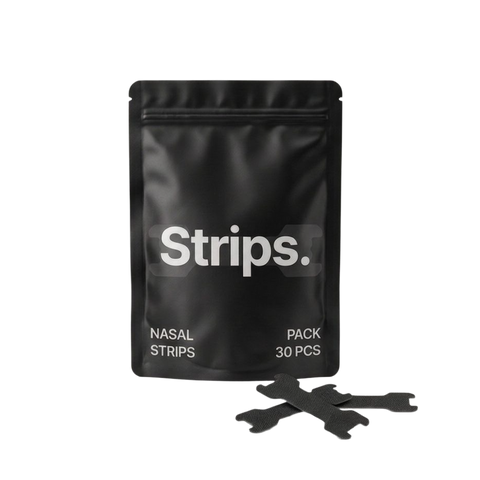
Nasal strips work by mechanically widening the nasal passages. The strip adheres to the outside of the nose and, through a spring-like tension in its bands, gently lifts the sides of the nose outward — specifically targeting the area known as the nasal valve, which is the narrowest point of the nasal airway and the primary source of nasal airflow resistance in most people.
That reduction in resistance matters more than most people realize. At rest, roughly 70% of total airway resistance comes from the nasal passages. During high-intensity exercise, when breathing rate spikes and athletes are pulling hard for every cubic centimeter of oxygen they can get, even a modest improvement in nasal airflow efficiency compounds into a meaningful performance gain.
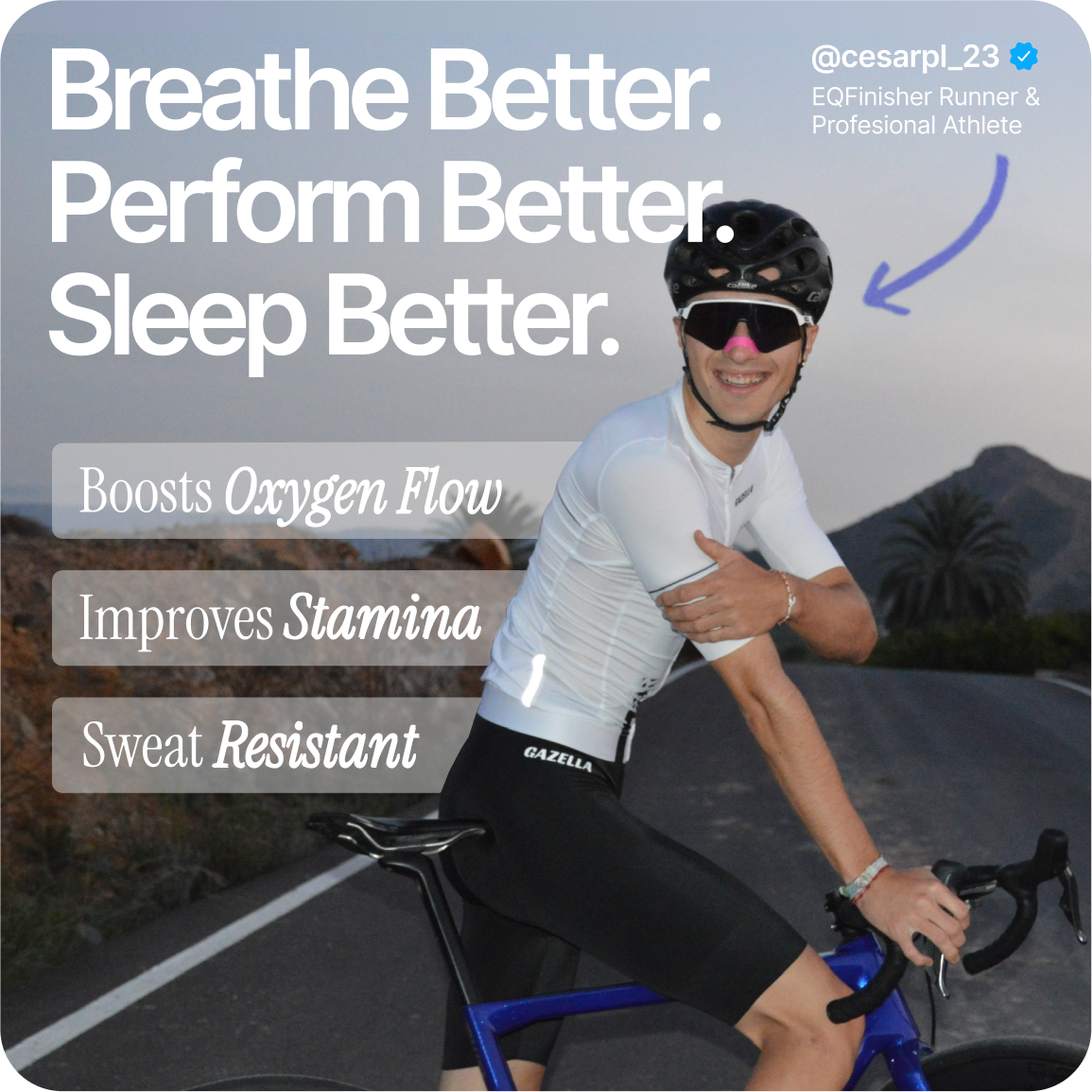
By mechanically dilating the nasal valve, nasal strips reduce the effort required to move air through the nose — which translates to less respiratory muscle fatigue, more oxygen available per breath, and a lower perceived exertion at the same workload. For a world-class tennis player deep in a five-set match, every marginal gain matters. This one is hiding in plain sight.
Why Nasal Breathing Matters in Tennis
Tennis is a deceptive sport. From the stands, it looks like controlled bursts of explosive effort followed by comfortable recovery. From inside the baseline, it's one of the most physiologically demanding sports on earth. A single five-set Grand Slam match can last four to five hours. Rallies demand maximal anaerobic output — explosive lateral movement, full-swing groundstrokes, split-second net approaches — followed by only fifteen to twenty seconds of recovery before the next point begins.
The physiological challenge isn't just the anaerobic bursts. It's the accumulated oxygen debt, the rising CO2 levels in the blood, and the cognitive demands of maintaining tactical clarity while the body screams for rest. This is where nasal breathing — and the optimization of it — creates a genuine competitive edge.
Breathing through the nose (versus the mouth) increases CO2 tolerance. This matters because it's not actually low oxygen that triggers the urge to breathe — it's rising CO2. Athletes with higher CO2 tolerance can sustain harder efforts longer before feeling respiratory distress. Nasal breathing also activates the parasympathetic nervous system more effectively, supporting faster recovery between points. And the nasal passages produce nitric oxide — a vasodilating molecule that improves oxygen delivery to working muscles — a mechanism that mouth breathing simply bypasses.
For Alcaraz, who plays with an intensity that borders on reckless, the nasal strip isn't a gimmick. It's part of a breathing strategy designed to keep him functional — physically and mentally — deep into the deciding sets where matches are won and lost.
What the Science Says
The research on nasal breathing and athletic performance has grown considerably over the past decade, and the findings are consistently compelling. Studies in respiratory physiology have demonstrated that nasal strips can meaningfully reduce nasal airflow resistance — with some research showing reductions of 25–30% in airflow resistance when strips are applied, particularly during exercise when nasal congestion and tissue swelling naturally increase resistance.
On the nitric oxide front, the evidence is even more striking. The nasal passages and sinuses are the body's primary production site for endogenous nitric oxide — a molecule with profound effects on vascular function. When inhaled through the nose, nitric oxide travels directly into the lungs, where it acts as a local vasodilator, improving the matching of ventilation to blood flow and enhancing oxygen uptake efficiency. Research has shown that nasally-inhaled nitric oxide can improve arterial oxygen saturation — particularly relevant at altitude or during maximal aerobic effort.
Studies examining the relationship between nasal breathing training and VO2 max have found that athletes who train with nasal-only breathing protocols — even at lower intensities — develop greater CO2 tolerance, improved breathing efficiency, and stronger respiratory muscles. The nasal strip, in this context, serves as a tool that makes nasal breathing more accessible and sustainable during high-intensity competition, where the urge to default to mouth breathing is strongest. The strip reduces the resistance that would otherwise force the switch — keeping athletes in the nasal-breathing zone where the physiological benefits compound.
HiStrips: Built for Athletes Like Alcaraz
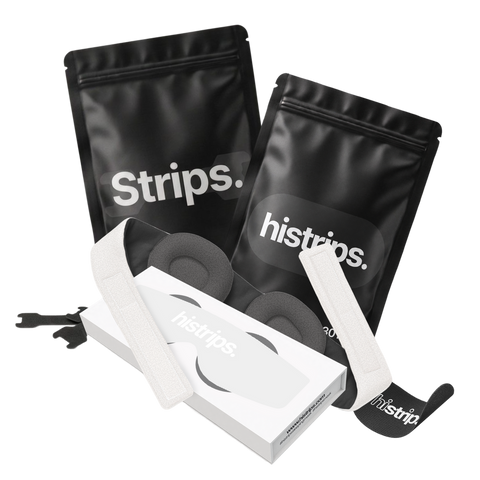
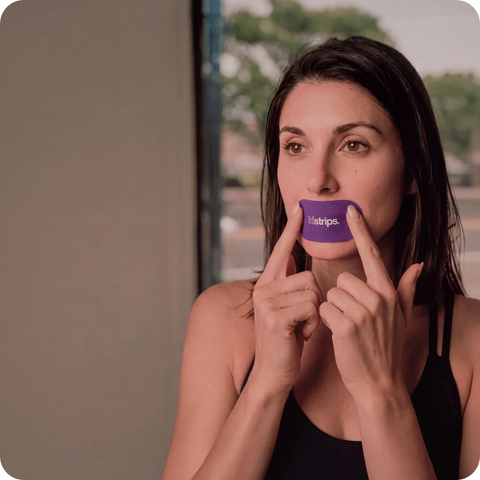
Most nasal strips on the market were designed for snorers — not for athletes moving at full sprint, diving for drop shots, or grinding through a three-hour third set in summer heat. HiStrips are different. Engineered specifically for performance contexts, HiStrips use a medical-grade adhesive that holds through sweat, heat, and the kind of facial movement that comes with explosive athletic effort. The strip contours to the bridge of the nose with a flexible band designed to maintain consistent dilation force throughout competition — not just the first twenty minutes.
The adhesive is skin-tested and designed for sensitive skin, so it goes on clean and comes off cleanly — no residue, no irritation after a long match. And the lifting force is calibrated for sport: strong enough to make a measurable difference in airflow, gentle enough to stay comfortable through hours of intense activity.
If you train hard, compete seriously, or simply want to breathe better during the activities that matter most to you, HiStrips are the nasal strip built to match your effort. Shop HiStrips Nasal Strips and start breathing like the athletes at the top of the game.
How to Use Nasal Strips Like a Pro
Getting the most from a nasal strip starts with placement. The strip should sit across the widest part of the nose bridge — not too high (near the bony bridge) and not too low (near the tip). The center of the strip should align with the nasal valve area, roughly 3–4mm above the tip of the nose. Clean, dry skin is essential for adhesion: apply the strip before you sweat, on freshly washed or alcohol-wiped skin.
For training, consider wearing the strip during warm-up and through the full session to build familiarity with the sensation and maximize the adaptation benefits. For competition, apply it as part of your pre-match routine — at least five minutes before you begin.
To get even more from nasal breathing, pair nasal strips with deliberate breathing practice. During lower-intensity training sessions, challenge yourself to breathe exclusively through the nose. This builds CO2 tolerance and respiratory efficiency over weeks and months, creating compounding performance benefits that go well beyond what the strip alone provides. Think of the strip as the tool that makes the practice accessible — and the practice as the thing that raises your ceiling.
The Takeaway
When you see Carlos Alcaraz on court — moving with impossible fluency, recovering from points that would end lesser players, maintaining the kind of focus that wins Grand Slams — and you notice that small strip across his nose, know that it isn't accidental. It's intentional. It's science. It's the kind of marginal gain that separates athletes who compete at the highest level from those who wish they could.
The best part? You don't have to be ranked number one in the world to access this performance edge. HiStrips Nasal Strips are available now — engineered for athletes who refuse to leave performance on the table. Try them in your next training session, and feel the difference that better breathing makes.


Leave a comment
This site is protected by hCaptcha and the hCaptcha Privacy Policy and Terms of Service apply.