





You crushed the session. Hit every set. Left nothing in the tank.
Then you went home, fell asleep with your mouth wide open, and gave back half the work.
Mouth breathing during sleep is the silent performance killer most athletes never address. It spikes cortisol, fragments sleep architecture, dries out your throat, and leaves you foggy by morning. Eight hours in bed, and your body barely recovered.
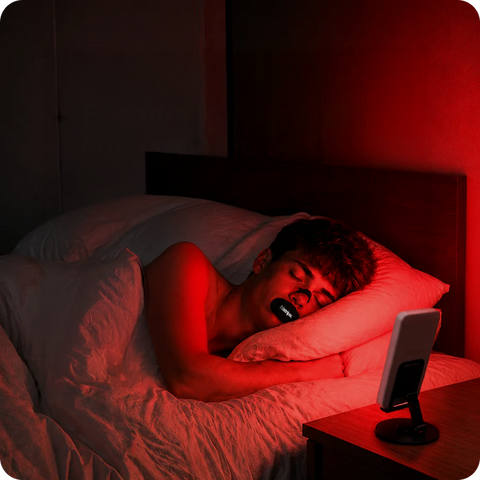
Mouth tape fixes that. One strip across your lips. Mouth stays sealed. Every breath goes through the nose. Deeper slow-wave sleep. Better REM. You wake up recovered, not just rested.
This is the complete guide. What mouth tape does, why it matters for recovery, how it connects to jaw posture and nasal breathing, and how to use it the right way.
What Mouth Tape Does
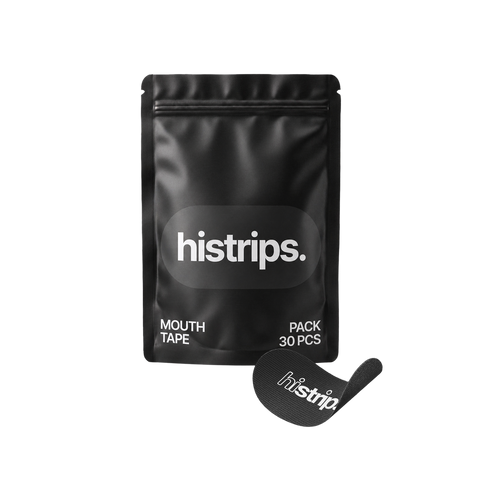
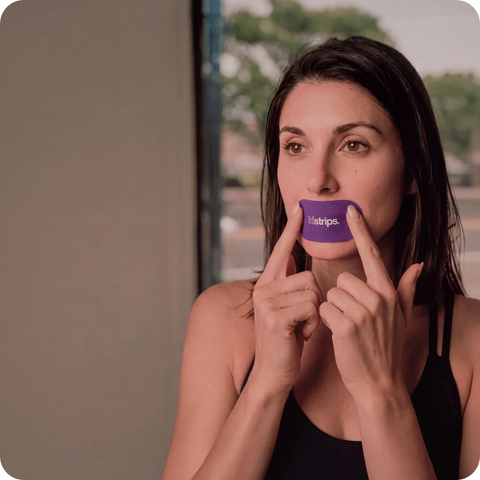
Mouth tape is a strip of breathable, medical-grade adhesive placed across your lips before sleep. It keeps your mouth closed so every breath routes through the nose — all night, no exceptions.
The concept is simple. The physiology behind it is not.
When your mouth falls open during sleep, your tongue drops backward and downward. That narrows the upper airway. Air has to force through a tighter space, which creates turbulence, and turbulence is what produces snoring. Mouth breathing also bypasses the nasal filtration system entirely: no warming, no humidifying, no nitric oxide production.
Mouth tape eliminates the open-mouth default. Lips sealed. Tongue pressed to the palate. Airway stays wide. Breathing stays nasal.
Quick answer: Mouth tape is a breathable adhesive strip worn over the lips during sleep that keeps your mouth closed and enforces nasal breathing. It reduces snoring, supports deeper sleep phases, and promotes proper tongue and jaw posture overnight.
Research on mouth-breathers with mild obstructive sleep issues found that taping the mouth during sleep reduced snoring intensity and improved breathing metrics. The mechanism is straightforward: when the mouth is sealed, the body switches to nasal respiration, which keeps the upper airway more stable and open.
Why Mouth Breathing Destroys Recovery
Sleep is training. Muscle protein synthesis. Growth hormone release. Neural consolidation. Immune restoration. Every adaptation that turns today's session into tomorrow's strength happens during deep, uninterrupted sleep.
Mouth breathing sabotages every phase of that process.
Cortisol spikes. Mouth breathing activates the sympathetic nervous system, your fight-or-flight response. Cortisol rises. Sleep fragments. Instead of cycling through deep slow-wave and REM phases, your body stays in a shallow, stressed state that blocks meaningful recovery.
Airway collapse. When the mouth opens, the jaw drops and the tongue falls backward. This narrows the pharyngeal airway and increases resistance. The result is snoring, micro-arousals you don't remember, and oxygen desaturation events that pull you out of deep sleep without ever waking you fully.
Dry mouth and throat irritation. Air passing over unprotected oral tissue strips moisture. You wake up with a dry tongue, cracked lips, and a sore throat. That dryness also reduces saliva, the mouth's natural defense against bacteria, which accelerates plaque buildup, bad breath, and gum inflammation over time.
Reduced oxygen exchange. Nasal breathing produces nitric oxide in the paranasal sinuses. Nitric oxide drives vasodilation, improving oxygen uptake and delivery to working tissues. Mouth breathing skips that entirely. You get less oxygen per breath, delivered less efficiently, to muscles that need it for repair.
Add it up: fragmented sleep architecture, elevated stress hormones, restricted oxygen delivery, and dehydrated airways. That's not a bad night. That's a systematic recovery failure, happening every single night you sleep with your mouth open.
The Performance Case for Nasal Breathing During Sleep
Nasal breathing during sleep is the opposite of everything listed above. Every mechanism flips.
Parasympathetic activation. Nasal breathing engages the parasympathetic nervous system, the rest-and-digest state. Heart rate drops. Heart rate variability improves. Cortisol decreases. Your body enters the deep recovery mode it needs to adapt from training.
Nitric oxide production. Each nasal breath carries nitric oxide from the sinuses into the lungs. That nitric oxide dilates blood vessels, lowers blood pressure, and improves the efficiency of oxygen-CO2 exchange through the Bohr effect. More oxygen reaches muscle tissue. More metabolic waste gets cleared.
Deeper sleep phases. With a stable, nasal airway, your body cycles through slow-wave and REM sleep without interruption. Slow-wave sleep is where growth hormone peaks. REM is where neural consolidation happens, motor learning, skill encoding, emotional processing. Both require unbroken breathing to sustain.
Reduced snoring. When the mouth stays closed and the tongue stays on the palate, the pharyngeal airway holds its shape. Less turbulence. Less vibration. Less snoring. That means better sleep for you, and anyone sharing the room.
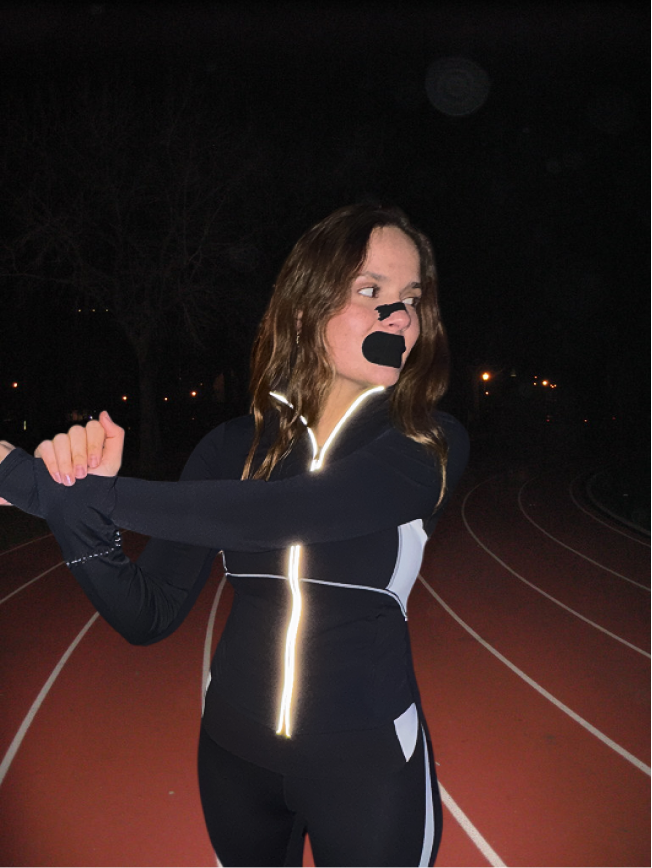
For HYROX athletes, CrossFit competitors, runners, and anyone who trains hard and expects to recover harder, nasal breathing during sleep is not optional. It's the recovery protocol that costs nothing, requires zero extra time, and runs for eight hours every night.
Mouth tape is the gear that enforces it.
Mouth Tape, Mewing, and Jaw Posture
The mewing community discovered something performance athletes already know: tongue posture matters.
When your tongue rests on the roof of your mouth, pressed against the palate, it supports the upper jaw, keeps the airway open, and maintains proper craniofacial alignment. This is the natural resting position for nasal breathers. It's also the position that promotes a defined jawline and forward facial growth.
Mouth breathing does the opposite. The tongue drops. The jaw falls open and rotates downward. Over time, chronic mouth breathing is linked to longer facial structure, weaker jaw definition, and narrower dental arches.
Mouth tape supports proper tongue posture all night. When your lips are sealed, the tongue has nowhere to go but up, pressed against the palate, exactly where it belongs. You don't have to think about mewing while you sleep. The tape does the work.
A note on expectations: mouth tape supports the habit of correct oral posture. It reinforces nasal breathing and keeps the tongue engaged with the palate during sleep. It does not reshape bone overnight. The structural benefits come from consistency, weeks and months of enforced nasal breathing and proper tongue position. Combined with conscious daytime practice, mouth tape is the tool that keeps the habit running while you're unconscious.
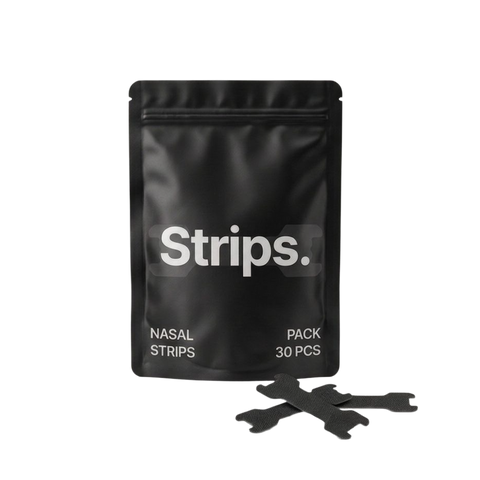
For athletes interested in structural optimization alongside performance recovery, this is where mouth tape and nasal strips work as a system. The nasal strip opens the airway. The mouth tape keeps the lips sealed so every breath routes through that open airway. Together, they create the conditions for nasal breathing, proper tongue posture, and deep recovery, simultaneously.
The HiStrips Night-Mode Recovery Stack
During high-intensity training, the soft tissue inside your nose collapses under negative pressure, restricting airflow by up to 50%. That same restriction happens at lower intensity during sleep, especially if you're congested, fatigued, or sleeping on your back.
If your nasal airway is partially restricted and you're not taping your mouth, the path of least resistance is obvious: your mouth opens, your tongue drops, and you spend the night in a shallow, mouth-breathing cycle that destroys recovery.
The fix is a two-piece system.
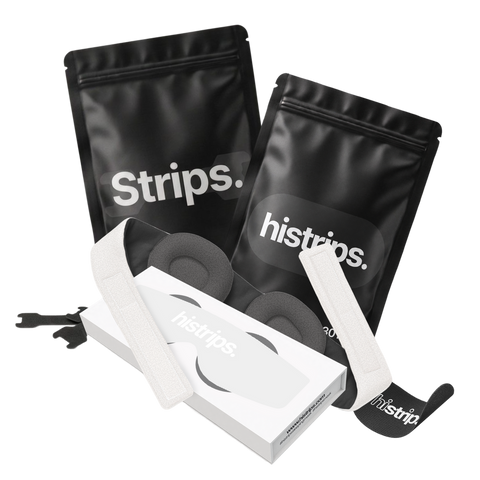
HiStrips Cotton Mouth Tape keeps your lips sealed with a soft, breathable, medical-grade adhesive designed for overnight wear. No claustrophobia. No harsh pull on removal. Just a gentle hold that enforces nasal breathing from lights-out to alarm.
Pair it with HiStrips Classic Nasal Strips or Magnetic Nasal Strips for maximum airway opening. The nasal strip lifts and supports the nasal valve, the narrowest point inside your nose, so air flows freely even when you're congested or lying flat.
Mouth tape seals the exit. Nasal strips open the entrance. Every breath goes through the optimal pathway.
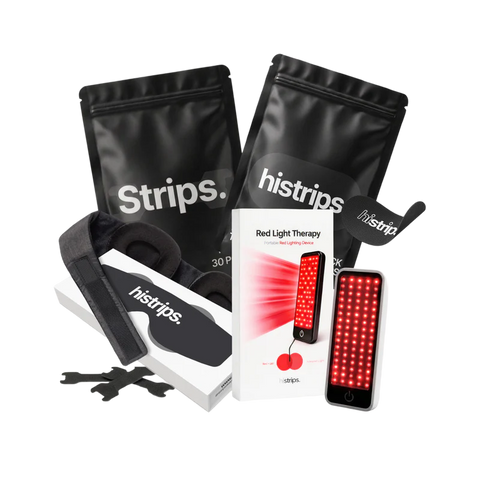
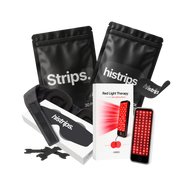
For the complete setup, mouth tape, nasal strips, and recovery tools in a single kit, the Elite Performer Kit packages everything you need for 24-hour airway optimization.
How to Use Mouth Tape
Getting the hold right starts before the tape touches your face. Follow this protocol for a comfortable, all-night seal:
-
Wash and dry your face. Oil, moisturizer, and sweat prevent adhesive from bonding. Clean skin with soap, pat dry completely.
-
Apply lip balm sparingly, on the inner lip only. A thin layer on the inside edge of your lips prevents discomfort on removal. Keep the outer lip surface dry and clean for the adhesive.
-
Place the tape with your lips gently pursed. Don't stretch the tape. Don't press your lips tightly together. A relaxed, natural seal is the goal.
-
Press and smooth for 10 seconds. Firm, even pressure across the full strip activates the adhesive bond.
-
Breathe through your nose for 30 seconds before lying down. Confirm you have a clear nasal airway. If one side feels blocked, add a nasal strip to open the passage before committing to the tape.
Removal: In the morning, wet the tape with warm water or remove it in the shower. Peel slowly from one corner. The adhesive releases cleanly without irritation.
First-time users: Start with a short nap or 30 minutes of relaxed breathing with the tape on before committing to a full night. Your body adapts fast, most athletes are comfortable within two to three nights.
Who Should Use Mouth Tape
Mouth tape is built for people who breathe through their mouth during sleep, whether they know it or not. Common signals:
-
You wake up with a dry mouth or sore throat. That's mouth breathing. Your oral tissue dried out overnight because air bypassed the nasal humidification system.
-
Your partner says you snore. Snoring is turbulent airflow through a collapsed or narrowed airway. Mouth breathing makes it worse.
-
You feel unrested despite sleeping 7-8 hours. Fragmented sleep from mouth breathing doesn't register as "waking up", but it destroys sleep quality just the same.
-
You train hard and recovery feels slow. If your sleep isn't delivering deep slow-wave and REM phases, your adaptation rate stalls regardless of how good your training program is.
Mouth tape is not designed for individuals with severe nasal obstruction or diagnosed, untreated obstructive sleep apnea. If you cannot breathe comfortably through your nose with your mouth closed while awake and relaxed, address the nasal obstruction first, nasal strips, saline rinse, or a conversation with a specialist.
For everyone else, athletes, gym-goers, biohackers, and anyone serious about recovery, mouth tape is the simplest upgrade to your sleep protocol.
The Bottom Line
You don't leave your nutrition to chance. You don't skip sessions. You don't ignore mobility work.
So why are you letting your mouth fall open for eight hours every night and calling it recovery?
Mouth tape seals the airway. Enforces nasal breathing. Supports deep sleep, proper tongue posture, and real overnight recovery. One strip. Every night. No excuses.
HiStrips. Doctor Recommended. Champion Approved.



Leave a comment
This site is protected by hCaptcha and the hCaptcha Privacy Policy and Terms of Service apply.