












Breathing at the Limit: How HISTRIPS Helps Team Visma Perform in Alpine Stages
Alpe d'Huez. Col du Tourmalet. Col de la Croix de Fer. The Alpine stages of the Tour de France are where races are broken — where the strongest riders in the world are pushed to the absolute edge of human physiological performance, and where the weakest links in any rider's preparation are ruthlessly exposed.
These climbs are not just brutally steep. They are brutally high. Alpe d'Huez finishes at 1,860 metres. The Col du Tourmalet crests at 2,115 metres. The Col de la Croix de Fer at 2,067 metres. And on Queen Stages, riders must summit multiple Alpine passes in a single day, arriving at the race's decisive moments already hours into maximum effort.
At these altitudes, a fundamental physiological constraint changes everything: the air itself delivers less oxygen.
The Physiological Challenge of Alpine Cycling
At sea level, atmospheric pressure is approximately 101.3 kPa. At 2,000 metres, it drops to roughly 79 kPa — a reduction of about 22%. This means that each breath at altitude contains significantly less oxygen than the same breath taken at the start line in Paris. The partial pressure of oxygen — the driving force that pushes O2 from the lungs into the bloodstream — decreases proportionally.
For an elite cyclist already operating at 90-95% of VO2 max, this is not a manageable inconvenience. It is a crisis. The body needs maximum oxygen delivery precisely at the point where the air delivers less of it. Something has to give — and typically, it is either power output or breathing effort. Often both.
The cascade of effects is severe:
- Reduced arterial oxygen saturation, limiting oxygen delivery to working muscles
- Elevated breathing rate, consuming more energy to move the same volume of air
- Faster lactic acid accumulation as the aerobic system struggles to meet power demands
- Increased perceived exertion — the same wattage feels harder at altitude
- Accelerated dehydration as faster, deeper breathing expels more water vapour
- Airway irritation from cold, dry alpine air entering at high velocity through the mouth
All of this occurs while riders are simultaneously managing position, tactics, nutrition, and the psychological pressure of the race's decisive moments. The riders who manage the physiological assault most effectively — who delay the onset of hypoxic fatigue by even a few minutes — are the riders who have the legs to attack on the final kilometre.
How Altitude Affects Breathing in Professional Cyclists
Under normal sea-level conditions, an elite cyclist at threshold effort breathes approximately 60-80 litres of air per minute. At altitude, to compensate for reduced oxygen partial pressure, that rate must increase — but the respiratory muscles themselves are subject to the same oxygen deficit as the leg muscles. The harder the breathing, the more metabolic cost the respiratory system imposes on the body, diverting resources from the primary muscles driving the pedals.
This respiratory muscle competition — sometimes called the "steal phenomenon" — is well-documented in exercise physiology research. At altitude, it becomes acute. The diaphragm and intercostal muscles, working harder to move more air, begin competing directly with the quads and glutes for available oxygen. In the final kilometres of an Alpine stage, this competition can be decisive.
There is another, less-discussed problem: mouth breathing at altitude. When the body is oxygen-stressed, the instinct is to open the mouth wide and breathe as hard as possible. This feels efficient — but it bypasses the nasal passages entirely, sacrificing the nose's critical protective functions at precisely the moment they are most needed.
The Mouth Breathing Trap at High Elevation
Alpine air is cold, dry, and at altitude, thin. When riders breathe this air directly through the mouth at high velocity, several damaging processes occur simultaneously. The airways receive unfiltered, unhumidified air — increasing inflammation in the bronchial passages. Cold air triggers bronchoconstriction in susceptible athletes, literally narrowing the airways further at the worst possible moment. Dehydration accelerates as moisture is lost with every exhaled breath. And the nitric oxide benefits of nasal breathing — the vasodilation, the improved pulmonary gas exchange — are entirely absent.
Mouth breathing at altitude is not just suboptimal. It is actively counterproductive to the precise physiological processes a rider needs to survive an Alpine stage.
The Science of Nasal Breathing at High Elevation
The nose does something the mouth cannot: it conditions incoming air. The nasal passages warm cold alpine air from near-freezing temperatures to body temperature before it reaches the lungs. They humidify dry mountain air to near-full saturation, protecting the delicate alveolar membranes where gas exchange occurs. They filter particles and pathogens from the air stream, reducing the inflammatory load on airways already under altitude stress.
Most critically at altitude, nasal breathing maintains nitric oxide production. Nitric oxide is synthesised in the paranasal sinuses and released with every nasal breath into the pulmonary circulation. At altitude, where pulmonary vasoconstriction is a constant threat as the body responds to low oxygen, the vasodilating effect of nitric oxide is not a bonus — it is a survival mechanism. It keeps pulmonary blood vessels dilated, maintains blood pressure at appropriate levels, and optimises the surface area available for oxygen exchange in the lungs.
Research on high-altitude performance consistently shows that athletes who maintain nasal breathing under exertion — or who use mechanical assistance to do so — demonstrate better oxygen saturation, lower perceived exertion scores, and superior power maintenance in the final stages of altitude efforts compared to mouth-dominant breathers.
Why HISTRIPS Is Essential for Mountain Stage Performance
The challenge for riders attempting to maintain nasal breathing on Alpine climbs is the nasal valve — the narrowest point of the nasal airway, formed by the flexible cartilage of the nose. At high breathing rates, this structure creates significant resistance to airflow. A rider pushing 350-400 watts up Alpe d'Huez, needing 70+ litres of air per minute, will find that nasal resistance alone makes sustained nasal breathing feel impossible without assistance.
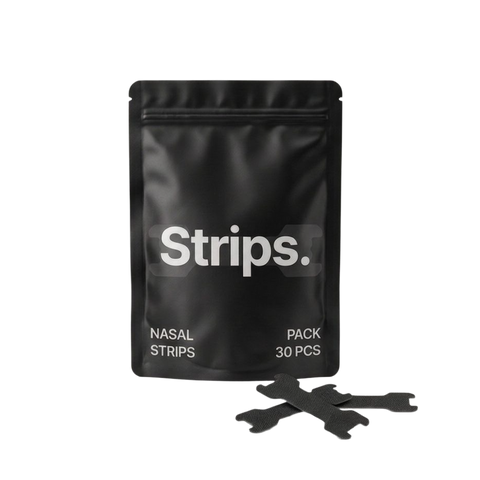
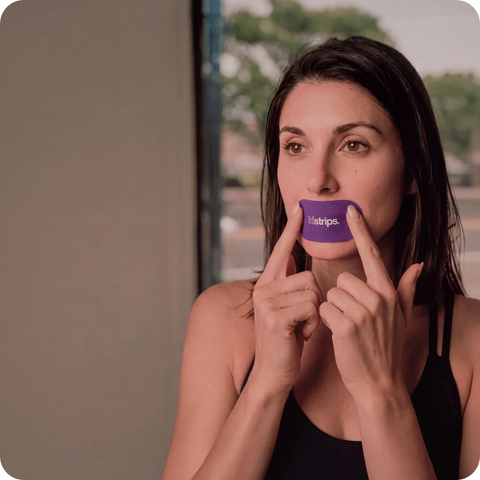
HISTRIPS nasal strips mechanically resolve this problem. By lifting the flexible nasal cartilage outward, the strip widens the nasal valve and reduces resistance to airflow by the equivalent of a 40%+ increase in nasal cross-sectional area. This single intervention makes the physiological difference between fighting the nose to breathe and breathing freely through it.
- Maintains nasal airflow even at the high breathing rates demanded by Alpine climbs
- Preserves nitric oxide production throughout the stage, sustaining pulmonary vasodilation
- Keeps airway conditioning (warming, humidifying) active in cold, dry alpine air
- Reduces respiratory muscle effort required to achieve target air volumes
- Delays the onset of hypoxic respiratory fatigue in the critical final kilometres
On a stage finishing at 2,000 metres after 180 km of racing, these factors are not marginal. They are the physiological margin between attacking and being dropped.
Team Visma's Alpine Strategy
Team Visma–Lease a Bike approaches Alpine stages as a systems problem. The physiological variables — altitude adaptation, glycogen management, thermoregulation, respiratory management — are optimised in the weeks before the race through carefully structured altitude camps, predominantly in the Sierra Nevada or Swiss Alps. Riders arrive at the Tour de France altitude-adapted, their haematocrit elevated and their respiratory systems trained to function under hypoxic stress.
On race day in the mountains, HISTRIPS strips are part of the morning protocol without exception. From the neutralised start through the valley approaches to the decisive Alpine climbs, the strips ensure that every breath is as efficient as physiology allows. The riders do not need to think about whether to breathe through their nose or their mouth — the strips make nasal breathing the path of least resistance, and the body follows.
In the final kilometres of stages like Alpe d'Huez — where Jonas Vingegaard has demonstrated his ability to accelerate when rivals are at their limit — the difference between a rider who has managed their respiratory system optimally and one who has not becomes visible in the data. Power numbers hold. Heart rate stabilises at optimal levels. The breathing economy that HISTRIPS has supported across hours of Alpine riding pays its dividend precisely when the race is decided.
Altitude is the great equaliser of cycling — it takes every physiological system to its limit simultaneously. The riders and teams that have prepared every variable, including the quality of each breath taken at 2,500 metres, are the ones who have something left when the climb gets steepest and the air gets thinnest.
That preparation begins with HISTRIPS.
Breathe Better at Any Altitude
The nasal strips trusted by Team Visma–Lease a Bike on Alpe d'Huez and the Col du Tourmalet. Optimise every breath.
Shop HISTRIPS Now


Leave a comment
This site is protected by hCaptcha and the hCaptcha Privacy Policy and Terms of Service apply.