







If you deal with chronic nasal congestion — whether from allergies, sinusitis, turbinate swelling, or anatomical issues — you may wonder whether nasal strips can actually help you. It's a fair question, and the honest answer is: it depends on the type and severity of your congestion.
What Chronic Nasal Congestion Actually Is
Chronic nasal congestion isn't a single condition — it's a symptom of several different underlying problems. The most common causes for athletes include:
- Chronic rhinitis: Persistent inflammation of the nasal lining, often allergic or vasomotor in origin. Causes constant or recurring swelling of the turbinates.
- Turbinate hypertrophy: Enlarged turbinate tissues that physically narrow the nasal airway. Common in athletes and often worsens during exercise as blood flow to nasal tissues increases.
- Deviated septum: A structural misalignment of the cartilage dividing the nasal cavity, causing one side to be significantly narrower than the other.
- Chronic sinusitis: Long-term inflammation or infection of the sinus cavities, causing persistent mucus buildup and tissue swelling.
How Nasal Strips Work — And Their Limits
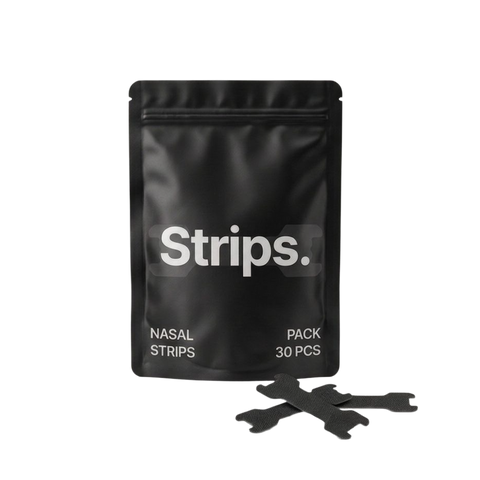
Nasal strips work through external mechanical dilation: they pull the outer skin of the nose outward, physically widening the nasal valve and the anterior nasal passages. They do not change the internal structures of your nose — they don't reduce turbinate swelling, correct a deviated septum, or clear sinus passages.
For mild to moderate nasal congestion caused by anterior nasal narrowing (the area strips physically open), strips can provide meaningful benefit. They work best when the primary obstruction is at the nasal valve — the narrowest part of the nasal airway that sits right at the nostril entrance.
For congestion deeper in the nasal passage — such as significant turbinate hypertrophy or a severely deviated septum — strips have less effect because they don't reach those areas.
When Strips Help vs. When They Don't
Strips help: athletes with mild nasal valve collapse, mild turbinate swelling, seasonal allergies with moderate congestion, and anyone whose primary issue is anterior nasal narrowing.
Strips have limited effect: athletes with significant turbinate hypertrophy, severe septal deviation, chronic sinusitis with significant blockage, and those who cannot breathe through their nose at rest.
Nasal Strips as a Complement to Treatment
For athletes managing chronic congestion, nasal strips can be a valuable part of your overall approach. They won't replace a proper medical evaluation and targeted treatment, but they can supplement other interventions: use them during workouts and sleep to maximize breathing capacity while you address the underlying cause with your physician.
HiStrips for Athletes with Mild Congestion
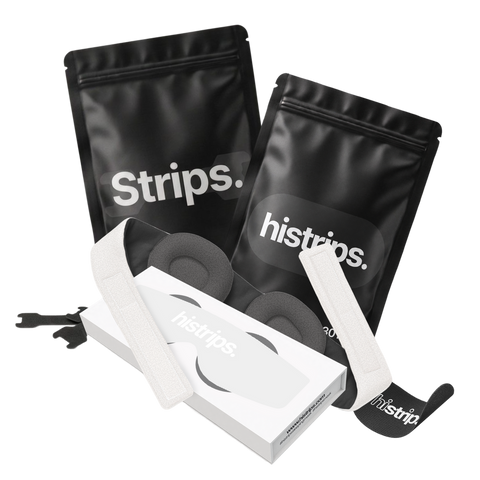
HiStrips are the best choice for athletes who have mild to moderate congestion and want to maximize their breathing during training and recovery. They provide consistent, reliable external dilation that makes a real difference when the primary issue is anterior nasal narrowing. For athletes with more severe structural issues, HiStrips can be used alongside other treatments — they won't interfere with sinus medications, nasal sprays, or other therapies.


Leave a comment
This site is protected by hCaptcha and the hCaptcha Privacy Policy and Terms of Service apply.