


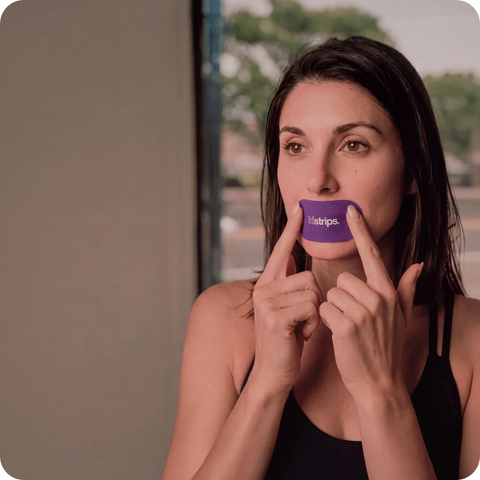





It's a fair question. You see them on the faces of professional athletes at the highest level of sport and wonder: are those nasal strips doing anything, or is it just a placebo? Maybe even a sponsorship play?
The answer, backed by both physiology and performance data, is clear: yes, nasal strips work — and for athletes serious about performance, they might be one of the most underrated tools available. Here's the science, the social proof, and the reason top competitors in every sport have been using them for decades.
The Anatomy of Athletic Breathing
To understand why nasal strips help athletes, you need to understand what limits breathing during high-intensity exercise. The bottleneck isn't your lungs — it's your upper airway. Specifically, the nasal passages.
The nasal valve — the narrowest part of the nasal airway — accounts for roughly 50% of total airway resistance during breathing. At rest, this isn't a problem. But during intense exercise, when your breathing rate increases dramatically and you're moving large volumes of air, that resistance becomes a real limiting factor. More resistance = more respiratory effort = energy diverted from your muscles to your breathing apparatus.
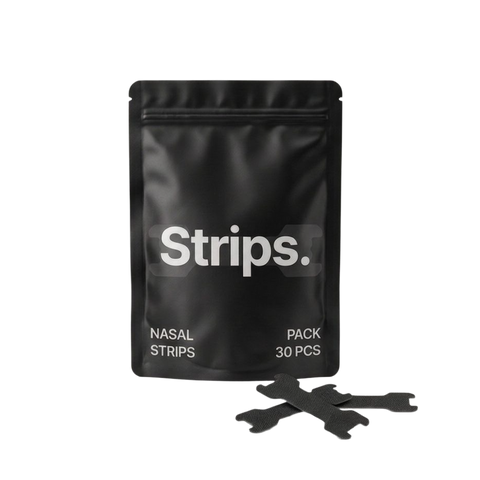
Nasal strips address this directly. By mechanically dilating the external nasal valve, they widen the nasal passage and reduce airway resistance. More airflow per breath, less effort to achieve it.
What the Research Says
The scientific literature on nasal dilators during exercise is robust and consistent. A study published in the British Journal of Sports Medicine found that external nasal dilators significantly reduced nasal resistance during submaximal exercise. Research in Medicine & Science in Sports & Exercise demonstrated reduced perceived exertion with nasal strip use during cycling at moderate intensities.
Multiple studies have shown that nasal strips reduce the work of breathing — meaning your respiratory muscles expend less energy moving the same volume of air. In endurance sports, where efficiency is everything, that energy saving translates directly to performance.
Perhaps most significantly, a study on exercise at altitude found that nasal dilators improved oxygen saturation when airway resistance was already elevated. In any situation where airflow is compromised, nasal strips offer a measurable improvement.
Carlos Alcaraz: Breathing Like a Champion
Carlos Alcaraz — world number one tennis player, Wimbledon and US Open champion — wears HiStrips during his matches. For those unfamiliar with the physical demands of professional tennis, consider this: a five-set Grand Slam match can involve five hours of intense, intermittent exercise, with players covering several kilometres and hitting hundreds of shots requiring explosive bursts of power.
At that level, every marginal gain matters. Alcaraz doesn't wear HiStrips because they're fashionable. He wears them because he feels the difference. Improved nasal airflow means more effective breathing during those critical moments — the tiebreak, the fifth set, the deciding point.
The fact that one of the most scrutinised athletes on the planet uses nasal strips in competition should tell you something. His performance team analyses every possible variable. Nasal strips made the cut.
Hyrox and Functional Fitness Athletes
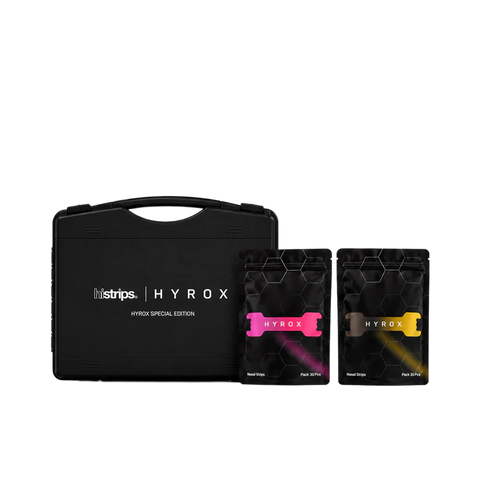
Hyrox — the global fitness racing phenomenon combining 8km of running with 8 functional fitness stations — is one of the most aerobically demanding competitive formats ever created. Brian Wallack, a top competitive Hyrox athlete, uses HiStrips in training and competition.
The reason is straightforward: Hyrox athletes need to maintain high breathing rates for sustained periods while simultaneously exerting force through complex movements. Nasal strips help keep the airway open during those transitions — from a sprint on the ski erg to a sled push to a set of burpee broad jumps — ensuring that oxygen delivery doesn't become the bottleneck.
The "Just Breathe Through Your Mouth" Argument
The most common counterargument to nasal breathing during exercise is simple: "I just breathe through my mouth." At high intensities, most people do. But here's what that argument misses.
First, nasal breathing isn't just about volume — it's about quality. The nose warms, humidifies, and filters air. It also produces nitric oxide, which dilates bronchioles and blood vessels, improving oxygen uptake in the lungs. Mouth breathing bypasses all of this.
Second, even if you're breathing through both your nose and mouth during intense exercise, keeping the nasal passages open means you're contributing nasal airflow to the total air volume — and you're maintaining that nitric oxide production. The two pathways aren't mutually exclusive.
Third, at submaximal exercise intensities — the kind that accounts for the majority of most athletes' training volume — nasal breathing alone is achievable and demonstrably beneficial for conditioning the respiratory system and maintaining CO2 tolerance.
Beyond Performance: Recovery and Sleep
Many athletes who start using HiStrips for competition or training quickly discover a second benefit: wearing them during sleep dramatically improves recovery. The same airway-opening mechanism that helps during exercise also promotes deeper, more efficient sleep — which is where most of the actual physical adaptation happens.
When you sleep with your airway fully open and nasal breathing maintained, you produce more growth hormone, achieve deeper sleep stages, and wake up with more complete muscular recovery. For athletes training at high volumes, this compounding effect is significant.
The Bottom Line
Do nasal strips work? Yes. The physiology is clear, the research is solid, and the adoption by elite athletes across multiple sports is not coincidence. They reduce airway resistance, decrease the energy cost of breathing, support nasal nitric oxide production, and help athletes perform better — and recover faster — across every discipline.
The question isn't whether nasal strips work. The question is why you're not already using them.
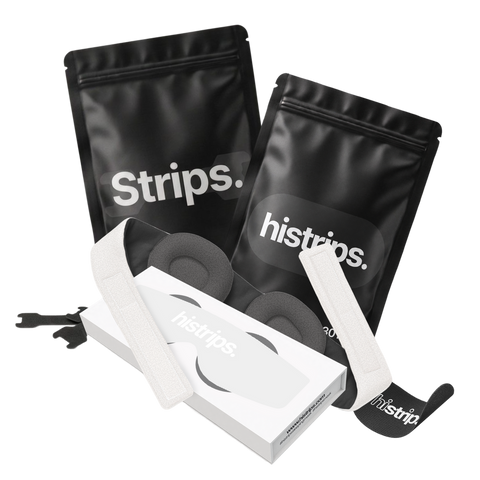
Try HiStrips — the nasal strip trusted by Carlos Alcaraz and elite athletes worldwide.
Ready to Try HiStrips?
Shop our most popular nasal strips:
- Black Nasal Strips — Most popular, extreme hold
- White Nasal Strips — Clean aesthetic
- Magnetic Nasal Strips — Reusable, up to 360 uses



Leave a comment
This site is protected by hCaptcha and the hCaptcha Privacy Policy and Terms of Service apply.