



You train five, six, seven days a week. You track macros. You dial in sleep. You obsess over recovery.
And you completely ignore the one system running every second of every rep, every set, every night: your breath.
Here's the truth most athletes never hear: the nasal valve, the narrowest point inside your nose, collapses under exertion, restricting airflow by up to 50%. You're working at maximum output with half a breathing lane open.
Nasal strips fix that. They mechanically lift and hold the nasal passages open so air moves freely, during training, during competition, and during the eight hours of recovery that determine whether tomorrow is a good day or a wasted one.
This is the complete guide. How nasal strips work, why they matter for performance, how to use them for sleep, and how to pick the right ones for your goals.
How Nasal Strips Work
A nasal strip is a flexible adhesive band with embedded spring-like supports. You place it across the bridge of your nose, just above the nostril flare. As the band tries to straighten, it lifts the soft tissue of the nasal sidewalls outward, physically widening your airway.
The mechanism is simple. The result is immediate.
Studies confirm that external nasal dilators increase the cross-sectional area of the nasal valve, reducing nasal resistance and preventing the tissue collapse that chokes airflow during deep breathing. One study found nasal strips increased nasal cavity volume in the front portion of the airway, offering comparable airflow improvement to decongestant sprays, without drugs, chemicals, or side effects.
Quick answer: Nasal strips are adhesive bands that physically open your nasal passages, increasing airflow instantly. They are drug-free, non-invasive, and used by athletes worldwide for training, competition, and sleep.
The nasal valve is responsible for 50-60% of total nasal airway resistance. That's where nasal strips do their work, right at the bottleneck.
Why Nasal Breathing Outperforms Mouth Breathing
Mouth breathing during training is chaotic. Loud. Inefficient. And it costs you more than you realize.
When you breathe through your nose, the air is filtered, warmed, and humidified before it reaches your lungs. That protects your airways during cold or dry sessions. But the real edge is biochemical.
Nasal breathing triggers nitric oxide production. Nitric oxide is produced in the paranasal sinuses and delivered into the lungs with each nasal breath. It drives vasodilation, widening blood vessels so oxygen-rich blood reaches working muscles faster. It supports lower blood pressure, improved oxygen uptake, and better oxygen-CO2 exchange through the Bohr effect.
Translation: more oxygen delivered to the muscles that need it, exactly when they need it.
Nasal breathing also activates the parasympathetic nervous system. Lower resting heart rate. Better heart rate variability. Calmer under pressure. For HYROX athletes, CrossFit competitors, and distance runners, that parasympathetic activation is the difference between controlled pacing and redlining into the wall.
Mouth breathing does the opposite. It bypasses the nasal filtration system, dries out the throat, increases cortisol, and fragments your breathing pattern into short, shallow gulps that spike your heart rate without improving oxygen delivery.
Nasal strips keep you nasal longer. They hold the airway open at higher intensities so you don't default to mouth breathing the moment things get hard.
Nasal Strips for Training and Race Day
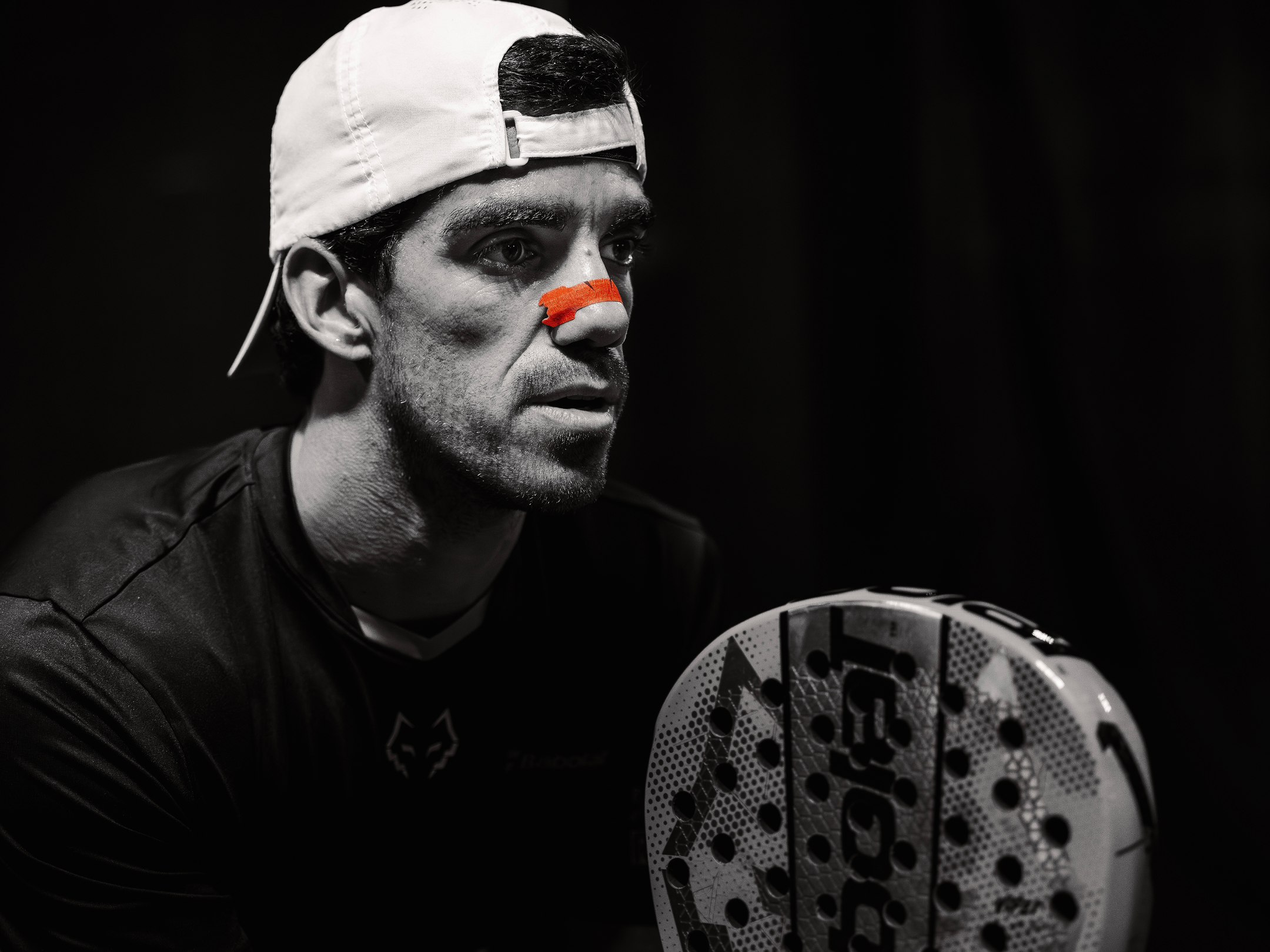
Elite runners have worn nasal strips in competition since the 1996 Atlanta Olympics. Marathon record holders, triathletes, and HYROX competitors use them as standard pre-race gear.
The reason: during high-intensity effort, the soft tissue inside your nose gets pulled inward by negative pressure. The harder you breathe, the more the nasal valve collapses. You've felt it, that tightness, that resistance, the moment where your mouth opens and controlled breathing turns into survival breathing.
Nasal strips prevent that collapse. They keep the nasal passages structurally open, even at high output. Instead of fighting for air, you get a stable, clear airway from warm-up to finish line.
For sport-specific use, here's what matters:
-
Endurance events (running, cycling, HYROX): Nasal strips support sustained nasal breathing during steady-state and threshold work. The longer you stay nasal, the more efficient your oxygen exchange.
-
High-intensity intervals (CrossFit, circuit training): During short, maximal bursts, mouth breathing takes over. Nasal strips still help during rest intervals, faster recovery between sets by keeping the nasal airway open when you're catching your breath.
-
Cold and dry conditions: Nasal breathing warms and humidifies air. Strips ensure you can stay nasal even when cold air would normally force your mouth open.
A note on the science: meta-analyses show nasal strips do not directly increase VO2 max in lab settings. But lab tests don't capture what athletes report in real-world conditions, reduced perceived effort, better breathing rhythm, and improved focus during long efforts. Performance is more than a VO2 number. It's control under pressure.
For training and race day, HiStrips Classic Nasal Strips deliver the lift and hold you need. For athletes who want maximum opening power, HiStrips Magnetic Nasal Strips use a two-part system, adhesive tabs plus a magnetic band, for a stronger, more customizable fit that stays locked through sweat.
Nasal Strips for Sleep and Recovery
Your training doesn't end when you leave the gym. It ends eight hours later, when you wake up.
Sleep is where adaptation happens. Muscle protein synthesis. Growth hormone release. Neural consolidation. Every physiological process that turns today's session into tomorrow's strength depends on deep, uninterrupted sleep. And all of it depends on oxygen delivery.
Mouth breathing while you sleep fragments your sleep architecture. It spikes cortisol. It dries out your throat and mouth. It promotes snoring, which disrupts slow-wave sleep for you and anyone sharing the room. Snoring isn't just noise. It's a performance leak. It signals restricted airflow, poor sleep quality, and compromised recovery.
Nasal strips worn overnight keep the nasal valve open, reducing the resistance that causes mouth breathing and snoring in the first place. Research shows nasal dilation reduces snoring intensity and decreases mouth dryness, both markers of better overnight nasal breathing.
For a complete night-mode recovery setup, pair HiStrips Classic Nasal Strips with HiStrips Cotton Mouth Tape. The nasal strip opens the airway. The mouth tape keeps your lips sealed so every breath is nasal, all night. Deeper slow-wave sleep. Better REM cycles. You wake up recovered, not just rested.
This combination also supports proper tongue posture and jaw positioning overnight, a key interest for athletes focused on structural optimization and long-term facial development through consistent nasal breathing habits.
How to Choose the Right Nasal Strip
Not all nasal strips are built for the same purpose. Pharmacy-grade strips are designed for congestion relief, thin adhesive, minimal lift, built for a stuffy nose on a sick day.
Performance nasal strips are built for athletes. Stronger lift. Sweat-resistant adhesive. Designed to hold through a 60-minute HYROX race or an 8-hour sleep cycle without peeling off.
Here's what separates serious gear from drugstore strips:
-
Adhesive strength: Sweat, oil, and humidity destroy weak adhesive. Performance strips use medical-grade bonding designed for active use.
-
Lift power: Wider, stiffer spring bands create more outward tension on the nasal valve. More tension means a wider airway.
-
Fit and comfort: A strip that's too small won't create enough lift. Too large and it wraps past the nasal valve zone, wasting adhesive surface. The strip should sit just above the nostril flare, right at the nasal valve.
-
Material: Hypoallergenic, breathable material prevents skin irritation during overnight or extended wear.
HiStrips Classic Nasal Strips deliver high-strength adhesive with a flexible spring band, the right balance of lift and comfort for both training and sleep. HiStrips Magnetic Nasal Strips go further: adhesive tabs anchor to each side of the nose, and a reusable magnetic band locks across the bridge for maximum opening power. No slipping. No peeling. No adjusting mid-session.
For the full performance stack, nasal strips, mouth tape, and recovery tools in one kit, the Elite Performer Kit packages everything you need for 24-hour airway optimization.
How to Apply Nasal Strips for Maximum Hold
A nasal strip only works if it stays put. Most adhesion failures come from poor application, not poor product. Follow this protocol:
-
Wash your nose with soap and water. Oil, sweat, and moisturizer kill adhesive bonding. Your skin needs to be completely clean and dry.
-
Wipe with alcohol if training. For pre-workout application, an alcohol wipe removes residual oil and gives the adhesive a clean surface to grip.
-
Position correctly. Place the strip across the bridge of your nose, just above where your nostrils begin to flare outward. The tabs should rest on the sides of the nose, right over the nasal valve area.
-
Press and hold for 30 seconds. Firm, even pressure across the entire strip, center first, then smooth outward to each tab. This activates the adhesive bond.
-
Let it set before high exertion. Applying 10-15 minutes before training gives the adhesive time to fully cure against your skin.
Removal: Wash your face with warm water for 10 seconds. Gently lift one tab at a time. Slow and steady, peeling fast irritates skin.
The Bottom Line
Breathing is the most underrated variable in performance. It runs everything, oxygen delivery, heart rate regulation, recovery, sleep quality, and most athletes never give it a second thought.
Nasal strips are the simplest, most direct way to open your airway and keep it open when it matters. Training. Competition. Sleep. Every breath, optimized.
HiStrips. Doctor Recommended. Champion Approved.


Leave a comment
This site is protected by hCaptcha and the hCaptcha Privacy Policy and Terms of Service apply.