





How Team Visame Conquered La Vuelta with Better Breathing

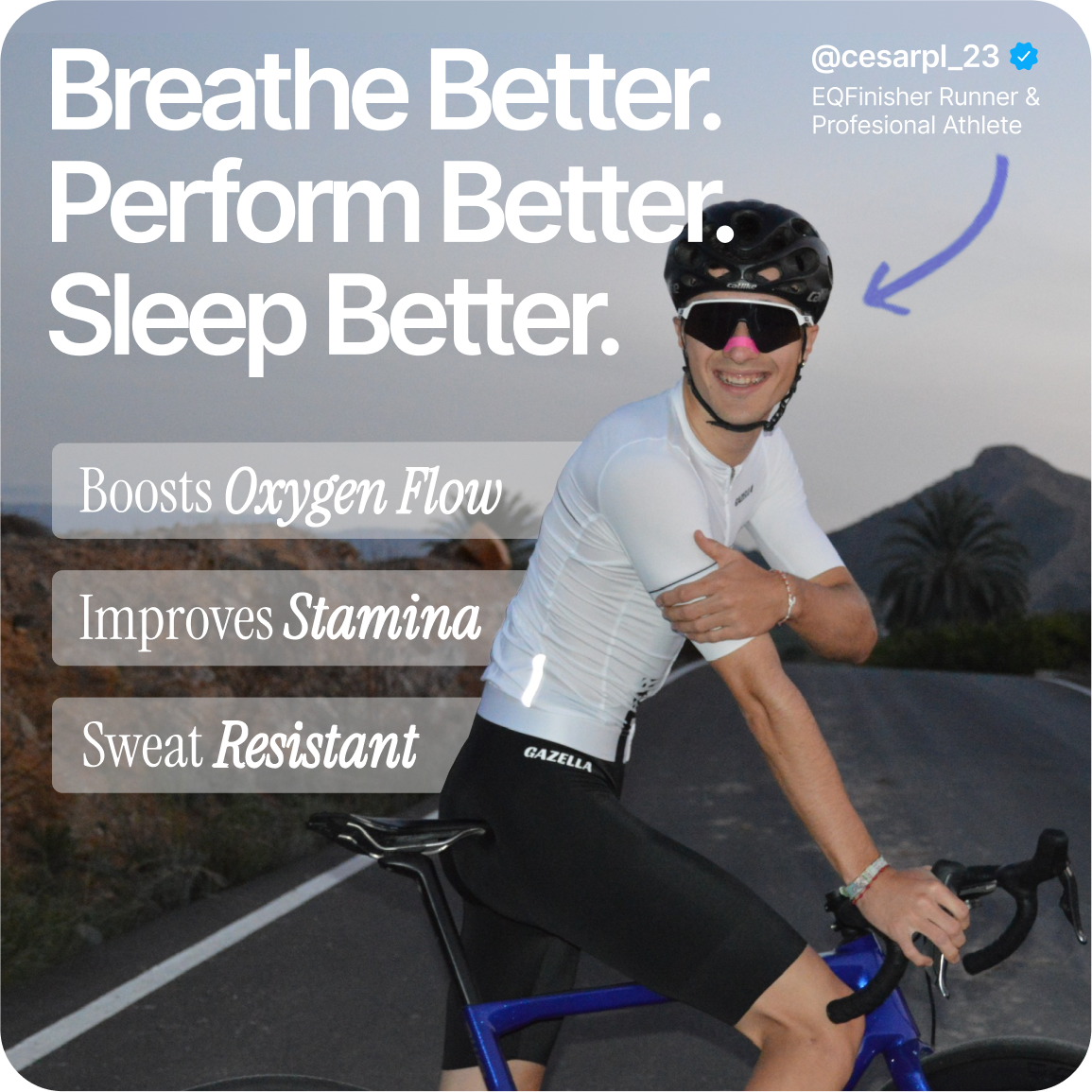
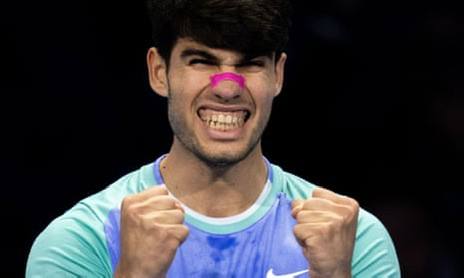
Team Visma riders wearing HiStrips at La Vuelta

At 2,000 meters above sea level, the air is thin and unforgiving. The peloton splinters. Riders who looked comfortable twenty kilometers ago are now drifting backward, their legs failing not because of muscle fatigue but because their bodies can no longer deliver the oxygen those muscles desperately need. The mountain doesn't negotiate. It simply separates those who prepared from those who hoped. In this brutal arena — across 21 stages, more than 3,300 kilometers, and some of the most punishing climbs on the European continent — Team Visame showed up with a performance protocol that goes beyond power numbers and nutrition timing. At the center of that protocol: a commitment to breathing optimization, anchored by HiStrips nasal strips on every race day and recovery night. This is the story of how better breathing became a competitive advantage at the highest level of professional cycling.
La Vuelta: Where Oxygen Is Everything
La Vuelta a España is, by almost every measurable standard, the most brutal of cycling's three Grand Tours. While the Tour de France draws the biggest crowds and the Giro d'Italia commands the most romance, La Vuelta consistently delivers the most vertical gain, the steepest gradients, and the most unpredictable racing — often featuring summit finishes above 2,000 meters where the oxygen partial pressure is 20–25% lower than at sea level.
Consider what that means physiologically. At altitude, the reduced atmospheric pressure means each breath delivers fewer oxygen molecules to the alveoli. VO2 max — the maximum rate at which the body can consume oxygen — drops roughly 1% for every 100 meters gained above approximately 1,500 meters. On a climb like the Lagos de Covadonga or the Angliru — one of the most feared climbs in professional cycling with gradients exceeding 23% — elite riders are pushing toward their physiological ceiling in an environment that has actively lowered that ceiling.
In this context, oxygen efficiency isn't just a performance variable. It's the variable. The difference between a podium finish and a DNF often comes down to which rider's body can extract and deliver oxygen most efficiently under conditions that are designed, by geography, to make that as hard as possible. Teams that understand this — that invest in every legitimate edge in the oxygen delivery chain — are the teams that perform when it counts most.
Why Pro Cyclists Are Turning to Nasal Strips
Professional cycling has a long history of marginal gains culture — the philosophy that aggregating small improvements across every aspect of performance produces large competitive advantages. Aerodynamic helmets, optimized bike fits, heat acclimatization protocols, altitude training camps: cycling has always been a sport of details. Nasal strips are the latest addition to that toolkit, and the science behind their adoption is more compelling than most people realize.
The nasal passages are the primary site of airflow resistance in the upper respiratory tract. At rest, the nasal airway accounts for roughly 50–70% of total respiratory resistance. During intense aerobic exercise, nasal tissue swells due to increased blood flow — a natural response to exertion — which further narrows the nasal valve and increases resistance precisely when an athlete needs airflow to be easiest. Nasal strips mechanically counter this by dilating the nasal valve from the outside, maintaining airway patency under conditions that would otherwise constrict it.
But the benefit goes beyond simple airflow mechanics. The nasal passages are the body's primary production site for endogenous nitric oxide — a potent vasodilator. When air passes through the nasal cavity during inhalation, it picks up nitric oxide produced by the sinus epithelium and carries it into the lungs, where it acts locally to improve ventilation-perfusion matching and enhance oxygen uptake. For a cyclist at threshold on a mountain stage, that mechanism is exactly what the body needs working at full capacity. Nasal strips help ensure it does.
Team Visame's Performance Edge
Team Visame's approach to La Vuelta preparation reflected a sophisticated understanding of the physiological demands of multi-stage racing at altitude. Their performance staff identified breathing optimization as an underexploited variable — one where meaningful gains could be achieved without the regulatory constraints that limit other performance interventions.
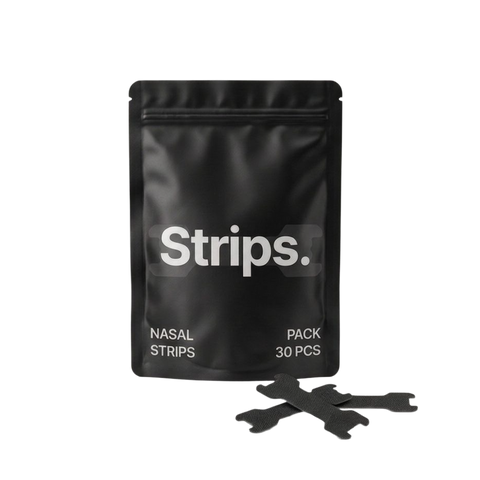
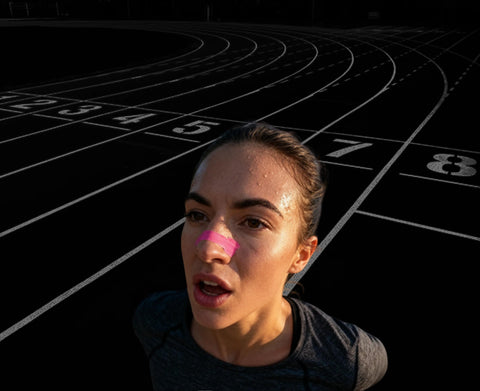
The team's protocol integrated HiStrips nasal strips at two key points in the race-day and recovery cycle. During stages, riders wore strips to maintain optimal nasal airflow through the demanding mountain passages where effort levels — and the natural urge to default to mouth-only breathing — were highest. The goal was to keep as much of the breathing work routed through the nasal passages for as long as possible, capturing the nitric oxide benefit and the CO2 tolerance advantage that nasal breathing supports.
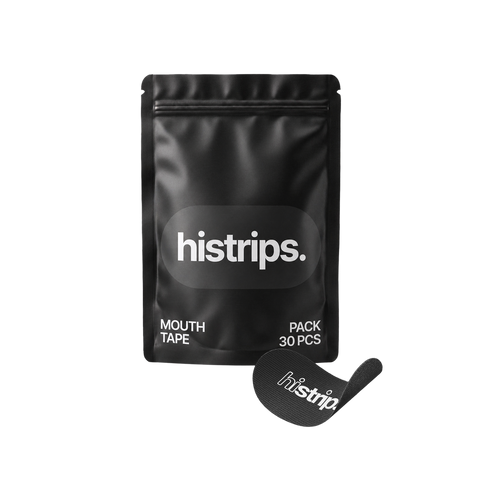
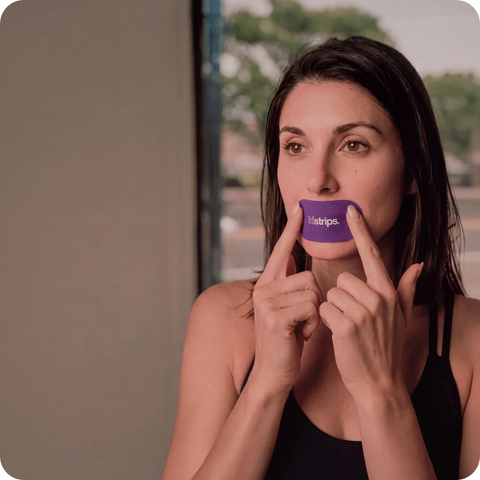
Equally important was the recovery component. Between stages, quality sleep is the primary driver of physiological restoration — it's when adaptation occurs, inflammation resolves, and glycogen replenishes. The team incorporated HiStrips mouth tape into their recovery protocol to encourage nasal breathing through the night, improving sleep quality and reducing the airway-drying effects of mouth breathing that can contribute to next-day fatigue. In a race where recovery margins between 21 consecutive stages are measured in hours, better sleep is not a luxury. It's a competitive necessity.
The Altitude Advantage: Nasal Breathing at High Elevation
The relationship between nasal breathing and altitude performance is one of the more fascinating intersections in sports science, and it's particularly relevant to a race like La Vuelta, where riders spend significant time above 1,500 meters.
At altitude, the reduced availability of atmospheric oxygen creates a cascade of physiological stressors: arterial oxygen saturation drops, cardiac output increases to compensate, and the respiratory rate elevates to move more air through the system. In this state, the nitric oxide produced in the nasal passages becomes especially valuable. Research has demonstrated that nasally-inhaled nitric oxide improves hypoxic pulmonary vasoconstriction — a reflex that, if unchecked, increases pulmonary artery pressure and can impair right heart function during exertion at altitude. By delivering nitric oxide to the pulmonary circulation via nasal breathing, athletes may attenuate this response and maintain better cardiac efficiency under hypoxic conditions.
Additionally, breathing through the nose adds mild resistance to exhalation that helps maintain positive end-expiratory pressure in the lungs — keeping small airways open and maximizing alveolar surface area available for gas exchange. At altitude, where every available alveolus matters, this is not a negligible effect. Nasal strips, by ensuring that nasal breathing remains viable even at high ventilation rates, help athletes stay in the respiratory mode that best supports altitude performance — rather than defaulting entirely to mouth breathing, which bypasses all of these mechanisms.
HiStrips: The Strip Behind the Performance
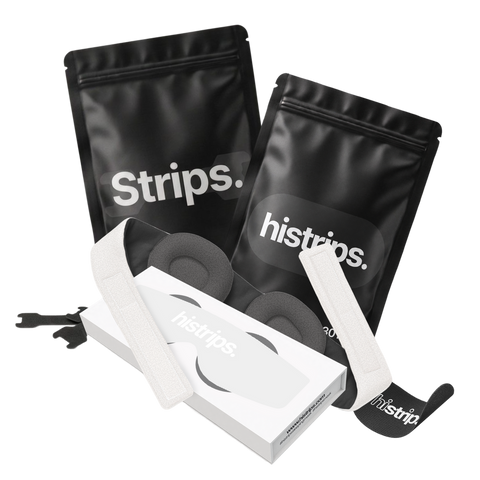
What separates HiStrips from consumer nasal strips designed for nighttime snoring is the engineering for athletic use. Professional cycling is one of the most physically demanding environments a product can be tested in: hours of intense effort, extreme sweat output, variable weather conditions from scorching valley heat to cold mountain summits, and the mechanical forces of aggressive breathing at high ventilation rates.
HiStrips use a medical-grade adhesive formulated to maintain bond strength through sustained perspiration — the adhesive chemistry is specifically designed not to break down when the skin is wet, which is exactly when most standard strips fail. The strip's band tension is calibrated to provide meaningful nasal valve dilation while remaining flexible enough to accommodate the full range of facial movement that comes with extreme exertion. It stays on. It stays effective. And it comes off cleanly when the stage is done.
For athletes who take recovery as seriously as performance — and at the Grand Tour level, there is no other way to compete — HiStrips mouth tape completes the breathing stack, ensuring that the breathing discipline maintained during competition carries through the night. Explore HiStrips and build your breathing protocol.
Train Like a Pro: Adding Nasal Strips to Your Cycling Routine
You don't need to race La Vuelta to benefit from breathing the way Team Visame does. The same principles that drove their protocol apply at every level of cycling, from weekly club rides to amateur gran fondos to indoor training sessions.
Start by incorporating nasal strips into your longer training rides — specifically the sessions where you're working at zone 2 or tempo intensity for extended periods. This is where nasal breathing is most sustainable and where the CO2 tolerance adaptations develop most effectively. Apply your HiStrips strip before your warm-up, on clean dry skin, so the adhesive is fully set when effort levels climb.
For indoor training — turbo trainers, smart bikes, structured interval sessions — nasal strips are particularly useful because the controlled environment makes it easier to focus on breathing mechanics. Challenge yourself to breathe exclusively through the nose during your endurance blocks, using the strip to reduce the resistance that makes this difficult at higher cadences.
On race day, treat the strip as part of your pre-race ritual — as non-negotiable as tyre pressure and nutrition timing. Apply it, warm up in it, and let your breathing system perform the way it was designed to.
The Verdict
La Vuelta doesn't give inches. It takes them. And the teams that stand on the final podium in Madrid are the ones that prepared for every dimension of the fight — including the one that happens in the lungs, the nasal passages, and the alveoli at 2,000 meters above sea level where oxygen is scarce and margins are everything.
Team Visame understood that better breathing is a performance variable, not a wellness afterthought. By integrating HiStrips nasal strips into both race-day execution and nightly recovery, they treated respiration with the same seriousness that elite sport demands. The result speaks for itself.
If you're ready to breathe like a Grand Tour professional, shop HiStrips Nasal Strips now. Your next mountain doesn't have to be a fight for air — it can be a demonstration of what optimal breathing makes possible.


Leave a comment
This site is protected by hCaptcha and the hCaptcha Privacy Policy and Terms of Service apply.