


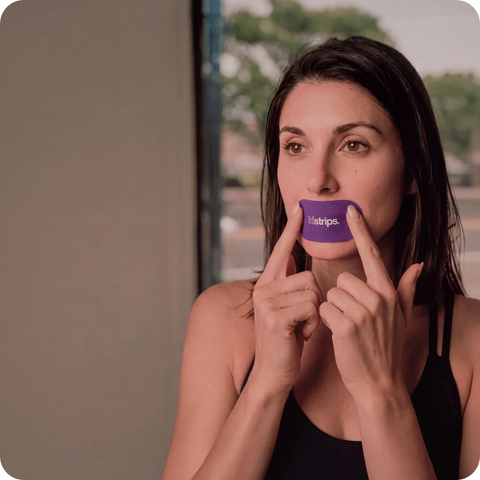




Nasal strips are one of the most versatile, evidence-backed, and widely misunderstood performance tools available. Used by elite athletes, competitive fighters, recreational runners, and people who simply want a better night's sleep, nasal strips (also known as nose strips or external nasal dilators) have a well-established scientific basis and an exceptionally broad application range.
This is the complete guide — everything you need to know about nasal strips, from basic mechanics to advanced athletic use, in one place.
What Are Nasal Strips?
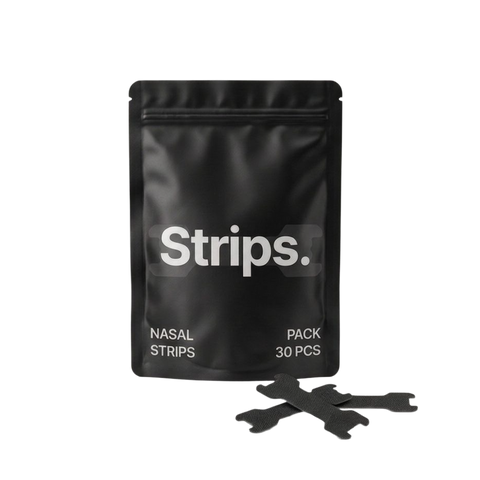
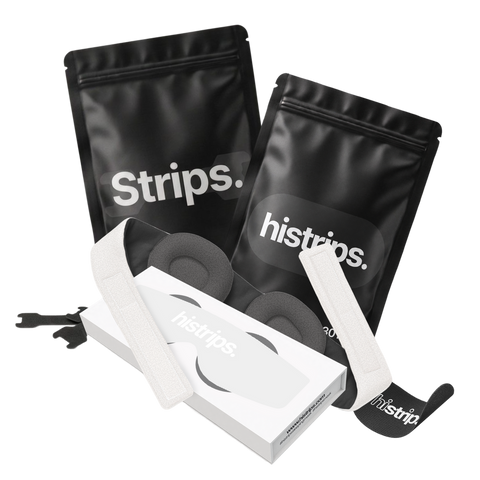
A nasal strip is an adhesive band containing a flexible spring mechanism that is applied to the outside of the nose. When correctly placed across the nasal flare, the spring action gently lifts the sides of the nose, widening the nasal valve — the narrowest part of the nasal airway and the primary site of airflow resistance.
Unlike decongestant sprays or antihistamines, nasal strips contain no active pharmaceutical ingredients. Their action is entirely mechanical: more physical space in the nasal passage means more air per breath, immediately and without any pharmacological effect.
How Do Nasal Strips Work?
The nasal valve accounts for approximately 50% of total upper airway resistance. It is a dynamic structure — its width changes with air temperature, mucosal swelling, and individual anatomy. When the nasal valve narrows (due to anatomy, congestion, or increased airflow demand during exercise), breathing becomes laboured and the body compensates by switching to mouth breathing.
Nasal strips counteract this by applying continuous outward tension on the alar cartilage (the wing-shaped cartilage of the nose). This tension mechanically holds the nasal valve open at a wider diameter, reducing resistance and allowing significantly more air to pass with the same breathing effort.
Research published in peer-reviewed journals including the American Journal of Rhinology has confirmed that external nasal dilators increase nasal airflow by 25–31% in objective rhinomanometric testing.
Who Uses Nasal Strips?
The user base for nasal strips is surprisingly broad:
- Endurance athletes (runners, cyclists, triathletes) — for nitric oxide advantage and sustained nasal breathing
- Strength and conditioning athletes (lifters, CrossFit athletes) — for better breathing mechanics under load
- Combat sport athletes (MMA, boxing, wrestling) — for rapid recovery between exchanges
- Sleep-focused users — for snoring reduction and improved sleep architecture
- Allergy and congestion sufferers — for drug-free, mechanical relief
- Recovery-focused individuals — for optimised overnight breathing during sleep and recovery
All the Key Benefits
1. Increased Nasal Airflow
The most direct benefit: measurably more air through the nose per breath. Confirmed by objective testing, not just subjective report.
2. Enhanced Athletic Performance
Nasal breathing produces nitric oxide in the sinuses. Nitric oxide is a vasodilator that increases blood flow to muscles and improves oxygen utilisation. Preserving nasal breathing during exercise maintains this physiological advantage that mouth breathing bypasses.
3. Improved Sleep Quality
Nasal breathing during sleep is associated with better sleep stage cycling, less arousal, and more time in deep and REM sleep. Nasal strips support nasal breathing throughout the night.
4. Reduced Snoring
Most common-cause snoring is worsened or caused by restricted nasal airflow forcing turbulent mouth breathing. Multiple clinical studies confirm that nasal strips significantly reduce snoring frequency and intensity.
5. Drug-Free Congestion Relief
Mechanical widening of the nasal valve provides immediate relief from the sensation of nasal blockage without medication, rebound risk, or side effects.
6. Faster Post-Exercise Recovery
Optimised nasal breathing during cool-down and sleep accelerates lactate clearance, tissue repair, and glycogen restoration.
7. Completely Drug-Free and Non-Invasive
No prescriptions, no prohibited substances, no tolerance build-up, no dependency. Safe for daily use by virtually everyone.
Step-by-Step Application Guide
- Wash and dry your face thoroughly. Oil and moisture are the primary causes of poor adhesion.
- Peel back the protective liner to expose the adhesive side of the strip.
- Position the strip centred over the nasal flare — the tab or printed lines should sit over the widest part of your nostrils, not the bony bridge.
- Press firmly from centre outward along both wings. Hold for 5–10 seconds.
- To remove: soften the adhesive with warm water for 30–60 seconds, then peel slowly from the edges inward.
Sport vs Sleep Use
Nasal strips are equally effective for sport and sleep, but the priorities differ:
For sport: The nitric oxide benefit, airflow support during high-demand breathing, and faster inter-set/inter-round recovery are the primary advantages. Apply before warm-up. Use HiStrips' sweat-resistant adhesive for reliable performance throughout training or competition.
For sleep: The snoring reduction, improved sleep architecture, and better recovery environment are the primary advantages. Apply just before bed on clean, dry skin. The strip should last comfortably through 8 hours of sleep.
Safety and Who Should Avoid Them
Nasal strips are very safe for the vast majority of users. Potential considerations:
- Mild skin irritation in people with very sensitive skin (use warm water removal technique)
- Those with known adhesive allergies should test on a small area first
- People with active skin conditions on the nose (eczema, psoriasis) should consult a physician
- Post-nasal surgery: check with your surgeon before use
Nasal strips are not a treatment for obstructive sleep apnea — consult a sleep specialist if you suspect OSA.
How HiStrips Is Different
Most nasal strips use a single-spring design that delivers generalised lift. HiStrips are engineered with a precision dual-spring mechanism calibrated to open the nasal valve at the optimal angle for maximum airflow improvement. The skin-safe, latex-free adhesive is tested for sweat resistance — making HiStrips the choice for athletes who need their strip to stay in place from warm-up to the final effort.
HiStrips are built for performance. Every design decision — spring geometry, adhesive formulation, strip dimensions — is made with the demands of athletic use in mind.
Frequently Asked Questions
What are nasal strips used for?
Nasal strips are used to improve nasal airflow for athletic performance, reduce snoring, relieve nasal congestion, improve sleep quality, and support recovery. They are a versatile, drug-free breathing tool.
Do nasal strips actually work?
Yes — there is robust scientific evidence that nasal strips increase nasal airflow by a clinically meaningful amount. The effect is mechanical and measurable, not placebo.
Can I wear nasal strips every day?
Yes. HiStrips are drug-free and mechanical — daily use is safe with no tolerance or dependency concerns.
How long can I wear a nasal strip?
Up to 12 hours. Use a fresh strip for each application.
Will nasal strips help if I have a cold?
Yes — nasal strips provide mechanical relief from congestion regardless of the cause, helping you breathe more freely through mild illness or allergy episodes without medication.
Are nasal strips safe for children?
Children's sizes are available. Adult-sized strips should not be used on young children. Consult a paediatrician for significant nasal breathing issues in children.
Do nasal strips help with sleep apnea?
Nasal strips can complement CPAP therapy by reducing nasal resistance. They are not a standalone treatment for diagnosed obstructive sleep apnea — consult a sleep specialist for OSA treatment.
Are nasal strips legal in sports competitions?
Yes, completely. Nasal strips contain no prohibited substances and are permitted under all athletic commission and WADA rules.
What is the difference between nasal strips and nasal dilators?
Nasal strips are applied externally; nasal dilators are inserted internally. For most athletic and sleep applications, external nasal strips like HiStrips offer superior comfort, stability, and hygiene.
How do I stop nasal strips from falling off during exercise?
The key is proper skin preparation: clean, dry skin before application. Wipe with a face wipe before applying if you've already been sweating. HiStrips' sweat-resistant adhesive is specifically formulated for athletic conditions.
Start Breathing at Full Capacity
Whether you're chasing a PB, fighting for a title, trying to sleep better, or simply wanting to breathe freely through a stuffy nose — nasal strips deliver. HiStrips are engineered to the highest standard for athletes who demand precision equipment.
Shop HiStrips at histrips.com — the nasal strip built for performance, recovery, and real results.


Leave a comment
This site is protected by hCaptcha and the hCaptcha Privacy Policy and Terms of Service apply.