





The Recovery Secret Behind Team Visma's Tour de France Dominance: HISTRIPS Nasal Strips
In a race spanning three weeks and over 3,400 kilometres, the winner isn't always the strongest rider. The winner is the rider who recovers best — night after night, stage after stage. And recovery starts with how you breathe while you sleep.
The Invisible War: Recovery Between Stages
Every Tour de France stage inflicts physiological damage. Muscle fibres tear under repeated high-intensity contractions. Glycogen stores are depleted. Core temperature spikes, hormonal stress cascades, and the immune system mounts an inflammatory response to accumulated tissue damage. A rider finishing Stage 15 with a four-minute lead can lose it entirely if their body cannot repair overnight what the day destroyed.
Team Visma–Lease a Bike invest millions in recovery infrastructure — team buses equipped with ice baths, compression therapy, bespoke nutritional protocols, and dedicated sleep environments in carefully selected hotels. Every variable is controlled. And among those variables, sleep quality sits at the apex.
Why Sleep Quality Determines Race Outcomes
During slow-wave and REM sleep, the body releases the majority of its daily human growth hormone (HGH) output — the primary driver of muscle repair and glycogen restoration. Cortisol levels drop, inflammatory cytokines are cleared, and neural fatigue accumulated during the day's racing is consolidated and discharged.
But this recovery cascade is contingent on one thing: uninterrupted, high-quality sleep. Compromised breathing during sleep — caused by nasal congestion, nasal passage swelling from exertion, or simple anatomical resistance — fragments sleep architecture, reduces slow-wave sleep depth, and truncates REM cycles. The physiological result is measurably impaired recovery: elevated morning cortisol, reduced HGH secretion, higher resting heart rate, and increased perceived fatigue scores.
In a Grand Tour, even 15% degraded sleep quality, compounded over 21 nights, is catastrophic.
Exercise-Induced Nasal Congestion: The Hidden Recovery Killer
There is a specific physiological phenomenon that affects endurance athletes post-exercise: exercise-induced rhinitis. During and after intense cycling efforts, the nasal mucosa — the tissue lining the nasal passages — can swell in response to increased blood flow, airborne allergens (pollen is omnipresent during June in France), and respiratory inflammation from high breathing volumes at altitude.
Riders who spend hours breathing heavily — particularly on dusty mountain roads or through pollen-heavy valleys — often experience significant nasal congestion in the evening. This congestion increases nasal airway resistance, forcing partial or full mouth breathing during sleep, which in turn leads to snoring, micro-arousals, and sleep fragmentation.
How HISTRIPS Nasal Strips Transform Recovery Sleep
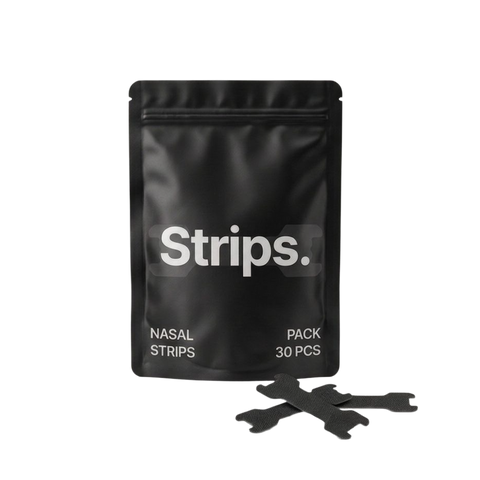
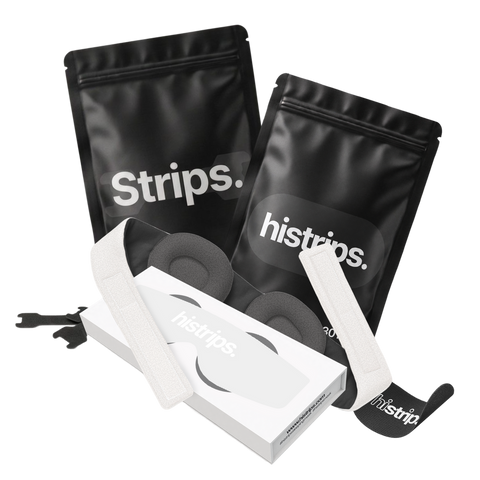
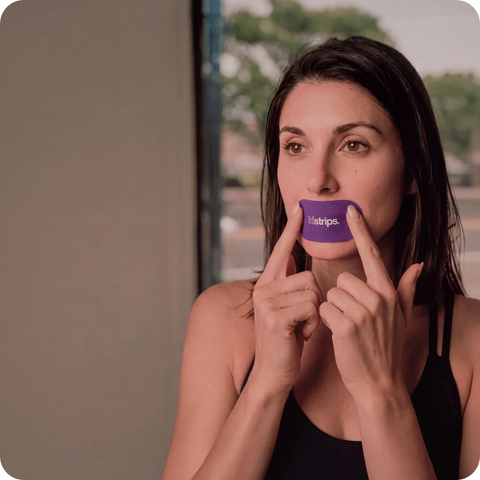
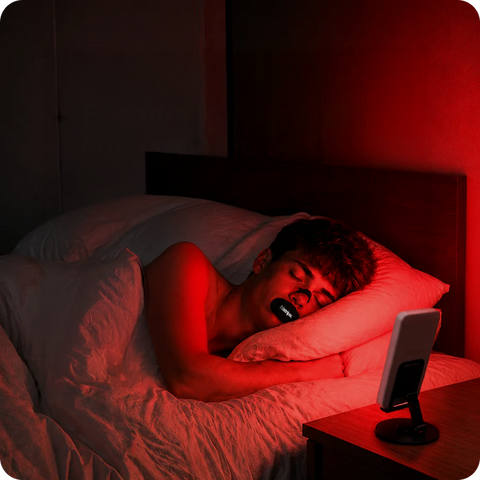
HISTRIPS strips, worn overnight, mechanically hold the nasal passages open regardless of mucosal swelling or natural anatomical resistance. The spring-loaded adhesive band lifts the nasal walls outward, increasing nasal airflow by 40%+ and maintaining patent nasal breathing throughout the night.
The physiological benefits of nasal breathing during sleep are well-established:
- Nasal breathing humidifies and warms air, reducing airway irritation and dryness
- Continued nitric oxide production during sleep supports cardiovascular recovery
- Reduced sleep apnoea risk and snoring due to maintained airway patency
- Deeper slow-wave sleep correlated with improved nasal breathing patterns
- Lower overnight heart rate and improved heart rate variability (HRV) metrics
The HRV Connection
Heart rate variability (HRV) — the millisecond variation between heartbeats — is the primary biomarker Team Visma's performance staff use to quantify recovery readiness each morning. Higher HRV = more recovered, more ready to train or race hard. Lower HRV = stress, fatigue, under-recovery.
Research on nasal breathing during sleep consistently shows improved HRV scores in athletes who maintain nasal versus oral breathing patterns overnight. For Tour de France riders who are measured against a personal HRV baseline each morning, this improvement is both measurable and meaningful. A rider with a HRV 8% above their personal baseline on a rest day climbs differently on the next mountain stage.
The 21-Night Recovery Stack
During the Tour de France, Team Visma riders follow a non-negotiable evening recovery protocol. After the stage — regardless of whether it was a flat sprint or a brutal summit finish — the sequence begins:
- Immediate post-stage nutrition: recovery shakes within 30 minutes of finishing
- Cold water immersion or contrast therapy for lower limb inflammation reduction
- Compression garments worn through the evening to reduce swelling
- Structured evening nutrition targeting glycogen restoration and protein synthesis
- HISTRIPS nasal strip applied before sleep — every single night of the race
- Controlled sleep environment: blackout, cool temperature (16–18°C), no electronic light
Altitude Stages and Nasal Congestion Risk
The Tour de France's most decisive stages occur above 1,500 metres. At altitude, thinner air and lower humidity increase the respiratory demand dramatically — riders breathe both harder and more dryly. Post-stage, this results in heightened nasal inflammation and congestion risk, precisely when sleep quality is most critical (altitude nights require maximum recovery to perform the following day).
HISTRIPS strips are especially important on these nights. Opening the nasal passages ensures continued nasal breathing despite elevated inflammation, preserving the sleep quality that underpins summit-stage performance.
Recovery Is the Race
In modern professional cycling, the peloton's training loads have largely converged. The physiological profiles of top riders are more similar than they are different. What separates Champions Edition winners from also-rans at the Tour de France is increasingly the ability to absorb training, recover faster, and come back to the start line each morning fractionally less fatigued than the competition.
HISTRIPS nasal strips are one piece of that recovery architecture — but they're a piece that works every single night, passively, with zero effort, zero side effects, and measurable results. For Team Visma–Lease a Bike, that's not optional. That's standard protocol.
Experience HISTRIPS Performance
Sleep better. Recover faster. Perform at the level of Tour de France champions.
Shop HISTRIPS Now


Leave a comment
This site is protected by hCaptcha and the hCaptcha Privacy Policy and Terms of Service apply.