






Most serious athletes obsess over their training load, nutrition, and recovery protocols — but they are leaving one of the biggest performance gains on the table. Their breathing. Specifically, how they breathe during training, competition, and sleep. Nasal strips may be a small piece of kit, but the athletes who use them know: the airway is everything.
The Performance Case for Nasal Strips
The equation is straightforward: more airflow through the nose = more oxygen delivered to working muscles = better performance. Nasal strips mechanically widen the nasal passages by lifting the soft cartilage walls of the nostrils, increasing nasal airway volume by up to 31%.
But the benefits go beyond raw airflow. Nasal breathing triggers the production of nitric oxide in the nasal sinuses — a vasodilator that relaxes blood vessels and helps hemoglobin carry more oxygen. Mouth breathing produces almost no nitric oxide. For endurance athletes, this is not a marginal gain. It is a systemic physiological advantage.
Key performance benefits of optimised nasal breathing:
- Higher oxygen uptake per breath
- Lower respiratory rate at equivalent intensities
- Reduced reliance on the energy-costly anaerobic system
- Better CO2 tolerance, which delays the breathing panic response
- Improved mental clarity during high-effort states
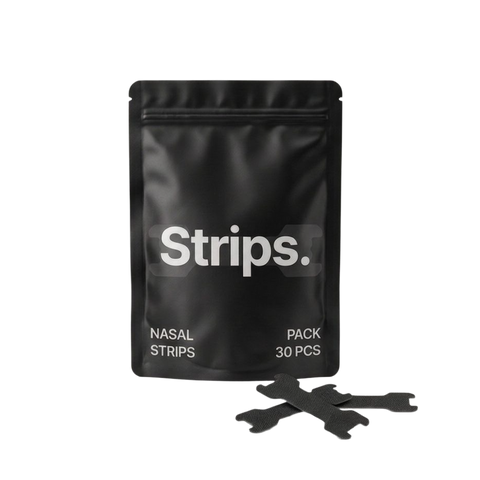
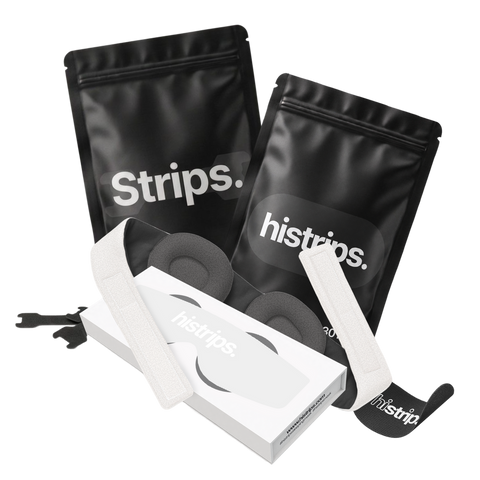
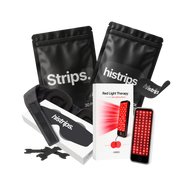
HiStrips nasal strips are designed to keep your nasal passages wide open whether you are in the gym, on the track, or recovering in bed.
Recovery at Night — Do Nasal Strips Help You Sleep Better?
Yes — and for recovery-focused athletes, this is just as important as the training benefit. Sleep is when your body rebuilds. Growth hormone is released, muscles repair, and the nervous system resets. All of that is compromised if you are not breathing efficiently through the night.
Mouth breathing during sleep — which happens when nasal passages are congested or too narrow — leads to fragmented sleep, dry mouth, snoring, and in more serious cases, obstructive sleep apnea. Sleep apnea occurs when the airway collapses during sleep, causing brief pauses in breathing that jolt the body out of deep sleep cycles.
Nasal strips help by keeping the nasal passages open, making it easier to breathe nasally throughout the night. For people with mild to moderate nasal congestion or narrower nasal anatomy, this alone can be transformative for sleep quality. For those with diagnosed obstructive sleep apnea, nasal strips are often used as part of a broader breathing protocol alongside other interventions — and can significantly reduce snoring and airway resistance.
Better sleep means faster recovery. Faster recovery means better training adaptation. For a serious athlete, optimising overnight breathing is not optional — it is part of the programme.
Nose Taping vs Nasal Strips — Which Is Better?
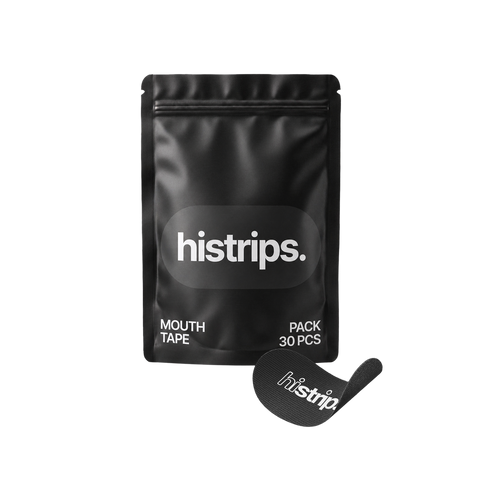
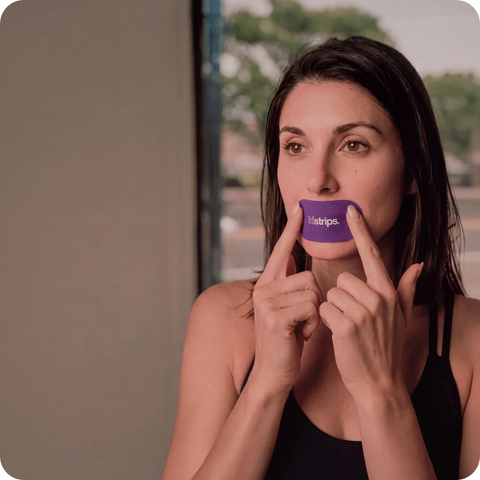
Nose taping at night — where a small piece of surgical or mouth tape is placed vertically across the lips or across the bridge of the nose — has become popular in biohacking and breathwork communities. The idea is to encourage nasal breathing during sleep by making mouth breathing slightly uncomfortable or impossible.
Does nose taping work? In the sense that it discourages mouth breathing, yes — it can be effective for some people. However, it does nothing to actually open the nasal passages. If your nose is restricted or congested, taping your mouth shut simply makes breathing harder overall, which can feel claustrophobic and disrupt sleep rather than improve it.
Nasal strips, by contrast, address the root cause — they actively open the airway rather than simply blocking the mouth. For most athletes, nasal strips are the superior choice because they:
- Create a larger nasal airway immediately on application
- Are comfortable and non-invasive to wear during sleep
- Work alongside normal nasal anatomy, not against it
- Can be worn during training as well as sleep — tape cannot
- Do not create a suffocating sensation if nasal passages are restricted
The best approach? Use nasal strips at night for open passages, and optionally combine with mouth tape if you want additional encouragement to breathe nasally. But the strip is the foundation.
How HiStrips Athletes Use Nasal Strips
Athletes who have made HiStrips part of their routine tend to use them in three contexts:
- During training — applied before sessions to maintain nasal breathing under load, especially during warm-up, conditioning work, and cool-down
- During competition — worn in races, matches, and fights to maximise airway efficiency when every breath counts
- During sleep — applied at bedtime as part of a recovery protocol to ensure deep, restorative rest through the night
Many athletes start with night use and quickly realise the training benefits — or start using them in training and discover how much their sleep quality improves when they continue wearing them at night.
Who Should Use HiStrips?
If you train seriously, HiStrips are for you. More specifically:
- Runners — nasal breathing is a proven strategy for pacing, endurance, and aerobic efficiency; strips make it sustainable even at higher intensities
- Cyclists — steady aerobic output demands consistent oxygen delivery; strips reduce the energy cost of breathing and improve time-trial performance
- MMA and combat sports athletes — if you have had your nose broken or have a deviated septum, nasal strips restore airway capacity that injury has compromised
- Gym athletes and CrossFitters — metabolic conditioning demands efficient breathing; strips help you stay nasal longer before tipping into open-mouth gasping
- Anyone who snores or wakes feeling unrested — night-time use alone can dramatically improve sleep quality and morning recovery
You do not need to be an elite athlete to benefit. You just need to train hard enough that your breathing matters — which is anyone who takes their performance seriously.
Upgrade your breathing. Try HiStrips nasal strips — engineered for athletes, used in training and recovery.


Leave a comment
This site is protected by hCaptcha and the hCaptcha Privacy Policy and Terms of Service apply.